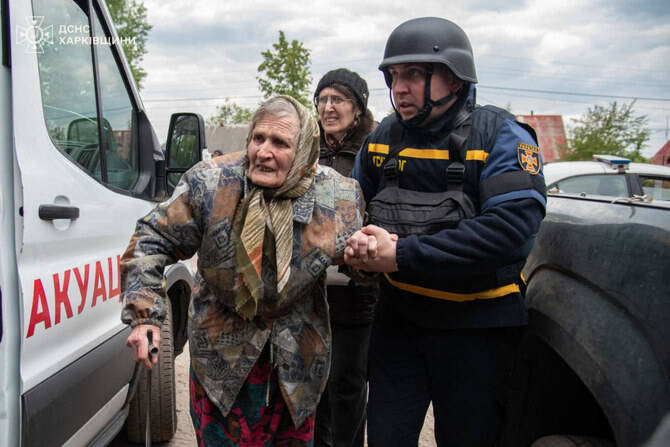
Ukraine evacuates 43 deportees held on Russian-Georgian border

Ukraine said Saturday it had evacuated 43 of its citizens recently deported from Russia who were being held in Georgia in dire conditions, accusing Moscow of "weaponizing" deportations. (AFP/File)
Short Url
Updated 19 July 2025
Follow

Ukraine evacuates 43 deportees held on Russian-Georgian border

  • At least 56 Ukrainians were being held in a basement facility near the Russian-Georgian border, according to aid group Volunteers Tbilisi
  • Sybiga said 43 Ukrainians had been evacuated from Georgia via Moldova

KYIV: Ukraine said Saturday it had evacuated 43 of its citizens recently deported from Russia who were being held in Georgia in dire conditions, accusing Moscow of “weaponizing” deportations.

At least 56 Ukrainians, mostly prisoners who completed their sentences and were subsequently ordered to leave Russia, were being held in a basement facility near the Russian-Georgian border, according to aid group Volunteers Tbilisi.

Ukraine’s Foreign Minister Andriy Sybiga said 43 Ukrainians, many lacking documents, had been evacuated from Georgia via Moldova, “including former political prisoner Andrii Kolomiyets.”

More people still remain in “difficult” conditions at the Russian-Georgian border, Sybiga said on X.

The treatment of those held at the border facility near the Dariali crossing is “inhumane,” said Maria Belkina, the head of Volunteers Tbilisi.

“They are without basic necessities — food, water, sanitation,” she told AFP, adding that some of the deportees had medical conditions, including suspected tuberculosis and HIV.

Russia may be accelerating deportations ahead of expected changes to Georgian migration laws in September, which are aimed at tightening entries, she added.

While Georgia has not officially closed the border to Ukrainian nationals, Belkina said a recent policy shift has delayed entry.

“Russia is weaponizing the deportation of Ukrainian citizens through Georgia,” Sybiga said, calling on Russia to transport the deportees directly to its border with Ukraine instead.

It was not clear how many people remained in the border facility, which only has 17 beds and no basic amenities and where some have been kept for weeks, according to Volunteers Tbilisi.

Rights groups estimate up to 800 more Ukrainians could be transferred to the border in the coming weeks.


Three Afghan migrants die of cold while trying to cross into Iran

Updated 58 min 36 sec ago
Follow

Three Afghan migrants die of cold while trying to cross into Iran

  • More than 1.8 million Afghans were forced to return to Afghanistan by the Iranian authorities between January and the end of November 2025

AFGHANISTAN: Three Afghans died from exposure in freezing temperatures in the western province of Herat while trying to illegally enter Iran, a local army official said on Saturday.
“Three people who wanted to illegally cross the Iran-Afghanistan border have died because of the cold weather,” the Afghan army official told AFP on condition of anonymity.
He added that a shepherd was also found dead in the mountainous area of Kohsan from the cold.
The migrants were part of a group that attempted to cross into Iran on Wednesday and was stopped by Afghan border forces.
“Searches took place on Wednesday night, but the bodies were only found on Thursday,” the army official said.
More than 1.8 million Afghans were forced to return to Afghanistan by the Iranian authorities between January and the end of November 2025, according to the latest figures from the United Nations refugee agency (UNHCR), which said that the majority were “forced and coerced returns.”
“These mass returns in adverse circumstances have strained Afghanistan’s already overstretched resources and services” which leads to “risks of onward and new displacement, including return movements back into Pakistan and Iran and onward,” UNHCR posted on its site dedicated to Afghanistan’s situation.
This week, Amnesty International called on countries to stop forcibly returning people to Afghanistan, citing a “real risk of serious harm for returnees.”
Hit by two major earthquakes in recent months and highly vulnerable to climate change, Afghanistan faces multiple challenges.
It is subject to international sanctions particularly due to the exclusion of women from many jobs and public places, described by the UN as “gender apartheid.”
More than 17 million people in the country are facing acute food insecurity, the UN World Food Programme said Tuesday.