

Pakistan targets Gulf remittances with new PayPak digital solution for overseas workers

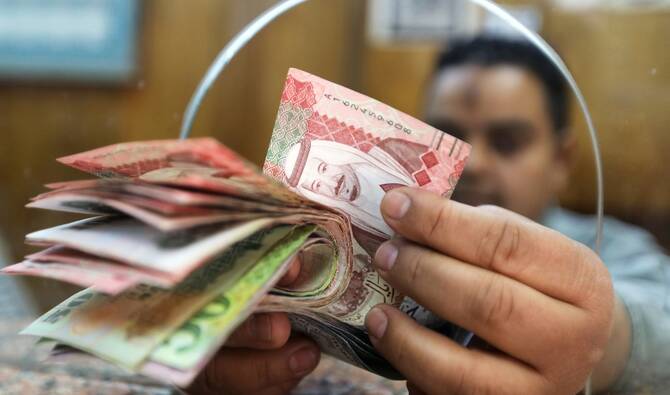
An employee counts Saudi Riyals bills at a money exchange office in central Cairo, Egypt, March 20, 2019. (REUTERS/ file)
Short Url
Updated 14 July 2025
Follow

Pakistan targets Gulf remittances with new PayPak digital solution for overseas workers

  • The initiative aims to facilitate secure and structured remittance flows from non-resident Pakistani workers who are based abroad
  • Pakistan received over $38.3 billion remittances in last fiscal year, with Pakistanis residing in Gulf contributing a major share

KARACHI: The Pakistani government is planning to facilitate overseas Pakistanis, particularly those in Gulf countries, by providing a technological solution that would enable them to send remittances through a domestic payment scheme, PayPak, the 1Link payment gateway system said on Monday, citing the Prime Minister Youth Programme (PMYP) chief said on Monday.

PMYP Chairman Rana Mashhood Ahmad Khan said this in a recent meeting with stakeholders, including 1Link CEO Najeeb Agrawalla and Pakistan Freelancers Association (PAFLA) Chairman Ibrahim Amin, in the country’s commercial capital of Karachi.

Pakistan received over $38.3 billion in remittances from different countries in the financial year ending in June, with Pakistanis residing in Gulf countries contributing a major share to this amount.

Khan said the government was working extensively to serve Pakistanis in the country and overseas by addressing their core issues through innovative, technological and affordable means.

“The government is keen to explore strategic collaboration on empowering overseas Pakistani youth through digital remittance services and expanding PayPak’s reach under the Prime Minister’s Youth Programme,” he was quoted as saying by 1Link.

Khan said Pakistanis living abroad were playing commendable role in contributing to the economy and the PM Digital Youth Hub was exploring various options to honor their services with dedicated facilities and offerings.

Launched in 2016 by 1Link, PayPak is Pakistan’s first and the only domestic payment scheme (DPS), making Pakistan the 28th country in the world to have its own domestic payment system. It aims to spur financial inclusion and digitization across the country.

“We aim to take initiatives to facilitate secure and structured remittance flows from non-resident Pakistani workers, especially those based in Saudi Arabia, UAE and other Gulf countries, while also promoting the use of PayPak for Hajj, Umrah, and other cross-border transactions including 1Bill service for non-resident Pakistanis,” 1Link CEO Agrawalla said.

As a major payment service provider, he said, 1Link proposed extending its technological expertise and platform capabilities to support the development and implementation of both initiatives.

PAFLA Chairman Amin said there were over 4 million Pakistanis residing in Gulf countries who had been contributing to the economy through their hard-earned income, adding that many of them lacked access to reliable, user-friendly technological payment solutions.

“PAFLA, in collaboration with Pakistani diplomatic missions, Pakistan’s banks, and different agencies, will do its best efforts to approach freelancers, blue- and white-collar Pakistani workers through outreach and engagement efforts across Gulf countries,” he said.


Pakistan says Azerbaijan’s SOCAR to finalize oil and gas investment next month

Updated 7 sec ago
Follow

Pakistan says Azerbaijan’s SOCAR to finalize oil and gas investment next month

  • SOCAR signals February decision after Davos talks, citing Pakistan’s reform momentum
  • Existing LNG, fuel supply ties point to deeper Azerbaijan-Pakistan energy cooperation

ISLAMABAD: Pakistan’s finance ministry said on Thursday Azerbaijan’s state energy company SOCAR is set to finalize an investment in Pakistan’s oil and gas sector next month, following high-level engagements on the sidelines of the World Economic Forum in Davos.

The announcement came after a business roundtable chaired by Finance Minister Muhammad Aurangzeb, where SOCAR President Rovshan Najaf told Pakistani officials the company viewed Pakistan as a long-term energy partner, according to a statement from the finance ministry.

Pakistan has been seeking fresh foreign investment into its energy sector as part of broader economic reforms aimed at stabilizing supply, reducing costs and improving contractual transparency. The oil and gas sector, alongside mining and minerals, has been identified by Islamabad as central to energy security and industrial growth.

SOCAR already has a commercial footprint in Pakistan through SOCAR Trading, which supplies liquefied natural gas under a government-to-government framework with Pakistan LNG Limited. Under the arrangement, SOCAR can supply up to one LNG cargo per month without take-or-pay obligations, giving Pakistan greater flexibility in managing demand and pricing. The agreement has been extended into 2025, reflecting continued cooperation.

“SOCAR views Pakistan as a natural long-term energy partner,” Najaf said, according to the finance ministry statement, citing Pakistan’s “market depth, growing energy demand, and ongoing reform momentum in the oil and gas sector.”

He also highlighted SOCAR’s engagement with Pakistan State Oil on petroleum product supply and expressed interest in expanding cooperation across the broader oil and gas value chain as reforms advance.

Welcoming the planned investment, Aurangzeb reiterated the government’s commitment to attracting “strategic and commercially viable investment” in energy, saying reforms were focused on improving pricing transparency, contractual clarity and risk-sharing mechanisms, according to the statement.

SOCAR is a major state-owned energy company operating in more than 20 countries, with a workforce exceeding 66,000 employees and reported revenues of about $50.6 billion in 2024, the ministry said.

Pakistan and Azerbaijan have been deepening economic ties in recent years, with energy cooperation emerging as a key pillar alongside trade and investment discussions. Officials say the expected SOCAR investment would mark a significant step in strengthening bilateral energy links.