


DOHA: Stuttering Gaza ceasefire talks between Israel and Hamas entered a second week on Monday, with US President Donald Trump still hopeful of a breakthrough and as more than 20 people were killed on the ground.
The indirect negotiations in the Qatari capital, Doha, appeared deadlocked at the weekend after both sides blamed the other for blocking a deal for a 60-day ceasefire and the release of hostages.
In Gaza, the Palestinian territory’s civil defense agency said at least 22 people were killed in the latest Israeli strikes on Monday in and around Gaza City, and Khan Younis in the south.
One strike on a tent in Khan Younis on Sunday killed the parents and three brothers of a young Gazan boy, who only survived as he was outside getting water, the boy’s uncle told AFP.
Belal Al-Adlouni called for revenge for “every drop of blood” saying it “will not be forgotten and will not die with the passage of time, nor with displacement or with death.”
AFP reporters in southern Israel meanwhile saw large plumes of smoke in northern Gaza, where the military said fighter jets had pounded Hamas targets over the weekend.
Trump, who met Israel’s Prime Minister Benjamin Netanyahu in Washington last week, is keen to secure a truce in the 21-month war, which was sparked by Hamas’s deadly October 7, 2023 attack on Israel.
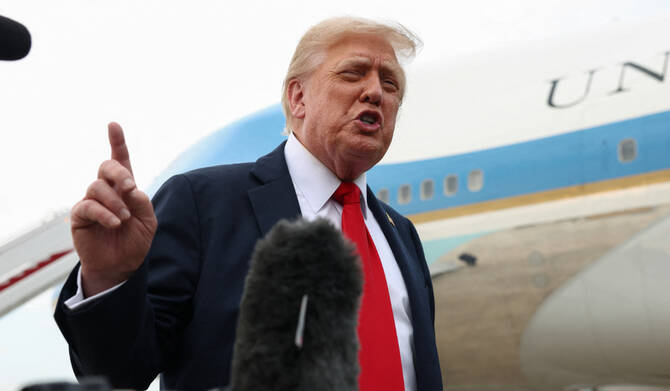
“Gaza, we are talking and hopefully we’re going to get that straightened out over the next week,” he told reporters late on Sunday, echoing similarly optimistic comments he made on July 4.
A Palestinian source with knowledge of the talks told AFP on Saturday that Hamas rejected Israeli proposals to keep troops in over 40 percent of Gaza and plans to move Palestinians into an enclave on the border with Egypt.
In response, a senior Israeli political official accused Hamas of inflexibility and trying to deliberately scupper the talks by “clinging to positions that prevent the mediators from advancing an agreement.”
Israel’s Foreign Minister Gideon Saar and the Palestinian minister of state for foreign affairs Varsen Aghabekian Shahin headed to Brussels on Monday for talks between the EU and its Mediterranean neighbors.
But the Ramallah-based Palestinian Authority denied media reports that any meeting between the two was on the agenda.
In Israel, Netanyahu has said he would be ready to enter talks for a more lasting ceasefire when a deal for a temporary truce is agreed and only when Hamas lays down its weapons.
But he is under pressure to quickly wrap up the war, with military casualties mounting and with public frustration both at the continued captivity of the hostages and a perceived lack of progress in the conflict.
Politically, his fragile governing coalition is holding, for now, but Netanyahu is seen as beholden to a minority of far-right ministers in prolonging an increasingly unpopular conflict.
He also faces a backlash over the feasibility and ethics of a plan to build a so-called “humanitarian city” from scratch in southern Gaza to house displaced Palestinians if and when a ceasefire takes hold.
The UN agency for Palestinian refugees has described the proposed facility as a “concentration camp” and Israel’s own security establishment is reported to be unhappy at the plan.
Israeli media said the costs were discussed at a security cabinet meeting at the prime minister’s office on Sunday night, just hours before his latest court appearance in a long-running corruption trial on Monday.
Hamas’s attacks on Israel in 2023 resulted in the deaths of 1,219 people, most of them civilians, according to an AFP tally based on official figures.
A total of 251 hostages were taken that day, of which 49 are still being held, including 27 that the Israeli military says are dead.
Israel’s military reprisals have killed 58,026 Palestinians, mostly civilians, according to the health ministry in Gaza.


