Irbil: More than 30 percent of Iraq’s autonomous Kurdistan region now has 24-hour state electricity, authorities said Thursday, with plans to extend full coverage by the end of 2026.
The northern region of Kurdistan has long promoted itself as a haven of relative stability in an otherwise volatile country.
Despite Iraq’s vast oil wealth, the national grid struggles to meet demand, leaving most areas reliant on imported energy and subject to frequent power cuts.
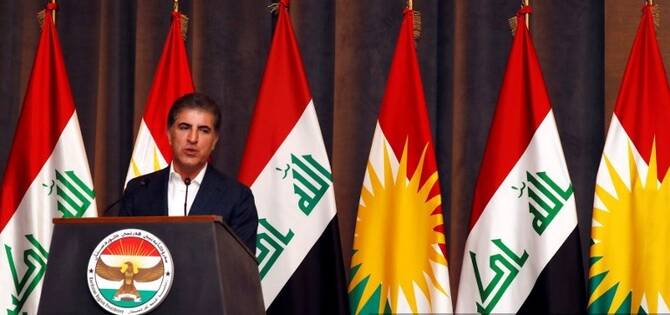
“Today, two million people across the Kurdistan region enjoy 24-hour electricity... that’s 30 percent of the population,” including the cities of Irbil, Duhok and Sulaimaniyah, said regional prime minister Masrour Barzani.
In 2024, the Kurdistan Regional Government launched “Project Runaki” to deliver round-the-clock power in a region where, like much of Iraq, residents often turn to costly and polluting private generators.
The region’s electricity minister, Kamal Mohammed, said residents were now enjoying “uninterrupted, cleaner, and more affordable electricity.”
“Rollout to other areas is expected to be completed by the end of 2026,” he told AFP.
As part of the transition, roughly 30 percent of the 7,000 private generators operating across Kurdistan have already been decommissioned, he said, a move that has contributed to an estimated annual reduction of nearly 400,000 tons of CO2 emissions.
The project also aims to lower household electricity bills, offering a cheaper alternative to the combined cost of grid power and private generator fees.
However, bills will still depend on consumption and are likely to increase during peak summer and winter months.
Mohammed said the project’s success hinges on the introduction of “smart” meters to curb electricity theft, as well as a new tariff system to promote responsible usage.
“More power has been added to the grid to support 24/7 access,” he said.
Kurdistan has doubled its gas production in the past five years, and most of the power supply comes from local gas production, Mohammed said.
Despite Iraq’s abundant oil and gas reserves, years of conflict have devastated its infrastructure.
The country remains heavily reliant on imports, particularly from neighboring Iran, which frequently interrupts supply. It also imports electricity from Jordan and Turkiye, while seeking to boost its own gas output.
“We stand ready to offer our technical support and assistance” to the federal government, Mohammed said.
In Irbil, resident Bishdar Attar, 38, said the biggest change was the absence of noisy and polluting generators.
“The air is now clear,” he said. “We can now use home appliances freely... as needed.”

Iraq’s Kurdistan enjoys all-day state electricity
Short Url
https://arab.news/6xyvj
Iraq’s Kurdistan enjoys all-day state electricity
- The region’s electricity minister, Kamal Mohammed, said residents were now enjoying “uninterrupted, cleaner, and more affordable electricity”
Deadly attacks by Sudanese paramilitary forces on a Darfur town displace over 3,000, group says
- Misteriha is a stronghold of Arab tribal leader Musa Hilal, who also hails from the Rizeigat Arab tribe as do the majority of the members of the RSF
- In October, the RSF overran el-Fasher, the provincial capital of North Darfur, after 18 months of siege
CAIRO: Deadly attacks by Sudanese paramilitary forces on a town in Sudan’s western Darfur region have displaced more than 3,000 people in the past few days, a doctors group said Thursday as the war in the African country nears its three-year mark with no end in sight.
The statement from the Sudan Doctors Network, which tracks the country’s brutal war, followed a statement earlier this week on Facebook in which the group said that the latest attack on Misteriha in North Darfur province left at least 28 people dead and 39 wounded.
The group said at the time the casualty tolls were an initial finding and that the real number of killed and wounded is likely higher.
The town is a stronghold of Arab tribal leader Musa Hilal who also hails from the Rizeigat Arab tribe as the majority of the members of the paramilitary Rapid Support Forces, or RSF. Motives for the attack were not known and the RSF could not be contacted for comment.
The conflict between the RSF and the Sudanese military erupted into war in April 2023 that has so far killed at least 40,000 people and displaced 12 million, according to the World Health Organization. Aid groups say the true toll could be many times higher, as the fighting in vast and remote areas impedes access.
The doctors group said the displaced families fled from Misteriha in the night, without any belongings and now lack shelter and food. It said most of the displaced are women, including pregnant women, facing “extremely severe” health conditions. It appealed for “immediate and urgent assistance.”
The paramilitary RSF on Monday intensified their attack on the town and subsequently seized it, a takeover that is likely to strengthen the RSF fighters’ hold over Darfur.
In October, the RSF overran el-Fasher, the provincial capital of North Darfur, after 18 months of siege. The paramilitary killed more than 6,000 people between Oct. 25 and Oct. 27 in the city — atrocities that UN-backed experts say bore ” the hallmarks of genocide.”
Meanwhile, UN High Commissioner for Human Rights Volker Türk said Thursday that his office has documented a sharp spike — more than two and a half times — in killings of civilians in 2025 in Sudan, compared with the previous year with thousands still missing or unidentified.
“This war is ugly. It’s bloody. And it’s senseless,” Türk said during a human rights council session in Geneva. “If much of the international community continues to act as a passive bystander, then something is fundamentally wrong with our collective moral compass.”
Repeated efforts by various countries and organizations to broker peace have failed to end the war.
The statement from the Sudan Doctors Network, which tracks the country’s brutal war, followed a statement earlier this week on Facebook in which the group said that the latest attack on Misteriha in North Darfur province left at least 28 people dead and 39 wounded.
The group said at the time the casualty tolls were an initial finding and that the real number of killed and wounded is likely higher.
The town is a stronghold of Arab tribal leader Musa Hilal who also hails from the Rizeigat Arab tribe as the majority of the members of the paramilitary Rapid Support Forces, or RSF. Motives for the attack were not known and the RSF could not be contacted for comment.
The conflict between the RSF and the Sudanese military erupted into war in April 2023 that has so far killed at least 40,000 people and displaced 12 million, according to the World Health Organization. Aid groups say the true toll could be many times higher, as the fighting in vast and remote areas impedes access.
The doctors group said the displaced families fled from Misteriha in the night, without any belongings and now lack shelter and food. It said most of the displaced are women, including pregnant women, facing “extremely severe” health conditions. It appealed for “immediate and urgent assistance.”
The paramilitary RSF on Monday intensified their attack on the town and subsequently seized it, a takeover that is likely to strengthen the RSF fighters’ hold over Darfur.
In October, the RSF overran el-Fasher, the provincial capital of North Darfur, after 18 months of siege. The paramilitary killed more than 6,000 people between Oct. 25 and Oct. 27 in the city — atrocities that UN-backed experts say bore ” the hallmarks of genocide.”
Meanwhile, UN High Commissioner for Human Rights Volker Türk said Thursday that his office has documented a sharp spike — more than two and a half times — in killings of civilians in 2025 in Sudan, compared with the previous year with thousands still missing or unidentified.
“This war is ugly. It’s bloody. And it’s senseless,” Türk said during a human rights council session in Geneva. “If much of the international community continues to act as a passive bystander, then something is fundamentally wrong with our collective moral compass.”
Repeated efforts by various countries and organizations to broker peace have failed to end the war.
© 2026 SAUDI RESEARCH & PUBLISHING COMPANY, All Rights Reserved And subject to Terms of Use Agreement.


