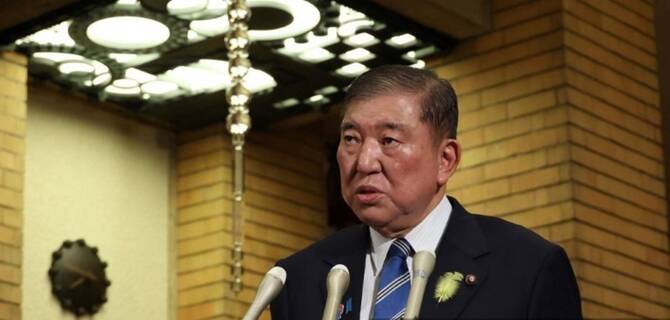
TOKYO: Japan’s Prime Minister Shigeru Ishiba said Sunday he won’t “easily compromise” in talks with Washington as Tokyo seeks to avert President Donald Trump’s threat to impose tariffs of up to 35 percent on Japanese goods.
“We will not easily compromise. That’s why it is taking time and why it is tough,” Ishiba told a television talk show.
His comments came as Japan rushes to negotiate with the Trump administration before the Wednesday deadline for trade deals.
While Trump imposed a sweeping 10 percent tariff on imports from most trading partners in April, he unveiled — then paused — higher rates on dozens of economies including Japan to allow room for negotiations.
This pause will expire July 9, meaning the elevated rates are due to kick in if countries fail to reach agreements with Washington to avert them.
Trump has said he was going to write a letter to Japan, asking it to “pay a 30 percent, 35 percent or whatever the number is that we determine,” and called the bilateral trade relation “unfair.”
He has particularly pressed Japan to accept more US automobiles and rice.
Ryosei Akazawa, Tokyo’s trade envoy, held telephone calls with US Commerce Secretary Howard Lutnick on Thursday and Saturday.
In the Sunday television show, Ishiba reiterated that Japan, as the biggest investor nation in the US economy, should be treated differently from other countries.
“What is unfair? How is it unfair? We need to examine each one” of the US claims, he said.
“We are allies, but we have to say what we have to say. We are the world’s largest investor nation and the largest job creator (in the US). We are different,” he said.
On another Sunday television show, Ishiba said Japan was “preparing to deal with all kinds of situations,” when asked about how he plans to deal with Trump’s letter.


![]()

Japan PM says won’t ‘easily compromise’ to Trump on tariffs
Short Url
https://arab.news/nvye6
Japan PM says won’t ‘easily compromise’ to Trump on tariffs
- American President Trump has said he was going to write a letter to Japan, asking it to “pay a 30 percent, 35 percent or whatever the number is that we determine,” and called the bilateral trade relation “unfair”


Latest updates


Recommended


© 2026 SAUDI RESEARCH & PUBLISHING COMPANY, All Rights Reserved And subject to Terms of Use Agreement.