


RIYADH: Saudi Arabia and the wider Middle East and North Africa region have witnessed a surge of startup funding rounds in recent weeks, underscoring the Kingdom’s pivotal role in driving technology investment and digital transformation across diverse sectors.
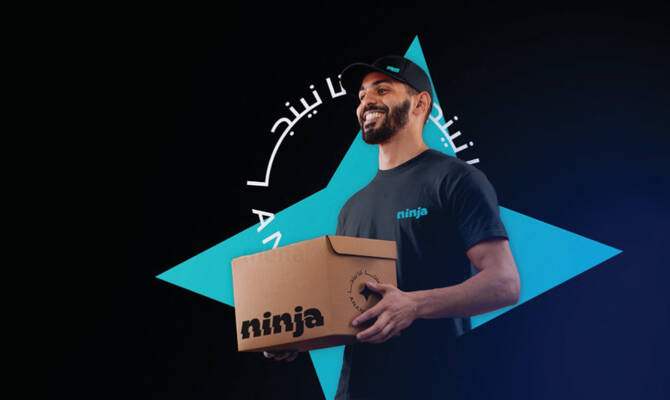
Saudi-based quick-commerce startup Ninja has raised $250 million in a funding round led by Riyad Capital, lifting its valuation to $1.5 billion and marking its emergence as the country’s latest technology unicorn.
Founded in 2022 by Saud Al Qahtani and Canberk Donmez, Ninja delivers groceries and daily essentials across Saudi Arabia, Bahrain, Qatar, and Kuwait, reflecting the region’s growing appetite for fast, tech-enabled consumer services.
The fresh capital will enable the company to scale logistics capabilities, expand into new geographies, and lay the groundwork for a planned public listing on the Saudi Exchange by 2027.
The transaction highlights Riyad Capital’s role as a prominent institutional investor in MENA startups, as well as Saudi Arabia’s rising stature as a venture capital hub as it diversifies its economy under Vision 2030.
PetroApp secures $50m to digitize fuel and fleet management
PetroApp, Saudi Arabia’s digital fuel and fleet management platform, has raised $50 million in a funding round led by Jadwa Investment through its GCC Diversified Private Equity Fund, with participation from Bunat Ventures.
Established in 2018 by Abdulaziz Al-Senan, PetroApp operates a cashless system designed to streamline corporate and government fleet payments while reducing fraud.
The platform also offers value-added vehicle services such as oil changes, car washes, and tire replacements.

Established in 2018 by Abdulaziz Al-Senan, PetroApp runs a cashless system designed to streamline corporate and government fleet payments. (Supplied)
The capital injection will support PetroApp’s retail launch within Saudi Arabia, accelerate its international expansion plans, and further develop its proprietary technology infrastructure.
Tariq Al-Sudairy, managing director and CEO of Jadwa Investment, said: “PetroApp presents a compelling investment opportunity, supported by a robust technology infrastructure and strong network effects.”
Abdulaziz Al-Senan, co-founder and CEO of PetroApp, described the partnership as a critical milestone, adding: “We are excited to embark on this partnership at a pivotal stage in PetroApp’s journey. Jadwa’s institutional expertise will be critical in strengthening our foundation, accelerating growth, and expanding our leadership in Saudi Arabia and beyond.”
Flawless raises $1.5m to expand AI-powered career guidance
Saudi Arabia-based Flawless has secured $1.5 million in pre-seed funding from a group of unnamed angel investors with an emphasis on early-stage innovation.
Founded by Shaimaa Al-Ghamdi, the platform combines generative artificial intelligence with principles of social psychology to deliver personalized career guidance to users seeking better-informed professional decisions.
Flawless evolved from a personal blog launched in 2023 to a fully operational digital business in 2024, targeting a gap in the market for data-driven career support solutions.
Al-Ghamdi said: “What began as a passion project is now a data-driven platform helping thousands make smarter career decisions.”
She added: “This funding validates our approach and gives us the fuel to scale responsibly and impactfully.”
The investment will be allocated to scaling the company’s technology infrastructure, refining its product offering, and recruiting new talent to grow operations.
Byzanlink raises $1m to build blockchain-based financial infrastructure
Dubai-based Byzanlink, a real-world asset tokenization platform, has closed a $1 million private funding round backed by Outlier Ventures, NTDP Saudi Arabia, Smart IT Frame, Sensei Capital, and several angel investors.
Founded in 2024 by Anbu Kannappan, the startup operates from Dubai Multi Commodities Centre and is focused on building infrastructure to tokenize traditional financial assets for both institutional and retail investors.

What began as a passion project is now a data-driven platform helping thousands make smarter career decisions.
Shaimaa Al-Ghamdi, Flawless founder
The company aims to improve market access, transparency, and operational efficiency through blockchain technology.
Byzanlink plans to allocate the proceeds toward product development, expanding integrations with ecosystem partners, and reinforcing compliance with evolving regulatory frameworks.
Kannappan said: “Support from such a diverse and forward-thinking group of partners is a strong signal for what we’re building. We believe the next generation of financial infrastructure will be powered by transparency, automation, and access. We’re committed to building that foundation.”
Idea-L secures $1m to scale venture creation platform
UAE-based idea-L has raised a $1 million pre-seed round from a group of undisclosed angel investors to advance its AI and Web3-powered venture creation platform.
Founded in 2024 by Peter Goodwin, Daniel Muller, and Mark Hill, idea-L is designed to help entrepreneurs transform early-stage concepts into investor-ready businesses through automation and digital collaboration tools.
The funding will be used primarily for technical hiring, platform enhancements, and the launch of new products intended to streamline venture creation workflows.
The company aims to position itself as a key enabler in the UAE’s growing startup ecosystem by combining generative AI and tokenized ownership structures.
InstaBank secures $15m to drive digital banking in Iraq
InstaBank, officially operating as Al-Fawr Digital Bank, has raised $15 million in funding to support the rollout and growth of its digital banking services in Iraq.
UAE-based EQIQ, a venture capital fund and venture builder, contributed $3 million as part of the round, which aims to transform Iraq’s underdeveloped banking sector.
Founded in 2025 by Hussain Qaragholi, InstaBank plans to use AI-powered tools and customer-centric design to deliver accessible, scalable financial services.
The digital bank will play a central role in EQIQ’s broader fintech strategy, which integrates banking, logistics, and social commerce solutions to accelerate financial inclusion across Iraq.
The investment underscores the rising investor interest in digitizing the country’s financial infrastructure and tapping into its large unbanked population.
EQIQ views InstaBank as a strategic asset to drive economic participation and modernize financial ecosystems.
AgriCash raises seed funding to scale AI-powered agri-fintech platform
Egypt-based agri-fintech platform AgriCash has secured an undisclosed amount of seed funding in a round led by Alex Angels, with participation from regional investors.
Founded in 2024 by Diaa Youssef and Mostafa El-Sehli, AgriCash offers farmers a digital platform combining financing solutions, AI-driven agronomic insights, crop insurance, and access to input markets.
The funding will help AgriCash expand its operations across Egypt and into neighboring markets, strengthen its AI infrastructure, and finalize integrations with insurance and banking partners.
The company’s flagship buy now, pay later model provides farmers with interest-free access to agricultural and livestock supplies for up to 12 months, with credit ceilings of up to 3 million Egyptian pounds ($60,777).
AgriCash aims to achieve 500 million Egyptian pounds in business volume by 2025 and plans to launch livestock financing in 2026 to consolidate its position as an end-to-end agri-finance platform serving smallholder farmers and commercial producers.



