

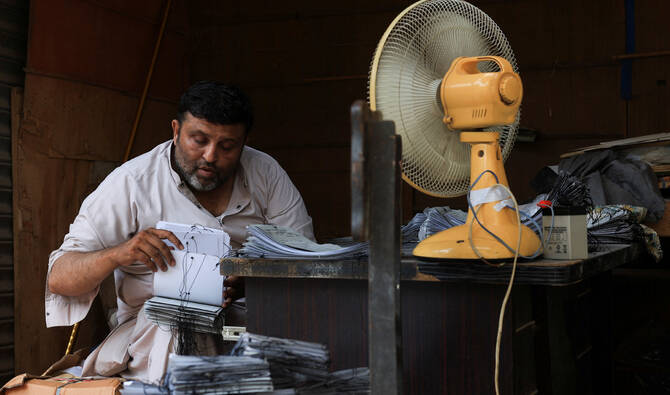

KARACHI: When the sun rises over the portside slums of Keamari in the Pakistani megacity of Karachi, 48-year-old mason Fazal Rahim steps out with his rusted tools into the searing heat.
By the time he returns home at night, drenched in sweat, there’s often no electricity to power even a single fan.
“It’s still unbearably hot and there’s no electricity either,” Rahim told Arab News.
“Our home turns into a hell, the children cry and heat rashes break out on their skin.”
As Pakistan’s largest city sweltered through a record-breaking heatwave in June, temperatures soared past 42 degrees Celsius (over 107°F), exposing a harsh urban reality: while the wealthy kept cool in air-conditioned homes, the poor suffered hours of unrelenting heat in overcrowded neighborhoods plunged into darkness by extended power outages.
Karachi’s two-tiered climate reality, shaped by class and access, now resembles what human rights advocates describe as “climate apartheid,” a term that captures how climate change disproportionately affects marginalized populations while the wealthy remain buffered.
Hospitals across the city, including the government-run Jinnah Postgraduate Medical Center (JPMC), saw a spike in heat-related illnesses.
“We had nearly a thousand patients last year who came in with heatstroke,” said Dr. Irfan Siddiqui, head of JPMC’s emergency department, citing a rise in cases of dehydration, food poisoning and heat exhaustion this year.
POWER DIVIDE
More than 90 percent of Pakistan’s international trade flows through Karachi, a city of over 20 million people and the country’s economic engine. But despite its centrality to Pakistan’s economy, the city’s basic infrastructure, especially in its low-income neighborhoods, is chronically neglected.
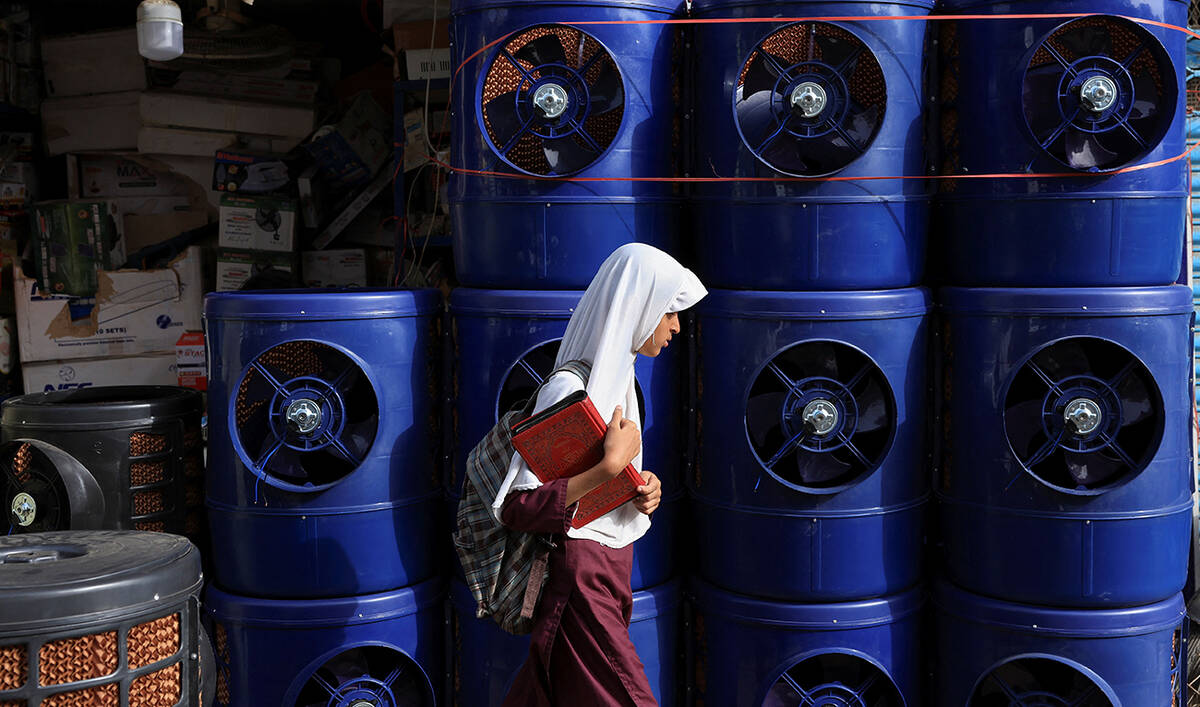
A student walks past a display of locally manufactured evaporative air coolers for sale, outside a shop, during a hot summer day, in Karachi, Pakistan on May 27, 2025. (REUTERS/File)
Some residents, like Rahim in Bhutta Village, reported only two hours of electricity in a full day last month. In stark contrast, affluent areas such as Clifton and Defense Housing Authority (DHA) remained largely unaffected by power outages, with many homes powered by private solar panels or diesel generators.
K-Electric, the city’s sole power distributor, insists the disparity is not based on class.
“The load-shedding schedule is purely determined on a commercial basis,” said Bilal Memon, a spokesperson for the utility. “Areas with higher theft and lower bill recovery face longer outages.”
Pakistan’s National Electric Power Regulatory Authority (NEPRA) confirmed in its latest State of Industry Report (2023) that Karachi faces some of the highest transmission and distribution losses among major cities — a result of illegal connections, aging infrastructure, and weak governance. The report also noted that high-loss areas tend to face longer outages as a penalty mechanism.
For those already on the margins, like Tahira Perveen, a widowed asthma patient residing in the low-income Manzoor colony, the unpredictability of the electricity supply can be dangerous.
“As for electricity, no one knows when it will come,” she said. “During the heat, it [the outage] happens all night and all day.”
A CITY GETTING HOTTER
Karachi is among the world’s ten fastest-warming megacities, according to urban climate assessments by the United Nations Environment Program. The city has warmed at nearly double Pakistan’s national average, with temperatures rising by approximately 0.34°C per decade since 1960, according to Sardar Sarfaraz, the former director of the Pakistan Meteorological Department.
The causes are well documented: unchecked urbanization, the destruction of green spaces, and widespread use of concrete that traps heat. Karachi lost over 20 percent of its tree cover between 2008 and 2019, according to satellite data analyzed by the Global Forest Watch platform.
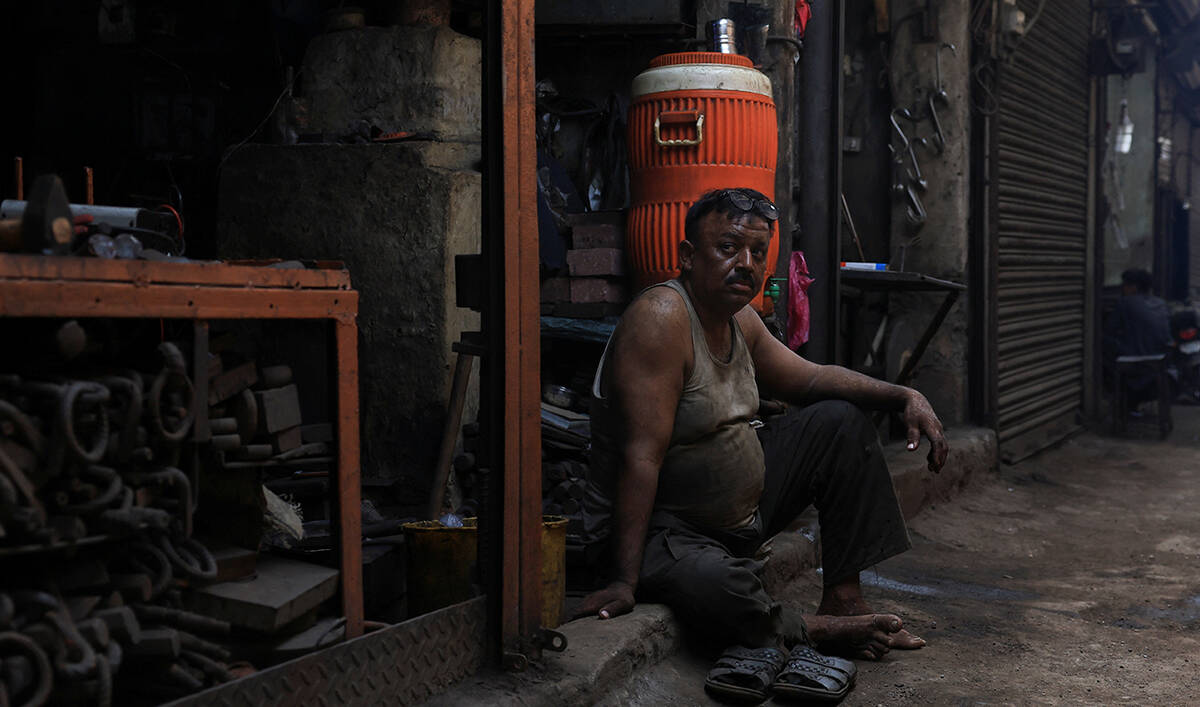
Man sits outside an iron hardware tools workshop, as he pauses during the power outage in hot weather in Karachi, Pakistan on June 17, 2025. (REUTERS/File)
“There are narrow lanes, very, very poorly ventilated houses, and it’s all a concrete jungle,” said Karachi-based climate expert Afia Salam.
“There is a segment, large segment of population, which is more impacted than the others. And then on top of it, if I put the gender lens on, the women are more impacted because culturally, they do not have access to the open spaces.”
Indeed, in the city’s informal settlements, women and children are often confined indoors, where poor ventilation and a lack of cooling options increase health risks during heatwaves.
CLIMATE INEQUALITY
Pakistan is ranked among the top ten countries most vulnerable to climate change, according to the Global Climate Risk Index by Germanwatch. Nearly 45 percent of its population lives below the poverty line, per the World Bank, and the country faces mounting challenges in coping with environmental shocks — from floods and droughts to rising temperatures.
In 2024, the International Monetary Fund approved $1.3 billion in climate-linked funding for Pakistan to support adaptation and resilience efforts. But activists say little climate funding is reaching those most in need.
“The policies being made don’t reflect the ground realities,” said Fatima Majeed, an activist working with coastal communities affected by rising sea levels and heat. “The people for whom these policies are intended are rarely consulted.”
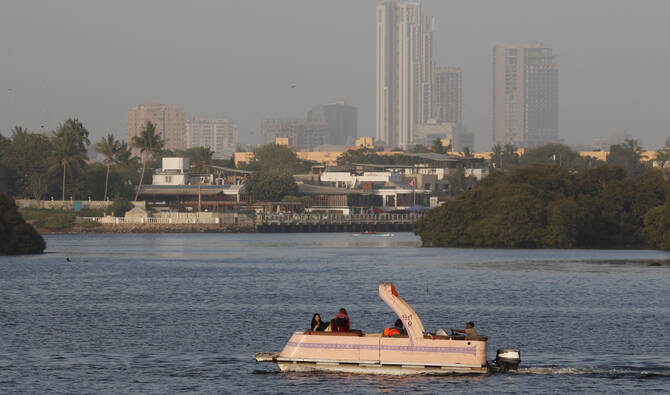
Locals ride on a boat during a hot summer day in Karachi, Pakistan on May 29, 2024. (REUTERS/File)
Her concerns were echoed by Yasir Husain, founder of the Karachi-based Climate Action Center.
“We find that the government is least interested in this,” he said. “When there are programs, there is funding. [But] that money is not used to help the vulnerable populations.”
Sindh’s Environment and Climate Change Secretary, Agha Shahnawaz Khan, pointed to ongoing efforts: penalizing smoke-emitting vehicles, tree plantation drives, mangrove restoration and solarizing public buildings.
“We will continue to lag behind until the community supports the government and the government takes proper initiatives,” he said.
COOLING FOR A FEW
Twelve kilometers from Rahim’s baking slum, Dr. Navaira Ali Bangash lives in comfort, her home equipped with air conditioners and backup power systems.
“We are probably the most privileged people who have air-conditioning installed at our homes, offices and even in our cars,” she said. “But then there are those underprivileged people... who cannot even afford basic fans.”
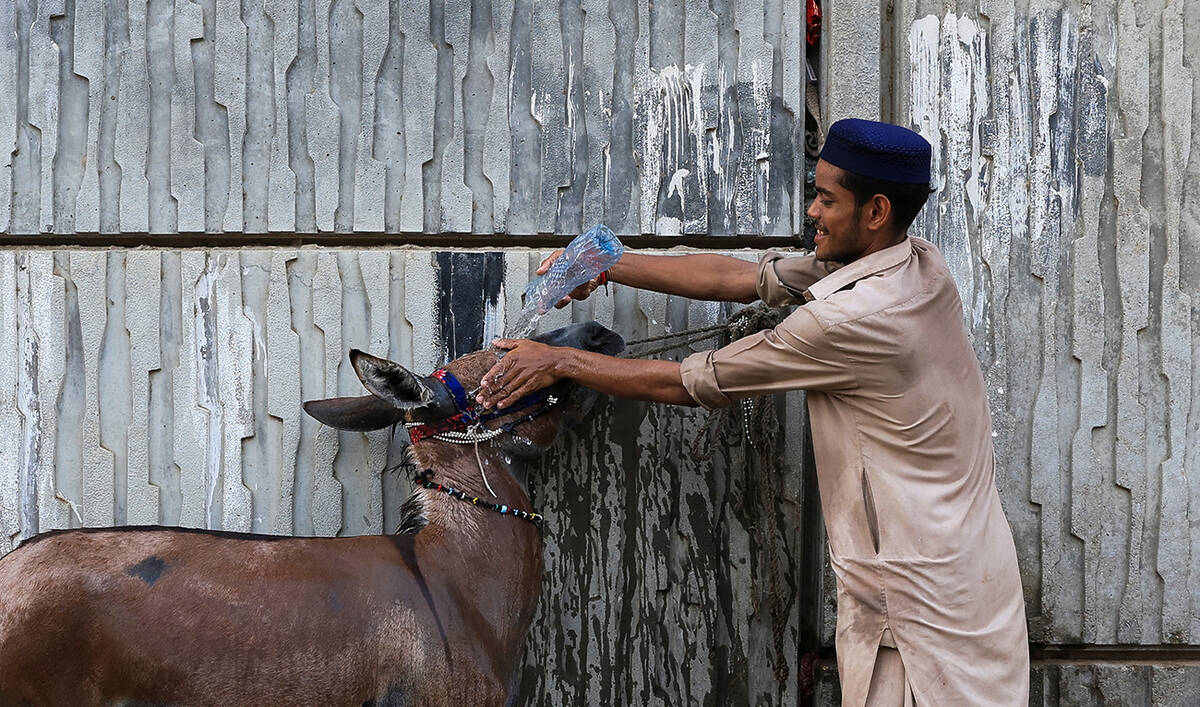
Teenager covers an eye of his pet donkey with his palm as he pours water to cool it off during a hot day in Karachi, Pakistan on June 16, 2025. (REUTERS/File)
While climate change is often described as a global challenge, in Karachi it is deeply local — a force that exposes long-standing inequalities in housing, infrastructure, and health care.
For Rahim, the national climate discourse and international funding commitments matter little. His immediate concern is whether the ceiling fan in his single-room home will run tonight.
“Electricity [outages] have made our lives miserable,” he said, his voice tired and defeated in the oppressive heat.


