

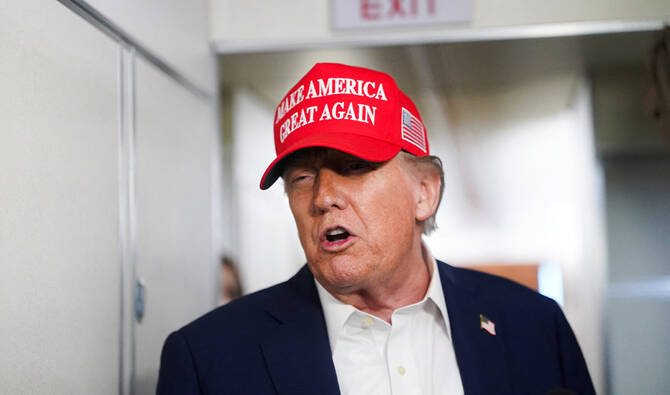

NEW JERSEY: US President Donald Trump said he had signed letters to 12 countries outlining the various tariff levels they would face on goods they export to the United States, with the "take it or leave it" offers to be sent out on Monday.
Trump, speaking to reporters aboard Air Force One as he traveled to New Jersey, declined to name the countries involved, saying that would be made public on Monday.
Trump had earlier on Thursday told reporters that he expected a first batch of letters to go out on Friday, a national holiday in the United States, though the date has now shifted.
In a global trade war that has upended financial markets and set off a scramble among policymakers to guard their economies, Trump in April announced a 10% base tariff rate and additional amounts for most countries, some ranging as high as 50%.
However, all but the 10% base rate were subsequently suspended for 90 days to allow more time for negotiations to secure deals.
That period ends on July 9, although Trump early on Friday said the tariffs could be even higher - ranging up to 70% - with most set to go into effect August 1.
"I signed some letters and they'll go out on Monday, probably twelve," Trump said, when asked about his plans on the tariff front. "Different amounts of money, different amounts of tariffs."
Trump and his top aides initially said they would launch negotiations with scores of countries on tariff rates, but the US president has soured on that process after repeated setbacks with major trading partners, including Japan and the European Union.
He touched on that briefly late on Friday, telling reporters: "The letters are better ... much easier to send a letter."
He did not address his prediction that some broader trade agreements could be reached before the July 9 deadline.
The shift in the White House's strategy reflects the challenges of completing trade agreements on everything from tariffs to non-tariff barriers such as bans on agricultural imports, and especially on an accelerated timeline.
Most past trade agreements have taken years of negotiations to complete.
The only trade agreements reached to date are with Britain, which reached a deal in May to keep a 10% rate and won preferential treatment for some sectors including autos and aircraft engines, and with Vietnam, cutting tariffs on many Vietnamese goods to 20% from his previously threatened 46%. Many US products would be allowed to enter Vietnam duty free.
A deal expected with India has failed to materialize, and EU diplomats on Friday said they have failed to achieve a breakthrough in trade negotiations with the Trump administration, and may now seek to extend the status quo to avoid tariff hikes.


