Death toll from Pakistan building collapse rises to 18 as rescuers search for survivors

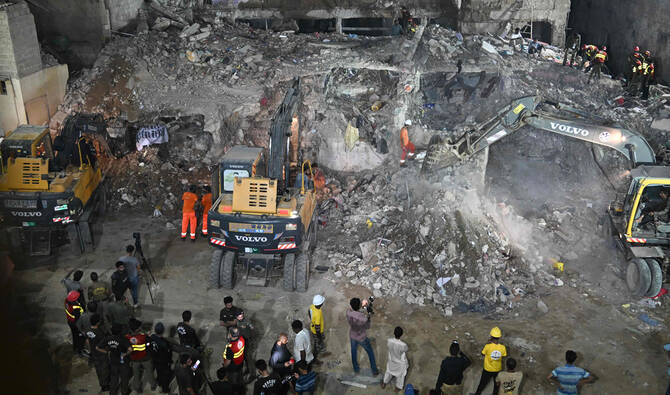
Rescue workers search for victims amidst the debris of a collapsed residential building in Karachi on July 4, 2025. (AFP)
Short Url
Updated 05 July 2025
Follow

Death toll from Pakistan building collapse rises to 18 as rescuers search for survivors

  • Friday’s incident was the latest in a string of deadly building collapses in Karachi
  • It laid bare the issue of unsafe housing in the city, home to over 20 million people

KARACHI: The death toll from a five-storey building collapse in the southern Pakistani city of Karachi rose to 18 on Saturday, officials said, after rescuers pulled more bodies from the rubble.

The Fotan Mansion residential building, where several families were said to be living, crumbled around 10am on Friday in the impoverished Lyari neighborhood of the city.

Rescue workers, along with residents of the area, worked through the night to find survivors and bodies after the incident, which has once again laid bare the issue of unsafe housing in Karachi.

“With two more bodies recovered from the debris, the death toll from the building collapse has risen to 18,” Dr. Summayia Syed, the Karachi police surgeon, told Arab News on Saturday evening.

“The victims have been identified as Rohit, 30, and his wife, Geeta, 24.”
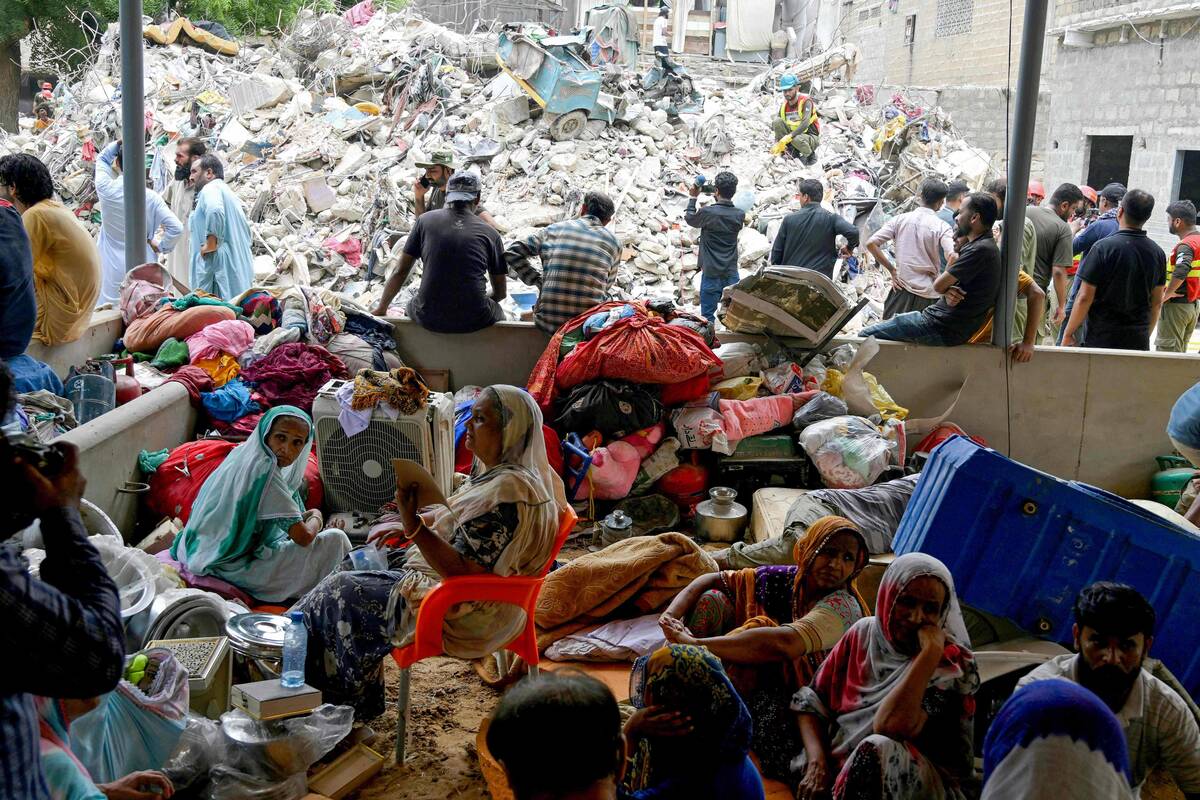


Families wait amidst the debris of a collapsed building in Karachi on July 5, 2025. (AFP)

Karachi Mayor Murtaza Wahab said the rescue operation was still ongoing at the site of the collapse.

Many of the occupants were members of the low-income Hindu minority community and residents estimated that around 40 people were inside when the building collapsed.

According to the Sindh Building Control Authority (SBCA), Fotan Mansion had been declared unsafe three years ago.

“This building was declared dangerous by the SBCA in 2022 and had been served multiple notices over the years,” SBCA spokesperson Shakeel Dogar told Arab News.


A neighbour narrates what he witnessed whilst a building collapsed in Karachi on July 5, 2025. (AFP)

“Before the recent rains, public announcements were also made in the area, but unfortunately, no one was willing to vacate.”

Friday’s incident is the latest in a string of deadly building collapses in Karachi.

In February 2020, a five-storey building collapsed in Rizvia Society, killing at least 27 people. The following month, another residential structure came down in Gulbahar, claiming 16 lives. In June 2021, a three-storey building in Malir collapsed, killing four. And just last year, in August, a building collapse in Qur’angi led to at least three deaths.


Dev Raj waits for recovery of his daughter who is stuck under the rubble of a collapsed building in Karachi on July 5, 2025. (AFP)

Mayor Wahab said on Friday evening that rescue efforts remained their top priority, with accountability and investigation to follow.

“Once we’re done with the rescue aspect, we will focus on who was responsible for this negligence or omission,” he added.
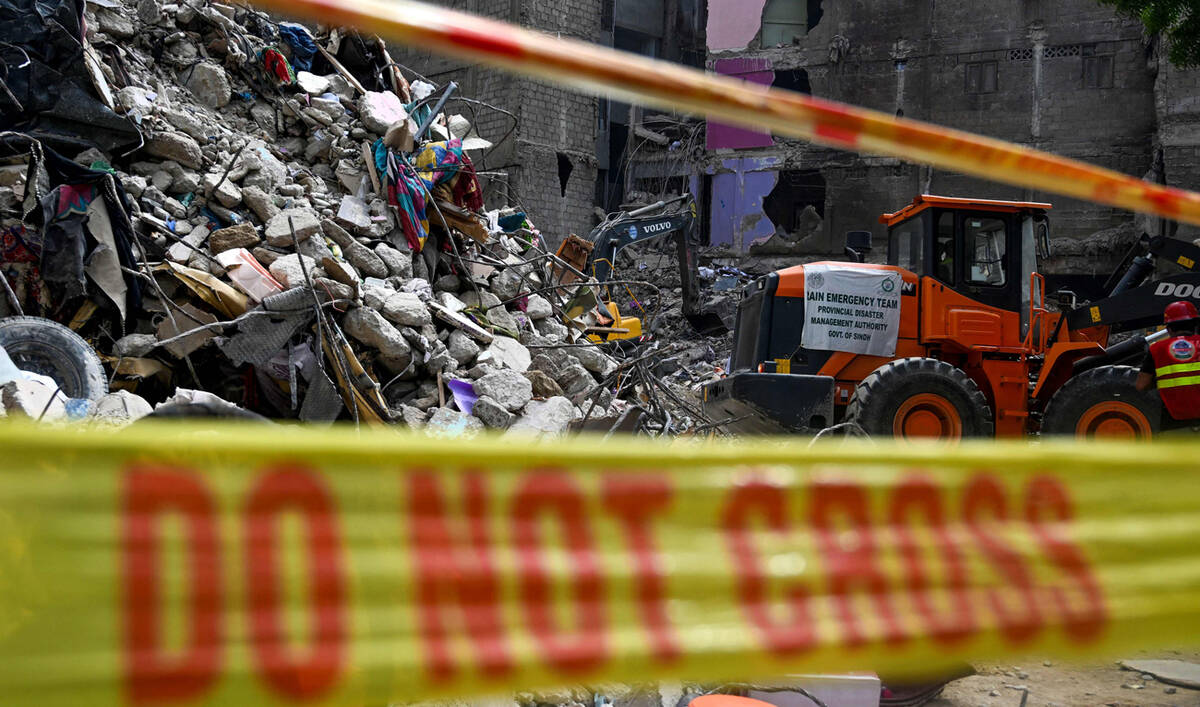


A rescue worker is pictured during a search operation amidst the debris of a collapsed building in Karachi on July 5, 2025. (AFP)


Pakistan mulls energy conservation measures as oil prices rise, Middle East conflict intensifies

Updated 6 sec ago
Follow

Pakistan mulls energy conservation measures as oil prices rise, Middle East conflict intensifies

  • Pakistan’s finance minister, petroleum minister meet Sindh chief minister, provincial officials to discuss energy crisis
  • Diplomatic contacts underway with Saudi Arabia, Oman, UAE for alternative fuel supplies, center tells Sindh government

ISLAMABAD: Pakistan’s Sindh government and the federal government discussed energy conservation measures amid a sharp rise in global oil prices on Sunday, the Sindh chief minister’s spokesperson said, as the conflict between Iran, Israel and the US intensifies. 

Fuel prices jumped more than 10 percent worldwide this week as oil rose above $90 a barrel, the highest in years. Pakistan on Friday increased petrol and diesel prices by Rs55 ($0.20) per liter each, as key energy shipping routes such as the Strait of Hormuz remain disrupted. 

Finance Minister Muhammad Aurangzeb and Petroleum Minister Ali Pervaiz Malik met Sindh Chief Minister Murad Ali Shah and other senior members of the Sindh government in Karachi. Participants reviewed the impact of escalating tensions in Iran on Pakistan’s energy supplies and the overall economic situation of the country. 

Information Minister Attaullah Tarar said on Saturday that the prime minister has asked his administration to formulate a strategy for fuel conservation and austerity in government affairs within 48 hours.

“The Sindh chief minister and federal ministers discussed emergency conservation measures to deal with a potential energy crisis,” the chief minister’s spokesperson said in a statement. 

As per the statement, the federal government informed the meeting that crude oil prices could reach as high as $120 per barrel if the Middle East conflict intensifies.
 
Aurangzeb said the federal government is closely monitoring global energy markets, adding that Islamabad is preparing alternative plans to manage the financial impact of rising oil prices.

The federal government informed participants of the meeting that three petrol cargo ships are expected to arrive in Pakistan by Monday. 

Malik revealed that Qatar’s move to declare force majeure on gas exports this week could disrupt LNG supplies. 

“Aurangzeb said Pakistan’s monthly oil import bill could rise to $600 million,” the statement said.

He said a joint dashboard is being developed with provinces to monitor fuel reserves, while both sides decided to increase coordination to prevent hoarding of petroleum products.

“Federal ministers said diplomatic contacts are underway with Saudi Arabia, Oman, and the UAE for alternative fuel supplies,” the statement said.

“Efforts are also being made to ensure oil supplies through routes other than the Strait of Hormuz, they added.”

Meanwhile, Malik said Pakistan will request relief from the International Monetary Fund regarding the petroleum levy, as it holds review talks over its External Fund Facility (EFF) program. 

The federal government’s delegation also included senior officials of the Oil and Gas Regulatory Authority, Sui Southern Gas Company and the Petroleum Division.