

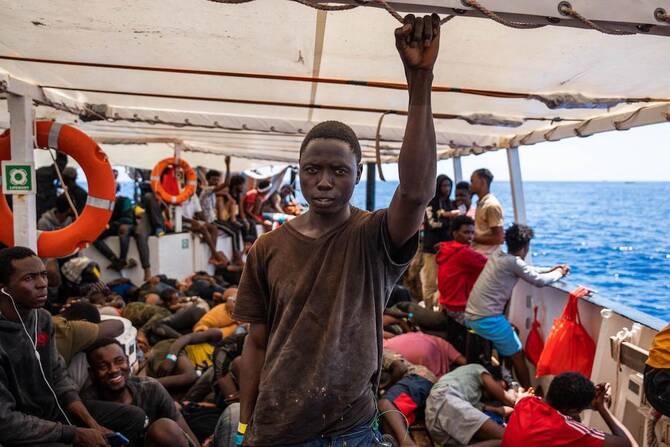

BERLIN: Germany is cutting financial support for charities that rescue migrants at risk of drowning in the Mediterranean, saying it will redirect resources to addressing conditions in source countries that spur people to leave.
For decades, migrants driven by war and poverty have made perilous crossings to reach Europe’s southern borders, with thousands estimated to die every year in their bid to reach a continent grown increasingly hostile to migration.
“Germany is committed to being humane and will help where people suffer but I don’t think it’s the foreign office’s job to finance this kind of sea rescue,” Foreign Minister Johann Wadephul told a news conference.
“We need to be active where the need is greatest,” he added, mentioning the humanitarian emergency in war-shattered Sudan.
Under the previous left-leaning government, Germany began paying around 2 million euros ($2.34 million) annually to non-governmental organizations carrying out rescues of migrant-laden boats in trouble at sea.
For them, it has been a key source of funds: Germany’s Sea-Eye, which said rescue charities have saved 175,000 lives since 2015, received around 10 percent of its total income of around 3.2 million euros from the German government.
Chancellor Friedrich Merz’s conservatives won February’s national election after a campaign promising to curb irregular migration, which some voters in Europe’s largest economy see as being out of control.
Even though the overall numbers have been falling for several years, many Germans blame migration-related fears for the rise of the far-right Alternative for Germany (AfD), now the second largest party in parliament.
Many experts say that migration levels are mainly driven by economic and humanitarian emergencies in the source countries, with the official cold shoulder in destination countries having had little impact in deterring migrants.
Despite this, German officials suggest that sea rescues only incentivise people to risk the sometimes deadly crossings.
“The (government) support made possible extra missions and very concretely saved lives,” said Gorden Isler, Sea-Eye’s chairperson. “We might now have to stay in harbor despite emergencies.”
The opposition Greens, who controlled the foreign office when the subsidies were introduced, criticized the move.
“This will exacerbate the humanitarian crisis and deepen human suffering,” said joint floor leader Britta Hasselmann.


