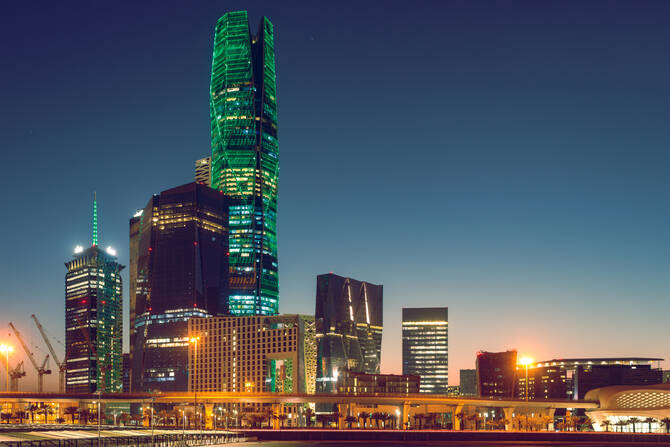

RIYADH: Saudi Arabia is projected to attract 2,400 high-net-worth individuals in 2025, marking a sharp increase from the 300 millionaires estimated to have relocated to the Kingdom in 2024.
This eightfold rise positions Saudi Arabia as the fastest climber in the Henley Private Wealth Migration Report 2025, published by Henley & Partners in collaboration with New World Wealth.
Across the Gulf, the UAE continues to lead globally, forecast to attract 9,800 millionaires this year, the highest net inflow worldwide, followed by the US with 7,500.
HNWIs are relocating to the Kingdom due to its ambitious Vision 2030 agenda, pro-business reforms, and growing investment opportunities. The surge in inbound wealth reflects the region’s growing appeal to both returning nationals and international investors, particularly in Riyadh and Jeddah.
Saudi Arabia has also introduced attractive residency programs, tax incentives, and a push to diversify the economy beyond oil.

Switzerland is projected to gain 3,000 millionaires, while Italy is set to receive 3,600. File/Reuters
Juerg Steffen, CEO of Henley & Partners said that 2025 marks a “pivotal moment” for global wealth migration, adding: “It reflects a deepening perception among the wealthy that greater opportunity, freedom, and stability lie elsewhere.”
Mega projects like NEOM, improved infrastructure, and a focus on tourism and fintech are drawing international interest.
Additionally, the Kingdom offers political stability, regional influence, and a strategic location, making it an increasingly attractive destination for global wealth.
Henley & Partner’s report aligns with a recent study by consulting firm Capgemini, which highlighted the Middle East’s growing appeal to next-generation high-net-worth individuals, citing geopolitical security and economic stability as key drivers of investment interest in the region.
The analysis, published earlier in June, pointed specifically to Saudi Arabia’s aggressive efforts to attract global wealth through its economic diversification strategies, positioning the Kingdom as a rising center for international capital.
Capgemini also noted that the UAE is capitalizing on the same trend, with both Gulf economies drawing increased interest from global investors seeking high-growth markets and stable financial environments.
UK biggest loser amid global shift
Henley & Partner’s recent report predicts that an unprecedented 142,000 millionaires across the world are expected to relocate in 2025.
While Gulf countries and select European destinations see rising inflows, several traditional wealth hubs are witnessing record outflows.
The UK is forecast to lose 16,500 high-net-worth individuals, the highest on record, more than doubling China’s projected outflow of 7,800.
This reversal comes after years of the UK being a net destination for wealth, with recent tax reforms — including increases to capital gains and inheritance taxes and tighter regulations on non-domiciled residents — prompting an accelerated departure.

The UK is forecast to lose 16,500 high-net-worth individuals, the highest on record. Getty
“Since 2014, the number of resident millionaires in the UK dropped by 9 percent compared with the W10’s global average growth of 40 percent,” said Trevor Williams, chair and co-founder at FXGuard, a digital foreign exchange risk manager, according to the report.
The shift is part of a broader trend in Europe, where France, Spain, and Germany are also expected to experience net outflows of wealthy individuals.
In contrast, Southern Europe is emerging as a new hub for global wealth.
Switzerland is projected to gain 3,000 millionaires, while Italy is set to receive 3,600.
Portugal and Greece are expected to receive 1,400 and 1,200, respectively.
Smaller markets such as Malta, Montenegro, and Latvia are also benefiting from favorable tax regimes and investment migration programs.
Beyond Europe, Thailand and Japan are increasingly preferred by wealthy individuals in Asia.
Thailand is forecast to gain 450 millionaires, and Japan 600, driven by political stability and high-end real estate.
Hong Kong is also showing signs of recovery, with inflows from mainland Chinese executives linked to the region’s growing tech sector. However, South Korea is set to see a significant outflow of 2,400 millionaires, reflecting broader economic and political uncertainty.

Hong Kong is also showing signs of recovery, with inflows from mainland Chinese executives linked to the region’s growing tech sector. File/Reuters
Other countries in Asia and the Middle East, including Vietnam, Pakistan, Iran, and Lebanon, are expected to see continued outflows of wealthy individuals, many relocating to the UAE or the US.
Misha Glenny, rector at the Institute for Human Sciences in Vienna, said recent geopolitical developments, including tensions in the Middle East, are contributing to a reshuffling of wealth migration patterns, according to the report.
In the Americas, Central American and Caribbean jurisdictions such as Costa Rica, Panama, and the Cayman Islands are expected to attract record numbers of high-net-worth individuals.
Despite a lower-than-usual forecast for inflows, the US remains a top destination for relocating millionaires.
Parag Khanna, founder and CEO of AlphaGeo, an AI-powered predictive analytics platform for investing, noted the ongoing role of Asia in shaping global wealth trends.
“Asia’s wealth landscape is a dynamic blend of ambition and caution. Singapore and Japan are solidifying their reputations as global wealth havens, while China and India are balancing domestic opportunity with the desire for diversification,” Khanna was quoted as saying in the report.