- Iran and Israel agreed a ceasefire on Tuesday ending 12 days of tit-for-tat strikes
JERUSALEM: Israeli Prime Minister Benjamin Netanyahu declared a “historic victory” against Iran despite a US intelligence report concluding that American strikes set back Tehran’s nuclear program by just a few months.
Iran and Israel agreed a ceasefire on Tuesday ending 12 days of tit-for-tat strikes, after US President Donald Trump joined the conflict with bunker-busting bombs at the weekend that he said destroyed key Iranian nuclear sites.
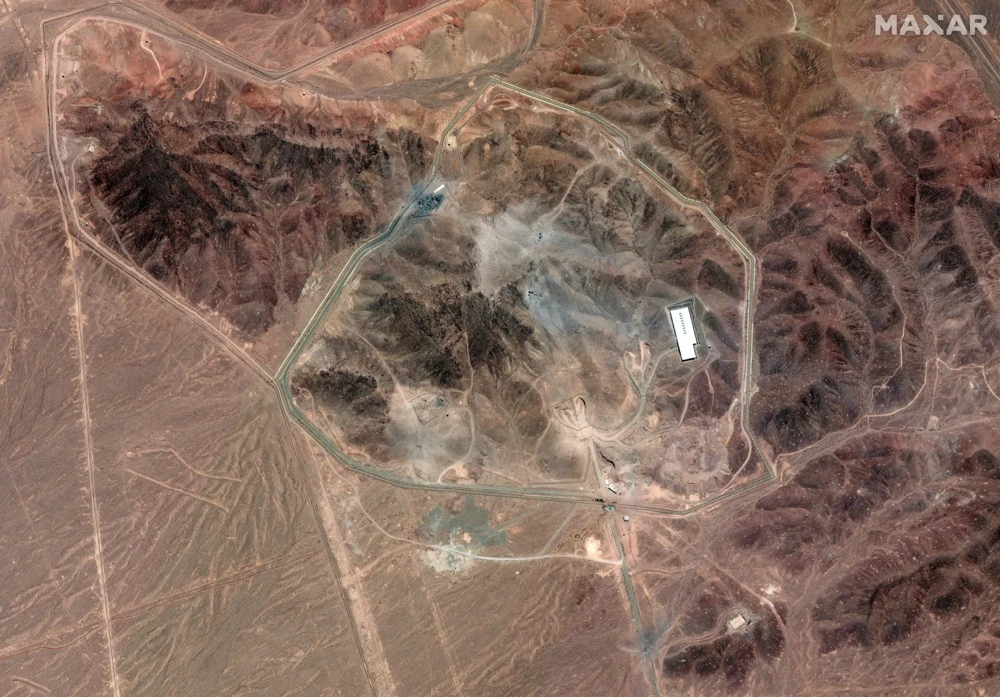
A classified preliminary US intelligence report however, concluded that American strikes on Iran set back its nuclear program by just a few months.
White House Press Secretary Karoline Leavitt confirmed the authenticity of the assessment but said it was “flat-out wrong.”
In an address to the nation after the ceasefire announcement, Netanyahu said “Iran will not have a nuclear weapon.”
“We have thwarted Iran’s nuclear project,” he said. “And if anyone in Iran tries to rebuild it, we will act with the same determination, with the same intensity, to foil any attempt.”
Israel had said its bombing campaign, which began on June 13, was aimed at preventing Iran from acquiring a nuclear weapon, an ambition Tehran has consistently denied.
Israel’s military said that its strikes had set back Iran’s nuclear program “by years.”
After Trump angrily berated both sides for early violations of the truce on Tuesday, Tehran announced it would respect the terms of the deal if Israel did the same, while Israel said it had refrained from further strikes.
Iranian President Masoud Pezeshkian said his country was willing to return to negotiations over its nuclear program, but that his country would continue to “assert its legitimate rights” to the peaceful use of atomic energy.
US media on Tuesday cited people familiar with the Defense Intelligence Agency findings as saying the American strikes did not fully eliminate Iran’s centrifuges or stockpile of enriched uranium.
The strikes sealed off entrances to some facilities without destroying underground buildings, according to the report.
White House Press Secretary Leavitt responded on social media: “The leaking of this alleged assessment is a clear attempt to demean President Trump, and discredit the brave fighter pilots who conducted a perfectly executed mission to obliterate Iran’s nuclear program.”
While Iran and Israel have been locked in a shadow war for decades, their 12-day conflict was by far the most destructive confrontation between them.
Israeli strikes hit nuclear and military targets — killing scientists and senior military figures — as well as residential areas, prompting waves of Iranian missile fire on Israel.
The war culminated in US strikes on underground Iranian nuclear sites using bunker-busting bombs — which Israel lacks — followed by an Iranian reprisal targeting the largest US military facility in the Middle East.
Trump shrugged off that response as “weak,” thanking Tehran for giving advance notice and announcing the contours of the ceasefire just hours later.
Some Israelis welcomed the prospect of a truce.
“Everyone is tired. We just want to have some peace of mind,” said Tel Aviv resident Tammy Shel. “For us, for the Iranian people, for the Palestinians, for everyone in the region.”
In Iran, people remained uncertain whether the peace would hold.
Amir, 28, fled from Tehran to the Caspian Sea coast and told AFP by phone, “I really don’t know... about the ceasefire but honestly, I don’t think things will return to normal.”
Israeli strikes on Iran killed at least 610 civilians and wounded more than 4,700, according to the health ministry.
c, according to official figures and rescuers.
The international community reacted with cautious optimism to the truce.
Saudi Arabia and the European Union welcomed Trump’s announcement, while Kremlin spokesman Dmitry Peskov said Russia hoped “that this will be a sustainable ceasefire.”
But French President Emmanuel Macron warned there was an “increased” risk that Iran would attempt to enrich uranium secretly following the strikes on its nuclear sites.
After the truce was announced, Israel’s military chief Eyal Zamir said Israel’s focus would now shift back to Gaza.
The Israeli opposition, the Palestinian Authority and the main group representing the families of Israeli hostages all called for a Gaza truce to complement the Iran ceasefire.