

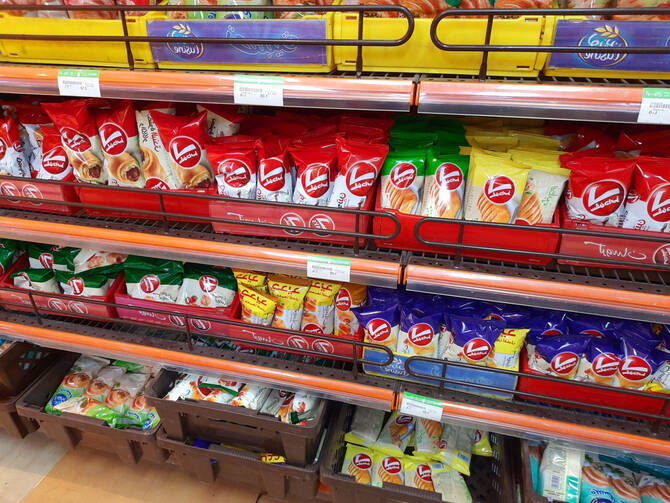

RIYADH: Consumer spending in Saudi Arabia remained resilient in the year to March, with outlays on low-cost goods rising 3.3 percent, according to a new report by NielsenIQ.
The analysis by the consumer intelligence company showed that spending on tech and durables also rose by 0.2 percent.
The findings are in line with data recently released by the Saudi Central Bank, which showed that Saudi consumer spending hit an all-time high in March, surging 17 percent to SR148 billion ($39.45 billion) — the highest monthly figure since May 2021 — before easing to SR113.9 billion in April.
The trend is further supported by the increased use of digital point-of-sale transactions and rising e-commerce activity through Mada card payments.
In NielsenIQ’s report, Andrey Dvoychenkov, general manager at the firm, credited the strategic visions and initiatives across the region for helping to drive continued economic momentum.
“We’re seeing strong growth in both premium and value segments, and a rapid evolution in retail channels — especially online. For brands, success hinges on relevance, agility, and a deep understanding of consumer expectations,” Dvoychenkov added.
The report also revealed that in the UAE spending on so-called fast-moving consumer goods climbed 7 percent, while tech and durables outlays reached $5.3 billion — up 2 percent year on year.
Top product trends
In Saudi Arabia, category performance pointed to changing consumption priorities. Petcare saw the strongest growth at 10 percent, followed by snacking at 9 percent, while paper products and home care posted declines.
In the UAE’s fast-moving consumer goods growth was driven by higher spending on snacking, beverages, dairy, and frozen foods, with personal care up 6 percent.
Growth in tech and durables was led by smartphones, media tablets, vacuum cleaners, and headsets.
Retail formats are evolving, with traditional trade channels in the UAE posting 10 percent growth in fast-moving consumer goods — outpacing organized retail at 3.2 percent — while tech and durables growth remained evenly distributed across formats.
E-commerce continues to expand, accounting for 30 percent of sales of tech and durables and 11 percent of fast-moving consumer goods in the UAE — up from 9 percent a year ago.
In Saudi Arabia, tech and durables e-commerce sales rose 7.7 percent, and fast-moving consumer goods’ online share increased by 1.4 percentage points.
More choice for consumers
NielsenIQ’s latest report showed that Saudi Arabia is now home to over 10,500 active brands, up 5 percent year over year, and nearly 100,000 stock keeping units, or SKUs.
In the UAE, brand count rose 6 percent to 13,000, with SKUs reaching 130,000. In tech and durables, brand activity expanded 18 percent in the UAE and 21 percent in Saudi Arabia, with both markets seeing SKU growth of more than 50 percent.
Consumer spending is increasingly polarized between value and premium segments. Both Saudi Arabia and the UAE recorded double-digit growth in these areas within fast-moving consumer goods.
In tech and durables, value-focused categories grew 6 percent in Saudi Arabia and 3 percent in the UAE, underscoring a heightened sensitivity to price and increased availability of cost-effective options.
The NielsenIQ’s findings backup a 2024 joint report by UAE-based gifting marketplace Flowwow and partner marketing platform Admitad which showed that online order volumes rose by 9 percent in Saudi Arabia and 7 percent in the UAE, highlighting the foundational strength of digital consumer activity in both markets.
An analysis of over 6.8 million transactions across the Middle East and North Africa placed Saudi Arabia, the UAE, and Kuwait among the top contributors by gross merchandise value, reflecting high levels of consumer engagement and sustained investment in digital channels.
Consumer confidence high
Saudi Arabia’s growth aligns with continued positive readings in consumer sentiment. The May 2025 Primary Consumer Sentiment Index, released by Ipsos, recorded a score of 72.2, marginally down from 72.4 in April.
The Kingdom remains among the top-performing countries globally on key economic indicators, with 64 percent of respondents rating the current economy as strong.
Additionally, 40 percent said their personal financial situation is strong, and 77 percent felt more confident about their ability to invest in the future compared to six months ago.
Looking ahead, 84 percent expect their local economy to strengthen over the next six months, though confidence in job security has softened slightly, particularly among resident Arab and Asian expatriates.
The region’s growing economic appeal has intensified competition, particularly in the fast-moving consumer goods sector.
As economic growth in the Gulf continues to outpace the global average — 3 percent for Saudi Arabia and 4 percent for the UAE in 2025, compared to 3.2 percent globally — brands face a growing need to adapt strategies to navigate a digitally connected, value-conscious, and increasingly competitive consumer environment.


