

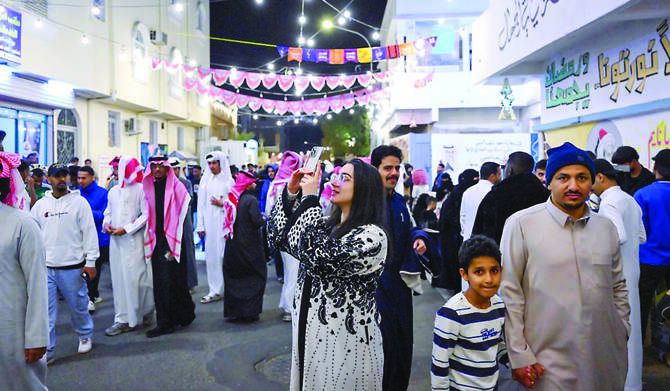

ALKHOBAR: As fasting hours compress daytime activity, engagement across social media platforms shifts sharply into the night. Posting schedules change and tone softens while interaction peaks after Taraweeh prayers and again before sahoor.
A previous Arab News report on Ramadan consumer trends highlighted a rise in digital transactions and e-commerce during the holy month, particularly in evening hours. The same behavioral logic applies to content consumption. When spending shifts to night, scrolling follows. Platforms such as TikTok, Instagram and Snapchat see stronger late-night engagement, while afternoon activity slows noticeably.
For creators, Ramadan requires strategic recalibration.

Short-form Qur’an challenges, in which users share daily reading goals, have become recurring Ramadan trends. (Supplied)
“I don’t use my normal schedule,” said Sara Al-Harbi, 26, a Riyadh-based lifestyle content creator. “If I post before iftar, engagement drops. After Taraweeh, people are active. That’s when interaction increases.”
Timing, however, is only part of the adjustment.
Content tone changes noticeably during Ramadan. Food remains dominant, but presentation shifts from aspirational dining to practical sahoor meals, hydration reminders and realistic kitchen routines.

Ramadan’s social media surge in Saudi Arabia is culturally anchored. (Supplied)
Short clips showing quick meal preparation before fajr frequently outperform highly produced content.
Religious participation also takes on structured digital forms. Short-form Qur’an challenges, in which users share daily reading goals, have become recurring Ramadan trends. They function as informal accountability systems, blending private worship with public encouragement.
“I joined a Qur’an reading challenge because I kept seeing it on my feed,” said Hassan Al-Mutairi, 22, a university student in Dammam. “Posting daily progress helped me stay consistent.”

Creators report that casual late-night recordings frequently generate stronger responses than carefully planned campaigns. (Supplied)
Arab News has previously reported that Ramadan represents the peak season for digital platforms in the Kingdom, with increased reliance on mobile apps and online transactions.
While those reports focused primarily on commerce, the behavioral shift extends into content creation. Higher nighttime app usage translates into higher engagement for creators and brands.
Businesses adjust accordingly. Restaurants promote sahoor offers close to midnight. Fitness instructors publish fasting-friendly workout plans. Wellness accounts share advice on energy management and sleep cycles.
Campaign timing increasingly aligns with prayer schedules rather than conventional office hours. Audience expectations also evolve during Ramadan.
Creators report that casual late-night recordings frequently generate stronger responses than carefully planned campaigns. Videos filmed in quiet kitchens or dim living rooms resonate because they mirror lived reality during fasting.
“Ramadan engagement is different,” said Reem Al-Otaibi, 31, a Jeddah-based social media strategist. “Users are more reflective. Highly polished content does not always perform well; simple, relatable videos often connect more.”
The shift is not purely commercial; it is communal.
Comment sections during Ramadan often become spaces for shared reminders and encouragement. Users exchange duas, reading updates and motivational messages. Compared with other months, the tone is noticeably calmer.
For Saudis living independently or studying abroad, social media reduces distance.
“Seeing everyone post about iftar makes you feel included,” Al-Mutairi said. “Even if you’re not with family, you feel part of it.”
Unlike global digital trends driven primarily by algorithm changes, Ramadan’s social media surge is structured around ritual. The fasting schedule dictates waking hours. Waking hours dictate posting patterns. Cultural timing overrides algorithmic timing.
For brands, the lesson is timing; for creators, it is authenticity. And for audiences, it is participation.
Ramadan’s social media surge in Saudi Arabia is not random or purely algorithmic. It is seasonal, measurable and culturally anchored.


