

Pakistan extends airspace closure for Indian aircraft until July 23

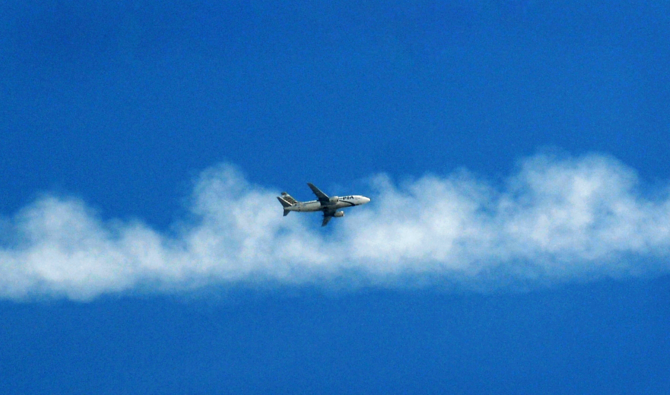
A Pakistani airplane flies over Islamabad on January 23, 2009. (AFP/ FILE)
Short Url
Updated 23 June 2025
Follow

Pakistan extends airspace closure for Indian aircraft until July 23

  • The restriction was first imposed in Apr. as part of tit-for-tat measures by India and Pakistan after an attack in disputed Kashmir
  • The attack, which India blamed on Pakistan without offering evidence, led to a four-day military conflict between the two countries in May

ISLAMABAD: Pakistan has extended for the second time its airspace ban on Indian aircraft until July 23, the Pakistan Airports Authority (PAA) said on Monday, citing continued tensions between the two countries.

The restriction was first imposed on Apr. 24 as part of a series of tit-for-tat measures announced by both India and Pakistan, days after an attack in Indian-administered Kashmir.

India blamed Pakistan for the assault that killed 26 tourists, Islamabad denied the allegation and called for a credible international probe into the incident. Both countries later engaged in a four-day military conflict in May.

“The ban on Indian aircraft from entering Pakistani airspace has been extended by one month,” the PAA said in a statement. “Pakistani airspace will remain closed to Indian aircraft until July 23, 2025.”

The ban applies to passenger and military aircraft operated by Indian airlines, according to the PAA. A Notice to Air Missions (NOTAM) has also been issued in this regard.

“Any aircraft registered in or leased by India would also be prohibited from using the Pakistani airspace,” the authority added.

Pakistan had previously extended the ban till June 24. It has forced Indian airlines to reroute their flights, resulting in increased fuel consumption, longer travel times and higher operational costs.

Air India, which operates numerous flights to Europe and North America, estimated in May that the airspace ban could lead to approximately $600 million in additional expenses over the course of a year and requested compensation from the Indian government.


Bangladesh approves new rice imports from Pakistan amid price pressures

Updated 23 December 2025
Follow

Bangladesh approves new rice imports from Pakistan amid price pressures

  • The deal follows Bangladesh’s resumption of direct rice trade with Pakistan earlier this year ⁠for the first time since independence in 1971
  • Diplomatic ties between the two nations have improved since the ouster of prime minister Sheikh Hasina after mass protests last year

DHAKA: Bangladesh has approved the import of 50,000 metric tons of white rice from Pakistan under a government-to-government deal as ​part of efforts to stabilize domestic prices, officials said on Tuesday.

The Cabinet Committee on Government Purchase cleared the deal at $395 per ton, reinforcing Dhaka’s renewed trade engagement with Islamabad.

Rice prices in Bangladesh have jumped by between 15 percent and 20 percent over ‌the past ‌year, with medium-quality ‌rice ⁠selling ​at about ‌80 taka ($0.66) per kilogram. Despite increased imports and the removal of duties to ease supply constraints, prices for the staple grain remain stubbornly high.

The deal follows Bangladesh’s resumption of direct rice trade with Pakistan earlier this year ⁠for the first time since independence in 1971. In ‌February, it imported 50,000 ‍tons of rice from ‍Pakistan at $499 per ton under a ‍similar agreement.

Diplomatic ties between the two South Asian nations have improved since an interim government led by Nobel laureate Muhammad Yunus took office after ​mass protests forced then prime minister Sheikh Hasina to flee to neighboring ⁠India last year.

Formerly East Pakistan, Bangladesh gained independence after a nine-month war in 1971, and relations with Pakistan have remained fraught in the decades since the conflict.

Separately, the government approved another 50,000 tons of parboiled rice through an international tender, part of a series of recent purchases aimed at cooling local prices. India’s Pattabhi Agro Foods secured ‌the contract with the lowest bid of $355.77 per ton.