SEOUL: South Korean President Lee Jae Myung nominated a five-term liberal lawmaker as defense minister Monday, breaking with a tradition of appointing retired military generals.
The announcement came as several prominent former defense officials, including ex-Defense Minister Kim Yong Hyun, face high-profile criminal trials over their roles in carrying out martial law last year under then-President Yoon Suk Yeol, who was indicted on rebellion charges and removed from office.
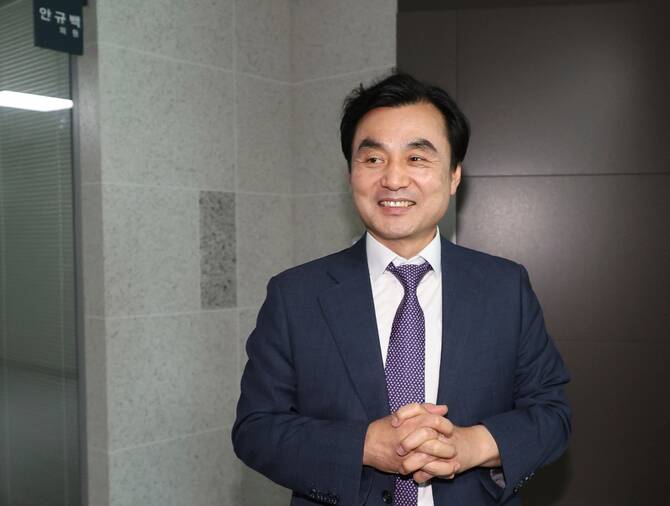
Ahn Gyu-back, a lawmaker from Lee’s Democratic Party, has served on the National Assembly’s defense committee and chaired a legislative panel that investigated the circumstances surrounding Yoon’s martial law decree.
Yoon’s authoritarian move involved deploying hundreds of heavily armed troops to the National Assembly and election commission offices in what prosecutors described as an illegal attempt to shut down the legislature and arrest political opponents and election officials.
That sparked calls to strengthen civilian control over the military, and Lee promised during his election campaign to appoint a defense minister with a civilian background.
Since a 1961 coup that brought military dictator Park Chung-hee to power, all of South Korea’s defense ministers have come from the military — a trend that continued even after the country’s democratization in the late 1980s.
While Ahn will face a legislative hearing, the process is likely to be a formality, since the Democrats hold a comfortable majority in the National Assembly and legislative consent isn’t required for Lee to appoint him. Among Cabinet appointments, Lee only needs legislative consent for prime minister, Seoul’s nominal No. 2 job.
“As the first civilian Minister of National Defense in 64 years, he will be responsible for leading and overseeing the transformation of the military after its mobilization in martial law,” Kang Hoon-sik, Lee’s chief of staff, said in a briefing.
Ahn was among 11 ministers nominated by Lee on Monday, with longtime diplomat Cho Hyun selected as foreign minister and five-term lawmaker Chung Dong-young returning for another stint as unification minister — a position he held from 2004 to 2005 as Seoul’s point man for relations with North Korea.


![]()

President Lee picks South Korea’s first civilian defense chief in 64 years
Short Url
https://arab.news/naux2
President Lee picks South Korea’s first civilian defense chief in 64 years


Latest updates


Recommended


© 2026 SAUDI RESEARCH & PUBLISHING COMPANY, All Rights Reserved And subject to Terms of Use Agreement.