

Cherry festival in northern Pakistan draws crowds amid growing exports to China

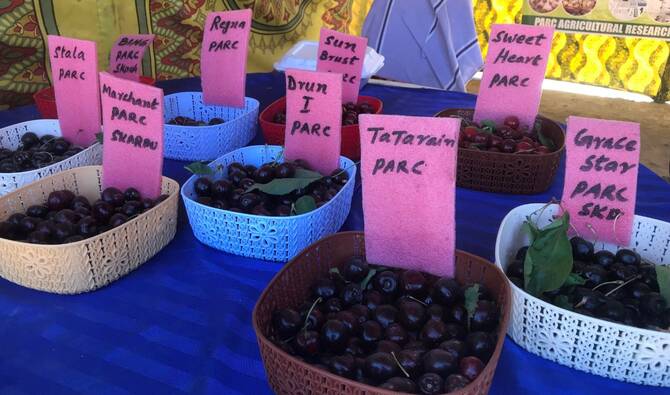
Different verities of cherries displayed at a stall at the 5th National Cherry Festival in Skardu. Pakistan on June 20, 2025. (AN Photo)
Short Url
Updated 22 June 2025
Follow

Cherry festival in northern Pakistan draws crowds amid growing exports to China

  • Gilgit-Baltistan, which produces 9,000 tons of cherries, exported over a quarter of the crop to China last year
  • Agricultural experts say the region’s cold climate is ideal for growing cherries, apricots and apples

SKARDU, Gilgit-Baltistan: As Pakistan begins to export cherries to neighboring China, a colorful one-day festival in Skardu this week drew hundreds of visitors, highlighting the potential of agri-tourism and cherry farming in the northern Gilgit-Baltistan (GB) region, officials and growers said.

Home to the Khunjerab Pass — the highest paved international border crossing in the world — GB is often described as Pakistan’s gateway to China.

The region’s cold climate is ideal for growing high-quality fruits such as cherries, apricots and apples.

“This is the 5th National Cherry Festival, and we are organizing Agri-Mela as part of the festival,” Zakir Hussain, deputy director at the GB agriculture department, told Arab News on Friday.
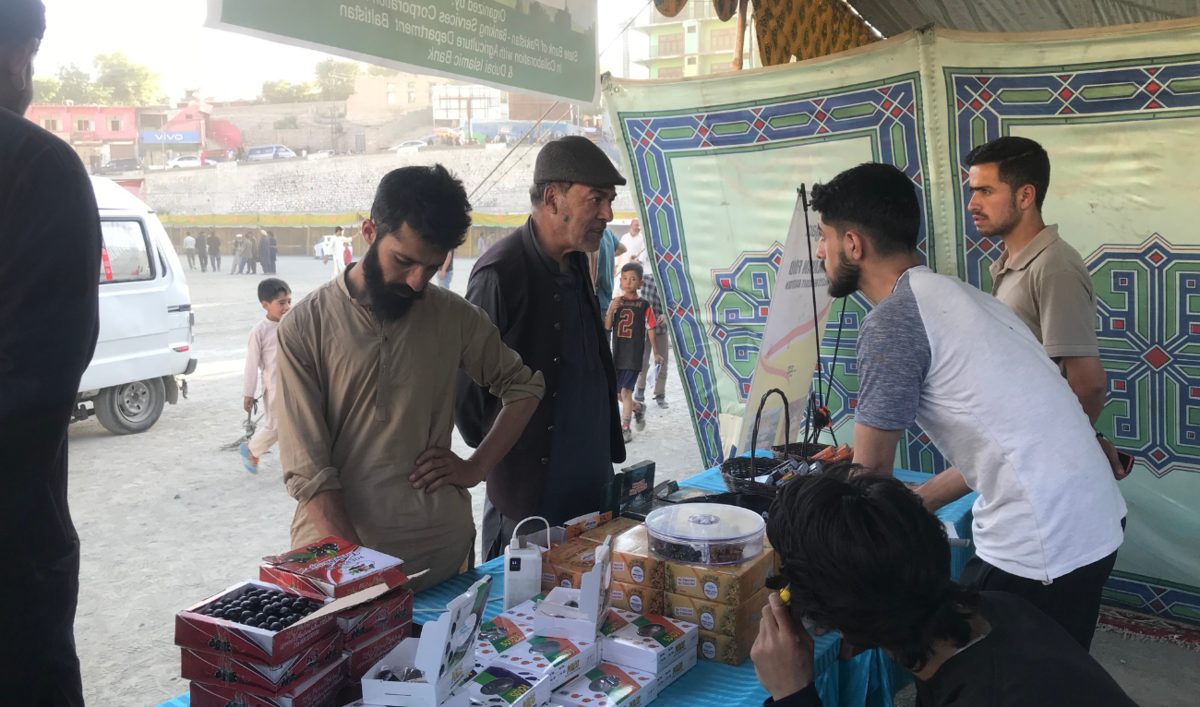


Visitors sample different verities of cherries displayed at a stall at the 5th National Cherry Festival in Skardu. Pakistan on June 20, 2025. (AN Photo)

 “The aim of this festival is to introduce cherry as a cash crop.”

He said the event, organized in collaboration with the State Bank of Pakistan, aimed to raise awareness about harvesting, marketing and the economic importance of cherries.

According to the GB agriculture department, the region produces 8,000 to 9,000 tons of cherries annually, with dried cherry marketing now also underway.

“Almost 3,000 tons of cherries had been exported to China in 2024,” Hussain said, adding that GB was the leading cherry-producing region in Pakistan.

Local farmers say the festival boosts their income and visibility.


A cherry farmer displays his produce at the 5th National Cherry Festival in Skardu. Pakistan on June 20, 2025. (AN Photo)

“We have been growing cherries for the last 12 to 13 years and we have 200 to 300 cherry trees in our orchard,” said Skinder Ali, a 40-year-old farmer. “Whenever the festival is held in Gilgit-Baltistan, we participate. And due to this event, we get access to the market at the national level.”

The festival also attracted tourists from other parts of the country.

“We especially came to Skardu to see the cherries, and we are from Islamabad,” Zohra Begum, a 52-year-old visitor, said. “We have been visiting [the stalls] for the last hour... The taste of cherries is very good ... So far we have purchased 10 kilograms. Let’s see how much we purchase later.”

“I am a traveler and biker from Lahore,” said Mohsin Abbas, another tourist. “We were in Shigar last night when we came to know about the festival. So we came here... We have tasted the cherries and they are very delicious.”

Ghulamullah Saqib, an agriculture expert and trainer, said the region’s climate is well suited for cherries, which require 800 to 1,000 chilling hours to bear fruit.

“There are 14 varieties of cherry that are found in Gilgit-Baltistan,” he added.


Pakistan says repaid over $13.06 billion domestic debt early in last 14 months

Updated 29 January 2026
Follow

Pakistan says repaid over $13.06 billion domestic debt early in last 14 months

  • Finance adviser says repayment shows “decisive shift” toward fiscal discipline, responsible economic management
  • Says Pakistan’s total public debt has declined from over $286.6 billion in June 2025 to $284.7 billion in November 2025

KARACHI: Pakistan has repaid Rs3,650 billion [$13.06 billion] in domestic debt before time during the last 14 months, Adviser to the Finance Minister Khurram Schehzad said on Thursday, adding that the achievement reflected a shift in the country’s approach toward fiscal discipline. 

Schehzad said Pakistan has been repaying its debt before maturity, owed to the market as well as the State Bank of Pakistan (SBP), since December 2024. He said the government had repaid the central bank Rs300 billion [$1.08 billion] in its latest repayment on Thursday. 

“This landmark achievement reflects a decisive shift toward fiscal discipline, credibility, and responsible economic management,” Schehzad wrote on social media platform X. 

Giving a breakdown of what he said was Pakistan’s “early debt retirement journey,” the finance official said Pakistan retired Rs1,000 billion [$3.576 billion] in December 2024, Rs500 billion [$1.78 billion] in June 2025, Rs1,160 billion [$4.150 billion] in August 2025, Rs200 billion [$715 million] in October 2025, Rs494 billion [$1.76 billion] in December 2025 and $1.08 billion in January 2026. 

He said with the latest debt repaid today, the July to January period of fiscal year 2026 alone recorded Rs2,150 billion [$7.69 billion] in early retirement, which was 44 percent higher than the debt retired in FY25.

He said of the total early repayments, the government has repaid 65 percent of the central bank’s debt, 30 percent of the treasury bills debt and five percent of the Pakistan Investment Bonds (PIBs) debt. 

The official said Pakistan’s total public debt has declined from over Rs 80.5 trillion [$286.6 billion] in June 2025 to Rs80 trillion [$284.7 billion] in November 2025. 

“Crucially, Pakistan’s debt-to-GDP ratio, around 74 percent in FY22, has declined to around 70 percent, reflecting a broader strengthening of fiscal fundamentals alongside disciplined debt management,” Schehzad wrote. 

Pakistan’s government has said the country’s fragile economy is on an upward trajectory. The South Asian country has been trying to navigate a tricky path to economic recovery under a $7 billion loan from the International Monetary Fund.