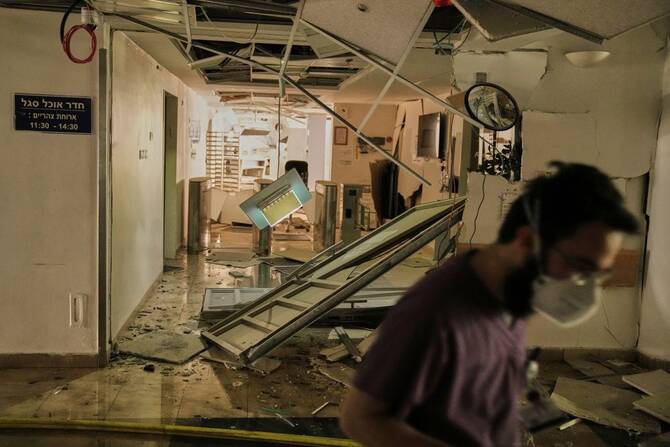

LONDON: Israeli police reportedly prevented journalists from filming at Soroka Medical Center in Beersheba, which suffered “extensive damage” from an Iranian missile strike on Thursday.
Officers were said to have cited security concerns as the reason, on the grounds that footage from the scene revealed “precise locations” and had been broadcast by Al Jazeera, a media outlet banned in Israel since May 2024 over its coverage of the war in Gaza.
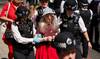
The Times of Israel said police confronted one cameraman at the hospital site and demanded he hand over his equipment. The journalist reportedly refused and told officers: “They are seeing you on CNN, seeing you on BBC, seeing you all over the world, so calm down for a second.”
Iran’s Islamic Revolutionary Guard Corps claimed responsibility for the attack in which the hospital was damaged, saying it had targeted nearby Israeli military and intelligence sites. The Israeli military denied having any facilities in the area. Footage authenticated by BBC Verify suggested the medical complex was hit by a direct strike.
Israeli police confirmed on Thursday that they ordered a halt to foreign media coverage at Soroka and other affected locations for reasons of national security. They added that they were actively looking for media workers filming at the sites.
“Israel Police units were dispatched to halt the broadcasts, including those of news agencies through which Al Jazeera was airing illegal transmissions,” the force said.
During a visit to the hospital site on Thursday, Israel’s minister of national security, Itamar Ben-Gvir, said: “This morning in Tel Aviv, there was an incident where equipment was confiscated. There is a clear policy: Al Jazeera endangers state security.”
The crackdown on the media comes amid growing concerns among advocates for freedom of the press. Several journalists and other industry professionals have reported obstruction by authorities, including confiscation of equipment. Many accuse Israeli officials of censorship. It follows policy directives from far-right minister Ben-Gvir, in coordination with Communications Minister Shlomo Karhi, to “maintain the safety and security of citizens.”
Sources close to Ben-Gvir said he has instructed Israel’s Shin Bet security agency and the police to step up action against any foreign media outlets or civilians suspected of celebrating the Iranian missile attacks.
“There will be zero tolerance for expressions of joy over attacks on Israel,” Ben-Gvir said this week.
Tensions in the region have risen sharply since coordinated strikes by Israeli authorities against Iranian military and nuclear sites began on June 13. Tehran has retaliated with missile strikes on Israeli targets, some of which have hit civilian buildings.
After a visit to the Soroka hospital site on Thursday, Israeli Defense Minister Israel Katz escalated the rhetoric further, declaring that Iran’s Supreme Leader Ayatollah Ali Khamenei “can no longer be allowed to exist.”
Iranian authorities say at least 639 people have been killed and 1,329 wounded since the fighting began a week ago. The death toll in Israel stands at 24, according to officials in the country.