

Pakistan urges global action on rising ‘Islamophobia’ at UN hate speech event

Pakistan’s Ambassador to the United Nations Asim Iftikhar Ahmad speaks during a special briefing to mark the International Day for Countering Hate, at the UN Headquarters in New York on June 16, 2025. (Photo courtesy: X/@PakistanUN_NY)
Short Url
Updated 17 June 2025
Follow

Pakistan urges global action on rising ‘Islamophobia’ at UN hate speech event

  • The event was organized by Morocco and the UN Office on Genocide Prevention
  • Pakistan expresses commitment to inclusion, calls diversity a collective strength

ISLAMABAD: Pakistan’s top diplomat at the United Nations on Monday called for a collective international response to rising “Islamophobia,” warning that unchecked hate speech and extremist narratives were fracturing societies and threatening global peace and stability.

Speaking at a high-level event to mark the International Day for Countering Hate, Ambassador Asim Iftikhar Ahmad said growing intolerance, fueled by politicized media and digital platforms, was targeting not only Muslims but also people of various races, genders and nationalities.

The International Day for Countering Hate is observed each year on June 18, following its institutionalization by the UN in 2023 in response to the global rise in hate-driven violence, incitement and disinformation.

Monday’s event at the UN was hosted by Morocco and the Office on Genocide Prevention.

“The surge in Islamophobia through discriminatory laws, defamation of religious symbols and orchestrated vilification are particularly alarming trends,” Ahmad said. “Media platforms, especially those aligned with dominant political forces, have enabled this hate.”

“Similar tactics now target other marginalized communities,” he continued. “We also observe rising racism and xenophobia fueling division and exclusion. These trends demand urgent collective response.”
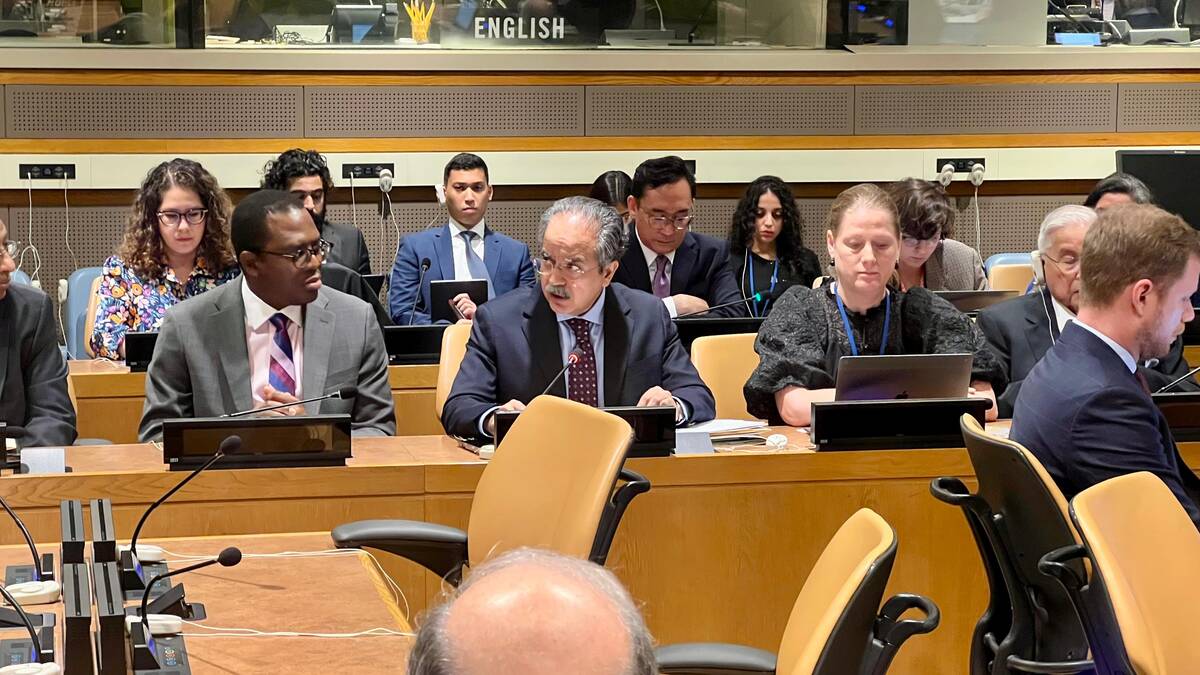


Pakistan’s Ambassador to the United Nations Asim Iftikhar Ahmad speaks during a special briefing to mark the International Day for Countering Hate, at the UN Headquarters in New York on June 16, 2025. (Photo courtesy: X/@PakistanUN_NY)

Ahmad welcomed the recent appointment of the UN Special Envoy on Combating Islamophobia, an institutional step initiated through a resolution presented by Pakistan on behalf of the Organization of Islamic Cooperation (OIC) in March last year.

Muslim countries, in recent years, have collectively raised their voice against acts of desecration such as the public burning of the Qur’an in several European countries.

Many of these incidents have coincided with the political rise of far-right parties, which have capitalized on anti-immigrant sentiment and targeted Islam and Muslim communities.

Muslim states have called for an end to such practices and have advocated for legal measures to prevent the desecration of religious symbols, arguing that such acts have no connection to free speech and must be addressed under international frameworks protecting religious and cultural dignity.

The Pakistani envoy said the appointment came at a critical time and urged full implementation of the UN Strategy and Plan of Action on Hate Speech.

He also condemned digital platforms and algorithmic systems, saying they reward sensationalism and amplify identity-based hate, warning that truth was being sacrificed in politicized media environments.

Ahmad reaffirmed Pakistan’s commitment to promoting respect, inclusion and peaceful coexistence, saying that diversity must be seen as a collective strength.


OIC’s COMSTECH stresses academic collaborations across Muslim world in Islamabad meeting

Updated 4 sec ago
Follow

OIC’s COMSTECH stresses academic collaborations across Muslim world in Islamabad meeting

  • COMSTECH holds annual meeting in Islamabad featuring 30 delegates from Iran, Somalia, Palestine, Indonesia and other OIC states
  • Limited pool of skilled professionals one of the foremost challenges facing Muslim world, notes COMSTECH secretary general 

ISLAMABAD: The OIC Standing Committee on Scientific and Technological Cooperation (COMSTECH) called for stronger academic collaboration across Islamic states to secure the future of higher education in the Muslim world, state-run media reported on Saturday. 

COMSTECH’s Coordinator General Prof. Dr. Muhammad Iqbal Choudhary was speaking at the Annual Meeting of the COMSTECH Consortium of Excellence at the organization’s Secretariat in Islamabad. The event brought together vice chancellors, rectors, and senior representatives from leading universities across OIC member and observer states. 

Nearly 30 international delegates representing universities from Iran, Somalia, Palestine, Indonesia, Malaysia, Thailand, Uganda, Bangladesh, Benin, Cameroon, Gabon, Côte d’Ivoire, and Senegal joined their counterparts from several Pakistani institutions at the meeting. Participants attempted to chart a collective path forward for tertiary education in OIC countries.

“Collaborations, knowledge sharing, best practices, exchange of scholars, technology transfer and joint academic programs are vital for overcoming the educational challenges faced across the OIC region,” Choudhary said, according to the state-run Associated Press of Pakistan (APP).

The COMSTECH secretary general noted that one of the foremost developmental challenges facing OIC nations remains the limited pool of skilled professionals and workforce. 

He said this gap can only be bridged through strengthened tertiary education systems and expanded opportunities for knowledge transfer.

Discussions at the event highlighted the urgent need for competency-driven education, modern pedagogical tools, university–industry partnerships and collaborative training programs designed to equip graduates with the skills necessary to address emerging global challenges.

“The Annual Meeting served as a vital platform for reviewing progress achieved over the past year, identifying future priorities, and deepening academic cooperation to promote scientific excellence and sustainable development across the OIC region,” the APP said.