


ISLAMABAD: Pakistan’s United Nations Ambassador Asim Iftikhar Ahmad this week criticized Israel for launching attacks against Iran’s nuclear facilities and military leadership, saying that Tehran has the right to self-defense under the UN Charter.
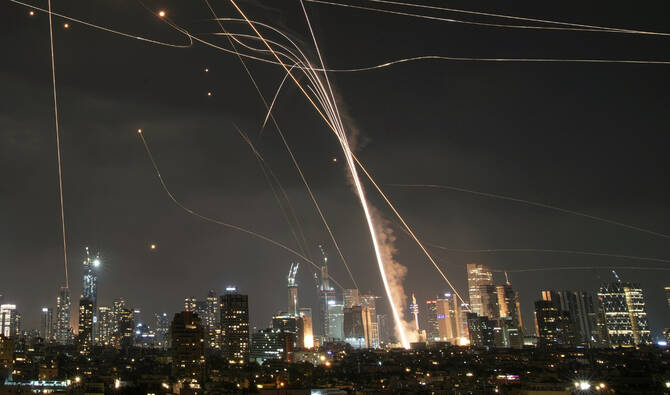
Ahmad’s statement came on Friday as tensions in the Middle East soared after Iran fired dozens of missiles at Israel, lighting up the skies above Jerusalem and Tel Aviv. The strikes were in response to a large-scale Israeli attack on Tehran’s nuclear facilities and military leadership early Friday that Tehran said killed 78 and injured over 320.
At a UN Security Council briefing meeting on the Iran-Israel tensions on Friday, Ahmed said Israel’s recent military operations in Gaza and repeated cross-border strikes in Iran, Syria, Lebanon, and Yemen demonstrate a consistent disregard for international norms.
“We unequivocally denounce these blatant provocations, which constitute a grave danger and a serious threat to the peace, security, and stability of the entire region and beyond, with serious implications,” Ahmad said on Friday. “Iran has the right to self-defense under Article 51 of the UN Charter.”

Pakistan’s Ambassador to the United Nations Asim Iftikhar Ahmad speaks during a UN Security Council briefing on Iran, at the UN Headquarters in New York on June 13, 2025. (Photo courtesy: X/@PakistanUN_NY)
Israeli leaders say the Friday attack was necessary to eliminate an imminent threat that Iran would build nuclear bombs, though it remains unclear how close the country is to achieving that. Iran maintains its nuclear program is for civilian purposes only.
Ahmad said Israel’s actions risk eroding the trust of the negotiation process related to Iran’s nuclear program, which he said was crucial for the peaceful settlement of these issues.
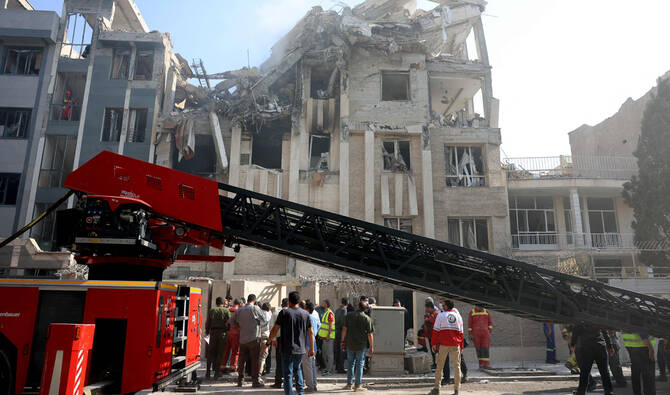
Rescue teams work outside a heavily damaged building, targeted by an Israeli strike in the Iranian capital Tehran on June 13, 2025. (AFP)
“We call on all parties to fulfill their respective obligations and responsibilities and avoid escalation,” the Pakistani envoy said. “Even in these testing times, diplomatic engagement and dialogue must be prioritized.”
Ahmad reiterated that the UN Security Council bears the responsibility to maintain international peace and security, calling it to “hold the aggressor accountable for its actions.”
“This Council must deny Israel the free hand, and the impunity with which it continues to operate in defiance of international law and international opinion,” he said.
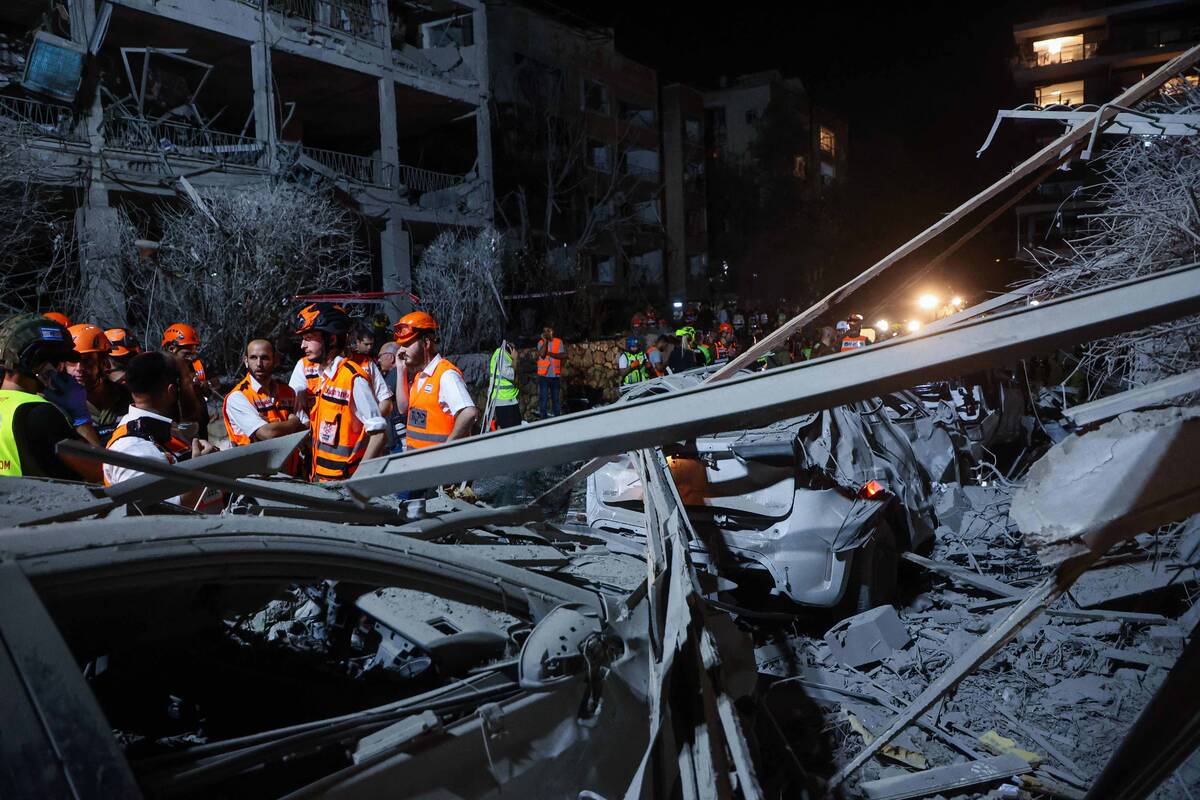
Israeli first responders arrive at a site hit by a missile fired from Iran, in Ramat Gan on the outskirts of Tel Aviv on June 13, 2025. (AFP)
Israel has long been determined to prevent Iran from developing nuclear weapons, a concern laid bare on Thursday when the Board of Governors at the International Atomic Energy Agency for the first time in 20 years censured Iran over its refusal to work with its inspectors.
Iran immediately announced it would establish a third enrichment site and install more advanced centrifuges.
Even so, there are multiple assessments on how many nuclear weapons Iran could conceivably build, should it choose to do so. Iran would need months to assemble, test and field any weapon, which it so far has said it has no desire to do.
US intelligence agencies also assess Iran does not have a weapons program at this time.

Israeli security forces inspect destroyed residential buildings that were hit by a missile fired from Iran, in Ramat Gan, near Tel Aviv, Israel on June 14, 2025. (AP)




