


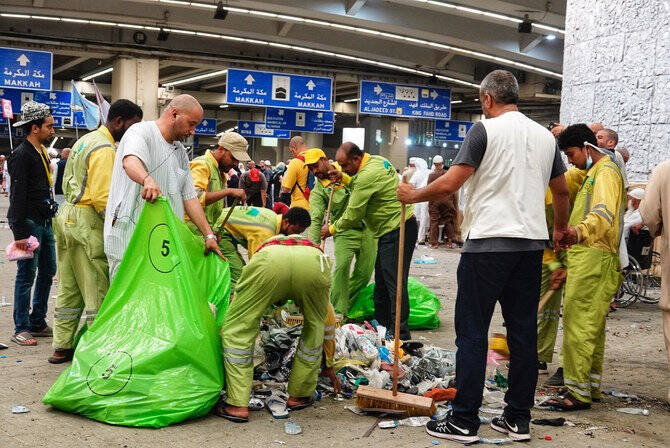

RIYADH: As millions of Muslims gather in Makkah for Hajj, concern is growing over the environmental toll of one of the world’s largest annual religious gatherings — particularly the vast quantities of plastic waste left behind.
From water bottles to shopping bags, single-use plastics are a staple at major public events, and Hajj is no exception. Given the sheer volume of pilgrims, this waste can have lasting environmental consequences, unless mitigated by more sustainable choices.

Fortunately, awareness is growing among individuals and organizations about the harm caused by plastic pollution. Many are now turning to greener alternatives to reduce their footprint during the holy season.
Among the most commonly used items are plastic water bottles. With millions expected to be discarded during Hajj, experts and advocates say it is important to replace single-use items with reusable options or eliminate their use altogether.
Opinion
This section contains relevant reference points, placed in (Opinion field)
One local company working to address the issue is Green Bags Saudi, a Jeddah-based provider of sustainable packaging. The company provides reusable bags made from jute, cotton, and canvas as part of its mission to support Saudi Arabia’s move away from disposable plastics.
“We proudly align our efforts with the Saudi Green Initiative, contributing to a greener future through both innovation and local production,” Aboobacker Yousuf, chairman and managing director of the GP Group of Companies that owns Green Bags Saudi, told Arab News.

Green Bags Saudi, a Jeddah-based manufacturer, provides reusable bags made from jute, cotton, and canvas as part of its mission to support Saudi Arabia’s move away from disposable plastics. (Supplied)
Although the company will not be directly involved in this year’s pilgrimage, Yousuf said it strongly advocates for more eco-conscious practices during Hajj.
“We recommend reusable cotton tote bags for carrying personal items, biodegradable hygiene kits, jute or canvas pouches for organizing belongings, and eco-friendly water bottles and cutlery sets,” he said.
“These items not only serve practical needs but also significantly reduce the environmental impact caused by disposable plastics during the event.”

Pilgrims are encouraged to be more conscious of their consumption and waste, and to choose products that support sustainability. (SPA)
Yousuf also encouraged pilgrims to be more conscious of their consumption and waste, and to choose products that support sustainability.
“Choosing reusable items over disposable ones, properly disposing of waste, and minimizing plastic use can make a significant difference,” he said.
“By carrying cloth bags, refilling water bottles instead of buying plastic ones, and using compostable or biodegradable products, every pilgrim can contribute to preserving the holy sites and supporting Saudi Arabia’s broader sustainability vision.”
DID YOU KNOW?
• 506 million tonnes of plastic were produced worldwide in 2022, but only 9 percent were recycled.
• Millions of tonnes of plastic enter the oceans every year, posing a threat to marine life.
• Plastic waste affects soil quality, damages plants, and contributes to groundwater pollution.
• By 2050, the weight of plastic waste present in our oceans could surpass that of fish.
While private companies are taking the lead in promoting eco-friendly alternatives, the public sector is also playing a key role in aligning Hajj services with the sustainability goals of Vision 2030 — a national strategy that seeks to boost quality of life across the Kingdom.
One standout example is the Sustainable Ihram Initiative, launched last month by the Fashion Commission. The program focuses on collecting and recycling textile waste generated by pilgrims, including ihrams, pillows, blankets, and sheets.
By embracing the principles of circular fashion, the initiative merges faith, cultural preservation, and environmental stewardship — aiming to provide visitors with exceptional experiences while protecting natural resources.

The Sustainable Ihram Initiative focuses on collecting and recycling textile waste generated by pilgrims, including ihrams, pillows, blankets, and sheets. (SPA photo)
“The Sustainable Ihram Initiative is a testament to the power of collaboration, reflecting the collective efforts of local and international partners committed to advancing the circular economy within the fashion industry,” said Burak Cakmak, CEO of the Fashion Commission, in comments to the Saudi Press Agency.
As Hajj begins, such efforts underscore a growing sense of shared responsibility for the environment. With the support of private enterprise and government initiatives, more pilgrims are being empowered to make sustainable choices.
By opting for reusable products, minimizing waste, and supporting eco-friendly innovations, pilgrims can help protect the sanctity of the holy sites — and contribute to a more sustainable future for the Kingdom and the planet.


