

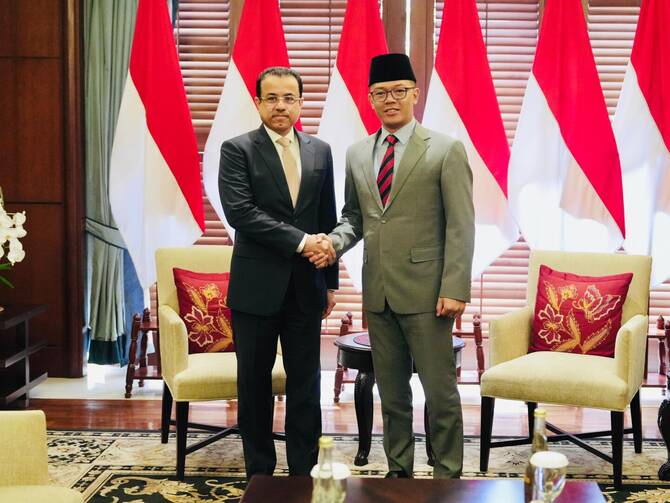

JAKARTA: Indonesia is looking to strengthen partnerships with Oman in the renewable energy sector, its Foreign Ministry has said, following talks with the Gulf state’s envoy to Jakarta.
Indonesia’s Foreign Minister Sugiono met with Omani Ambassador Sheikh Mohamed Ahmed Salim Al-Shanfari on Tuesday to discuss ways to deepen ties.
During the meeting, they discussed ways to boost trade diversification and “maximize strategic opportunities, particularly in the renewable energy sector and mining,” Indonesia’s Ministry of Foreign Affairs said in a statement.
Indonesia has been working to boost its clean energy sector through closer cooperation with countries in the Middle East, including Saudi Arabia and the UAE.
Saudi Arabia’s ACWA Power has several projects in Indonesia, including the development of the Saguling Floating Solar Photovoltaic Project in West Java province, which will have a 92 megawatt peak capacity.
Indonesia has also collaborated with Emirati giant Masdar in developing floating solar power plants in the country.
This includes Southeast Asia’s largest floating photovoltaic installation — which can power around 50,000 households — in Cirata, West Java that was inaugurated in November 2023 by then-President Joko Widodo.
Jakarta is working to increase renewable energy cooperation with other nations because “energy transition issues will be the determining sectors for humankind in the future,” Indonesia’s Foreign Ministry spokesperson Roy Soemirat told Arab News on Thursday.
“Therefore it is imperative for Indonesia to continue opening up possibilities to work with all partners in this area of common concern.”
One of the world’s biggest greenhouse gas emitters, renewables accounted for around 14 percent of Indonesia’s energy mix as of early 2025, with the majority of its power needs met by coal and oil.
Though Jakarta previously pledged to achieve a 23 percent share of renewable power in its energy mix by 2025, an updated roadmap issued this week by the Ministry of Energy and Mineral Resources showed that the goal has shifted.
The country of 270 million people now aims to achieve a 35 percent share of renewables in its energy mix by 2034.
According to a report by the Asia Clean Energy Coalition, meeting its renewable energy targets could boost Indonesia’s economic output by up to $1.8 billion and generate more than 136,000 jobs.


