



Abbaspur, POONCH: Blackened from the explosion, shards of a tin roof loosely hang from the branches of a wild apricot tree in the border village of Chaffar in Azad Kashmir’s Poonch district. What once used to be a modest kitchen is now littered with shattered stone, twisted metal and rubble.
It was here that a mortar shell struck hours before a ceasefire was announced between Pakistan and India. The Indian mortar shell instantly killed three generations of women, a mother, her daughter-in-law and two-year-old granddaughter, on the morning of May 10.
India and Pakistan engaged in a four-day military conflict that killed around 70 people on both sides last month, with the two nations attacking each other with fighter jets, missiles, drones and artillery until the United States (US) brokered a ceasefire.
Wajid Kayani, a Pakistani army soldier posted in Lahore at the time of the strikes, took heavy, reluctant steps as he led Arab News to a heap of rubble where his wife, mother and infant daughter had breathed their last in the wake of the cross-border skirmishes.
“[Just a night before], I had spoken to my mother and wife over the phone. They were both worried about the shelling,” he said.
“My mother told me and my younger brother [also a soldier], ‘May God protect you both. If someone has to go [die], let it be me.’ That’s what she said… and I can’t forget it. It’s unbearable,” Kayani said as he broke down.
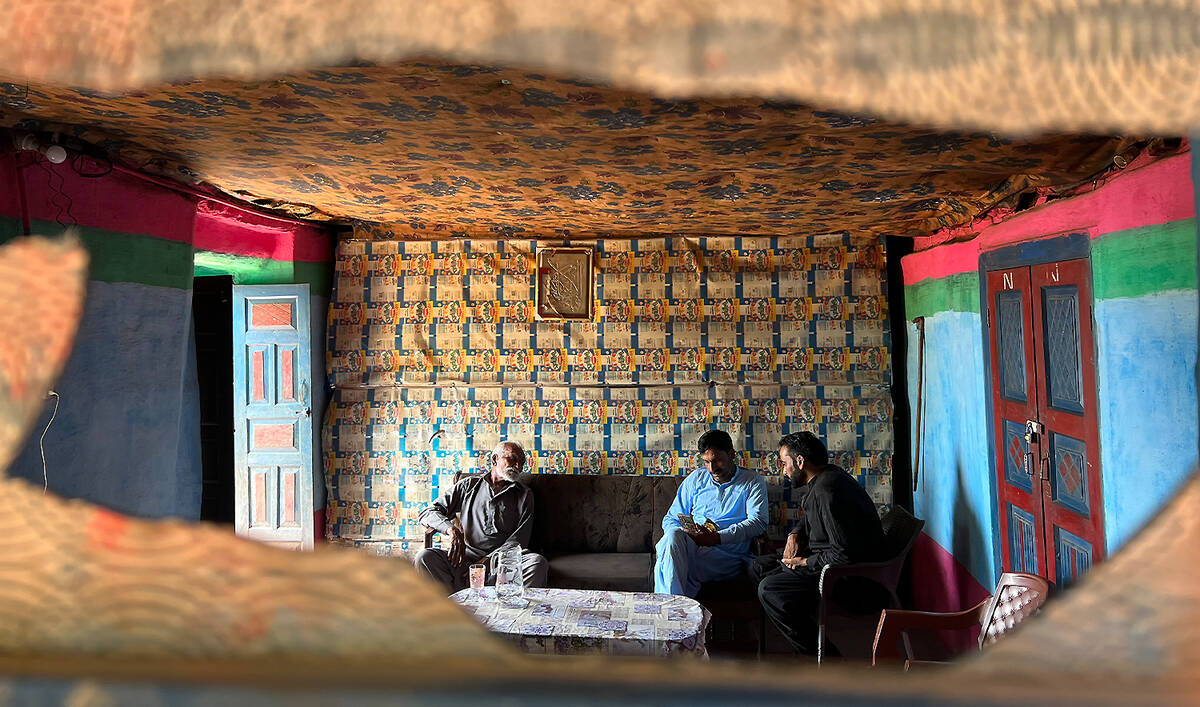
The photograph taken on May 23, 2025, shows a broken window of Wajid Khan’s house in the border village of Chaffar in the Poonch district of Pakistan-administered Azad Jammu and Kashmir. (AN photo)
The deceased women were identified as Qaisra Bibi, Kayani’s mother, his wife Areesha Qayyum and their daughter Hadiya Wajid, who would have turned two on May 27.
All three of them were inside the kitchen for morning tea when the first shell struck the house, according to the family. Another shell landed just meters away, striking a tree and punching holes into the surrounding walls.
The kitchen, once used to prepare meals for a large joint family, now wears the look of a charred, cratered space. Broken plates, half-melted pots and a ruined gas cylinder are scattered around.
Faiz Muhammad Kayani, the 70-year-old head of the family, struggled to speak as he entered the drawing room of the house with the help of a walking stick. Dozens of mourners have been visiting the family since the attack, but the elderly man, father to three sons and four daughters, is unable to come to terms with the horror he witnessed.
That morning, Faiz was at his younger son’s adjacent house and was coming to feed the livestock when he heard the shell strike his elder son’s house.
“I ran… I ran fast. But what was left to see? There was nothing left… just mud and stones,” he said in a shallow voice.
“They were buried underneath.”
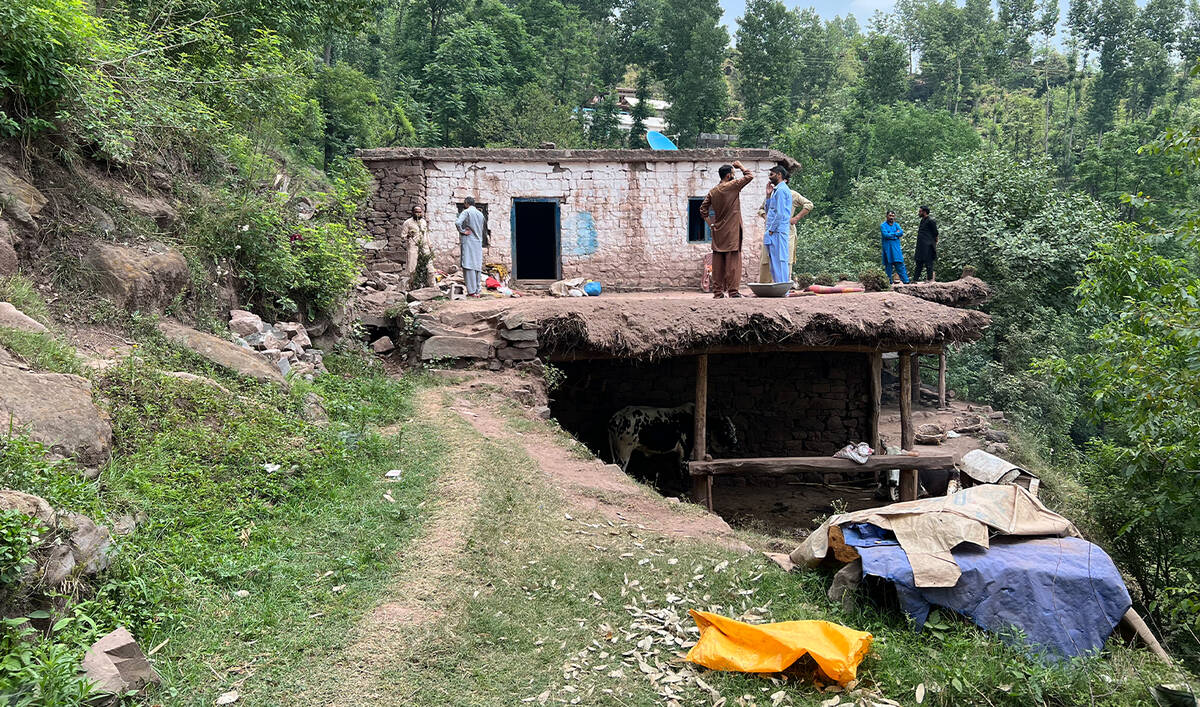
A picture taken on May 23, 2025, shows the destruction at the house of Wajid Kayani caused by an Indian artillery strike in Chafar village in the Poonch district of Pakistan-administered Azad Kashmir. (AN Photo)
The 70-year-old fell silent before excusing himself from further conversation.
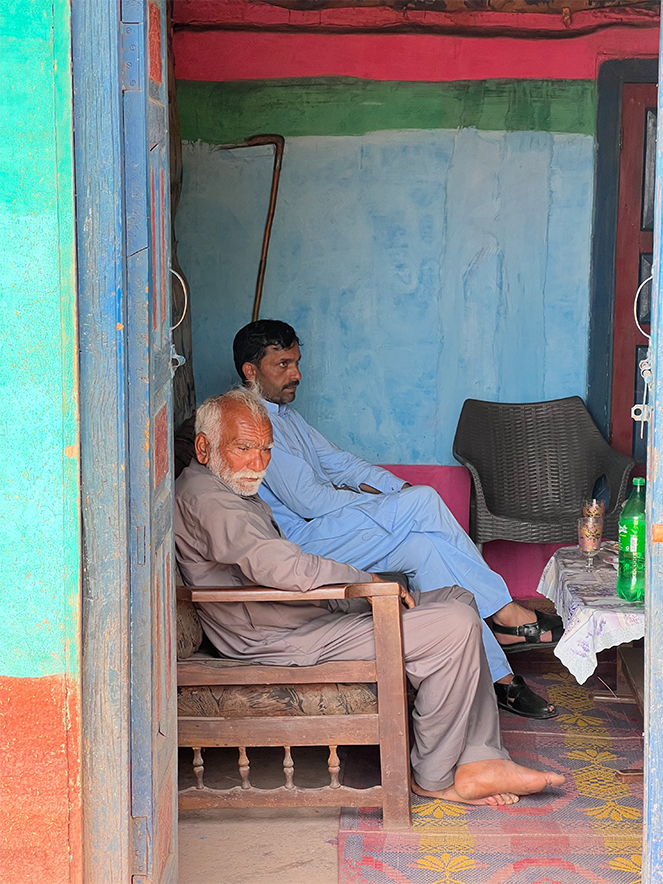
Faiz Muhammad Kayani, father of Wajid Kayani, is pictured at his house in Chafar village in the Poonch district of Pakistan-administered Azad Kashmir. (AN Photo)
Bitter rivals India and Pakistan have fought three wars, including two over the disputed region of Kashmir, since gaining independence from British rule in 1947. Both claim the Himalayan territory in its entirety but rule it in part.
The latest conflict was sparked by a militant attack in Indian-administered Kashmir’s Pahalgam town that killed 26 tourists on April 22. New Delhi blamed the attack on Pakistan, which Islamabad denied and called for a credible, international probe.
‘SCATTERED ACROSS BUSHES’
Kayani’s younger brother, Muhammad Sajid Kayani, also a soldier posted in Azad Kashmir’s Kotli sector, reached the house around 2 p.m. on the day of the tragedy.
“Despite the shock, [our] father pulled out the first body. Her [sister-in-law Qayyum] legs had been blown off,” Sajid said.
Their neighbors were unable to help as the shelling continued for hours. Sajid’s sister, who lived nearby, arrived shortly afterward and began searching for their mother.
“She found only our mother’s face. The rest of her body was scattered across the bushes. We had to collect the limbs piece by piece,” Sajid said.
“She found my little niece Hadiya under the rubble. Her left arm was missing. Her stomach was ripped open, and her intestines were outside.”
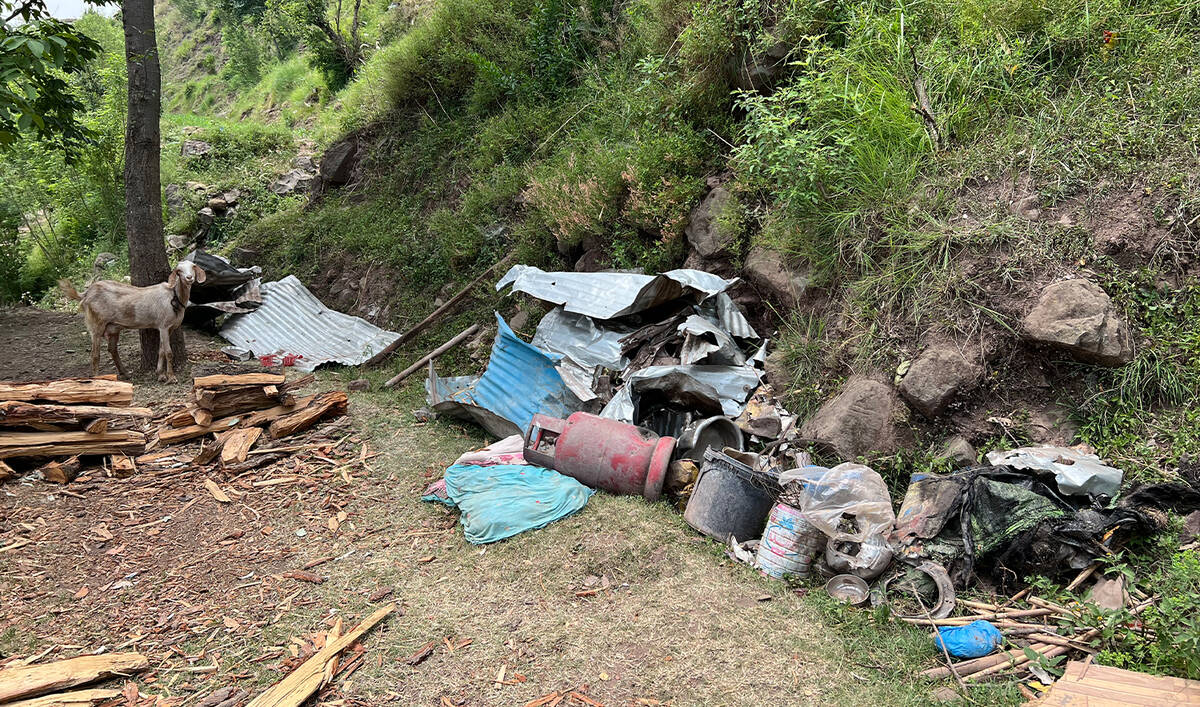
A picture taken on May 23, 2025, shows the destruction at the house of Wajid Kayani caused by an Indian artillery strike in Chafar village in the Poonch district of Pakistan-administered Azad Kashmir. (AN Photo)
But Hadiya was not the only child hit by the artillery fire.
“One of our nieces was just stepping inside through the kitchen door into the main house when the shell hit,” Sajid said.
“She was badly injured, shrapnel tore through her legs. She’s still recovering.”
The family held the funeral by 2:30 p.m. on May 10, hours before their eldest son, Kayani, could return home from Lahore.
“I couldn’t even attend the burial of my wife, daughter, and mother,” Kayani said, citing heavy shelling and road closures as the reasons.

Wajid Kayani (right) shows a picture of his two-year-old daughter, Hadiya Wajid, on his mobile in Chafar village in the Poonch district of Pakistan-administered Azad Kashmir on May 23, 2025, who was killed by an Indian mortar shell on May 10. (AN photo)
The two brothers returned to the wreckage the following day to search for anything left.
“We started clearing mud and lifting stones. That’s when we found more of our mother’s remains, her abdomen, and other parts. It must’ve weighed around 20 kgs. We buried them in a separate grave,” Wajid said.
“On the third day, we found even more, collected in a [huge metal] plate, and buried again in the same cemetery.”
Kayani’s daughter, Hadiya, was laid to rest in the same grave as her mother, Areesha. Her small body was torn apart by the attack and the family had no choice but to bury them together, given the intense shelling and chaos at the time.
His older daughter, just four years old, survived the attack. Her trauma, however, continues to run deep.
“She flinches at every little thing,” Kayani said. “She barely speaks anymore… just sits there, quiet. Too quiet.”


