

CASA-1000 power line project with Pakistan to be completed next year — Tajikistan minister

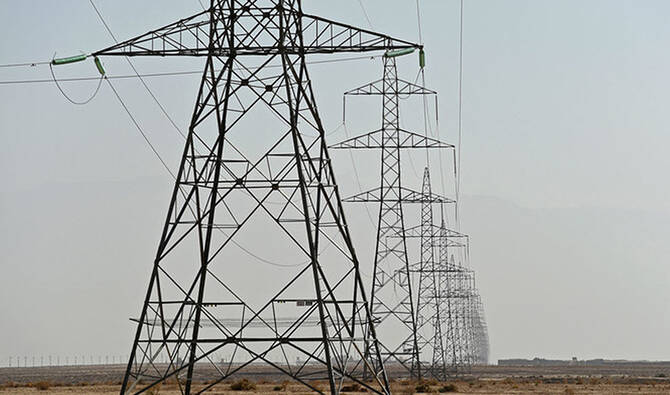
In this photograph taken on October 27, 2021, power pylons transmitting electricity from Uzbekistan to Afghanistan are pictured along the Hairatan Highway in Kaldar district of Balkh Province. (AFP/File)
Short Url
Updated 02 June 2025
Follow

CASA-1000 power line project with Pakistan to be completed next year — Tajikistan minister

  • $1.2 billion project aimed to allow export of Central Asian electricity to Afghanistan, Pakistan by 2020
  • Project was launched in 2016 but has been stalled for years by turmoil and violence in Afghanistan

ISLAMABAD: Tajikistan’s Deputy Minister for Energy Jamshed Shoimzoda has said a $1.2 billion Western-backed project to build a power line between Central Asia and South Asia would be completed by December next year, state news agency APP reported on Monday. 

The CASA-1000 project, launched in 2016, aims to allow Tajikistan and Kyrgyzstan, former Soviet republics with an extensive network of hydroelectric power plants, to sell excess energy to Pakistan and Afghanistan in the summer months. The project, initially meant to allow the export of electricity to Afghanistan and Pakistan by 2020, has been stalled for years by turmoil in Afghanistan. 

Tajikistan and Kyrgyzstan generate most of their energy from hydropower plants built on the rivers that flow into Kazakhstan, Turkmenistan and Uzbekistan. Tajikistan and Kyrgyzstan limit water release during summer due to lower power demand, angering their neighbors who need water for irrigation. The five countries have failed to reach an agreement after decades of negotiations. 

The new power line could smooth flows as power demand in Pakistan peaks during the summer months.

“Major energy project, CASA-1000 between Pakistan and Tajikistan, will be completed by December 2026, which will start providing 1000 MW of electricity to Pakistan,” Shoimzoda said in an interview to APP.

“This grand project will take time to be operational by January 2027, after which bilateral cooperation in the energy sector between the two countries will be further promoted and there will be a new beginning of clean and green energy projects in both countries.”

Tajikistan aims to completely switch to green energy and zero emission by 2027.

“The transmission capacity of the CASA-1000 energy project will be 1,300 megawatts, which will be an energy link between Tajikistan, Pakistan, and Afghanistan to provide clean energy not only to regional countries but also fill the need of Pakistan’s industrial sector,” Shoimzoda said. 

“Massive infrastructural projects will be beneficial for all of its stakeholders by fulfilling energy needs and strengthening regional connectivity.”

Shoimzoda said Tajikistan has the capacity to export 10 billion kilowatt of energy annually, which would benefit all countries in the region, including Pakistan. Tajikistan also currently has the capacity to generate 500 billion KW of electricity, the highest among regional countries in hydel power.

The minister said Tajikistan was already providing electricity to other regional countries, including Afghanistan, and in the future would create a regional energy hub, to “usher in a new era of sustainable energy production and economic prosperity in the region.”

The United States was initially involved in financing the 1,200-km-long line as part of its New Silk Road initiative to integrate Afghanistan with Central Asia. Other project sponsors have included the World Bank, Islamic Development Bank, the UK Department for International Development, and the European Bank for Reconstruction and Development.


Pakistan, global crypto exchange discuss modernizing digital payments, creating job prospects 

Updated 05 December 2025
Follow

Pakistan, global crypto exchange discuss modernizing digital payments, creating job prospects 

  • Pakistani officials, Binance team discuss coordination between Islamabad, local banks and global exchanges
  • Pakistan has attempted to tap into growing crypto market to curb illicit transactions, improve oversight

ISLAMABAD: Pakistan’s finance officials and the team of a global cryptocurrency exchange on Friday held discussions aimed at modernizing the country’s digital payments system and building local talent pipelines to meet rising demand for blockchain and Web3 skills, the finance ministry said.

The development took place during a high-level meeting between Finance Minister Muhammad Aurangzeb, Pakistan Virtual Assets Regulatory Authority (PVARA) Chairman Bilal bin Saqib, domestic bank presidents and a Binance team led by Global CEO Richard Teng. The meeting was held to advance work on Pakistan’s National Digital Asset Framework, a regulatory setup to govern Pakistan’s digital assets.

Pakistan has been moving to regulate its fast-growing crypto and digital assets market by bringing virtual asset service providers (VASPs) under a formal licensing regime. Officials say the push is aimed at curbing illicit transactions, improving oversight, and encouraging innovation in blockchain-based financial services.

“Participants reviewed opportunities to modernize Pakistan’s digital payments landscape, noting that blockchain-based systems could significantly reduce costs from the country’s $38 billion annual remittance flows,” the finance ministry said in a statement. 

“Discussions also emphasized building local talent pipelines to meet rising global demand for blockchain and Web3 skills, creating high-value employment prospects for Pakistani youth.”

Blockchain is a type of digital database that is shared, transparent and tamper-resistant. Instead of being stored on one computer, the data is kept on a distributed network of computers, making it very hard to alter or hack.

Web3 refers to the next generation of the Internet built using blockchain, focusing on giving users more control over their data, identity and digital assets rather than big tech companies controlling it.

Participants of the meeting also discussed sovereign debt tokenization, which is the process of converting a country’s debt such as government bonds, into digital tokens on a blockchain, the ministry said. 

Aurangzeb called for close coordination between the government, domestic banks and global exchanges to modernize Pakistan’s payment landscape.

Participants of the meeting also discussed considering a “time-bound amnesty” to encourage users to move assets onto regulated platforms, stressing the need for stronger verifications and a risk-mitigation system.

Pakistan has attempted in recent months to tap into the country’s growing crypto market, crack down on money laundering and terror financing, and promote responsible innovation — a move analysts say could bring an estimated $25 billion in virtual assets into the tax net.

In September, Islamabad invited international crypto exchanges and other VASPs to apply for licenses to operate in the country, a step aimed at formalizing and regulating its fast-growing digital market.