


RIYADH: Saudi Arabia’s GO Telecom has signed an agreement with the Syrian government to help modernize the country’s digital infrastructure, marking one of the first major private sector initiatives following the recent easing of Western sanctions.
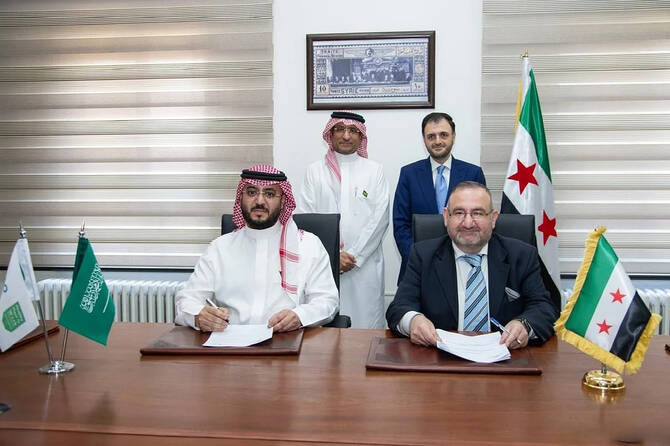
The agreement was signed by Syrian Minister of Telecommunications Abdul Salam Haykal and GO Telecom CEO Yahya bin Saleh Al-Mansour. The deal aims to revamp Syria’s ageing communications network, a critical step in the nation’s long path toward recovery. Riyadh-based GO Telecom is expanding its presence in post-conflict markets through strategic infrastructure investments.
The move follows a significant policy shift by Western powers. Just weeks ago, the US and the EU began lifting long-standing sanctions on Syria — a decision widely seen as a turning point in international engagement with the war-torn country.

The agreement was signed by Syrian Minister of Telecommunications Abdul Salam Haykal and GO Telecom CEO Yahya bin Saleh Al-Mansour. X/@GOTelecomKSA
On May 13, President Donald Trump announced the sanctions relief during a visit to Riyadh, calling it a “historic opportunity” for Syria’s recovery. The EU quickly followed suit, adopting legal measures to ease economic restrictions while maintaining those tied to security.
“This decision is simply the right thing to do,” said EU High Representative Kaja Kallas, underscoring the bloc’s support for Syria’s reconstruction and political transition. The EU’s move removed 24 entities, including the Central Bank of Syria, from its sanctions list.
“Today the EU reaffirms its commitment as a partner for the transition, one that helps the Syrian people to reunite and rebuild a new, inclusive, peaceful Syria,” Kallas added.
Syrian officials have welcomed the easing of sanctions as a pivotal moment. Speaking to the Associated Press on May 30, Syria’s Minister of Social Affairs and Labor, Hind Kabawat, said the changes would aid anti-corruption efforts and help pave the way for the return of millions of refugees.

The agreement was signed by Syrian Minister of Telecommunications Abdul Salam Haykal and GO Telecom CEO Yahya bin Saleh Al-Mansour. X/@GOTelecomKSA
Saudi Arabia and Qatar have also pledged joint financial support for Syrian state employees. A high-level Saudi economic delegation has visited Damascus to explore investments across key sectors, including energy, agriculture, and infrastructure.
“The Kingdom will provide, with Qatar, joint financial support to state employees in Syria,” said Saudi Foreign Minister Prince Faisal bin Farhan during a visit to Damascus on May 31. He reaffirmed Riyadh’s commitment to Syria’s reconstruction and emphasized the Kingdom’s involvement in the sanctions relief process.
Prince Faisal added that Saudi Arabia remains one of Syria’s key backers as it works toward economic recovery and long-term stability.
The GO Telecom agreement is seen as a signal of growing regional cooperation, as international and Gulf partners begin to re-engage in efforts to rebuild Syria’s shattered economy and infrastructure after over a decade of conflict.


