

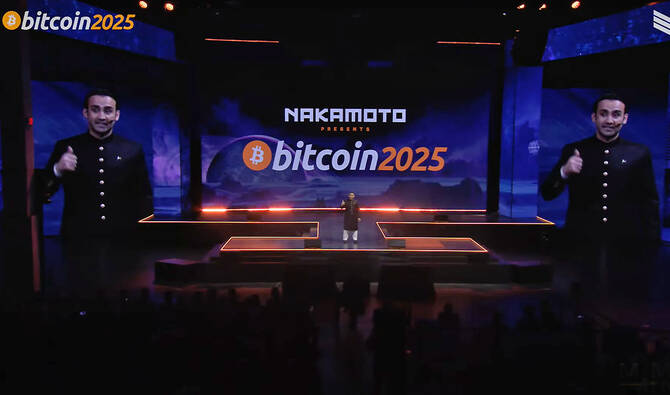

ISLAMABAD: Bilal Bin Saqib, Pakistan’s minister for crypto and blockchain and the CEO of the Pakistan Crypto Council (PCC), unveiled the country’s first government-led strategic bitcoin reserve at Bitcoin Vegas 2025, his office said on Thursday.
The strategic bitcoin reserve is a reserve asset, funded by the United States Treasury’s forfeited bitcoin, announced by President Donald Trump in March 2025. The reserve will be capitalized with bitcoin already owned by the federal government. The United States is the largest known state holder of bitcoin in the world, estimated to hold about 200,000 BTC, as of March 2025.
At Bitcoin 2025, the biggest bitcoin conference in the United States which is underway in Las Vegas, Saqib unveiled “the country’s first government-led Strategic Bitcoin Reserve, and with it, a radically new vision of Pakistan on the global map,” his office said in a statement.
“Bilal announced the establishment of a national Bitcoin wallet, holding digital assets already in state custody — not for sale or speculation, but as a sovereign reserve signaling long-term belief in decentralized finance.”
Pakistan set up the PCC in March, with Saqib, 34, as the CEO, to create a legal framework for cryptocurrency trading in a bid to lure international investment. Last month, Pakistan introduced its first-ever policy framework, created by a special government group under the Anti-Money Laundering (AML) and Counter Terrorism Financing (CTF) authority, to set rules for how digital money like cryptocurrencies and the companies that deal in it should operate in Pakistan. The policy has been formulated to align with compliance and financial integrity guidelines of the global Financial Action Task Force (FATF).
Earlier this month, the government also approved setting up the Pakistan Digital Assets Authority (PDAA), a specialized regulatory body to oversee blockchain-based financial infrastructure.
Speaking during his keynote at Bitcoin 2025, the PCC CEO highlighted that Pakistan had over 40 million crypto wallets, a median age of 23, and one of the largest and most active freelancer economies in the world.
“Saqib revealed that the government of Pakistan has allocated 2,000 megawatts of surplus electricity in Phase 1 for Bitcoin mining and AI data centers, opening doors to sovereign miners, tech firms, and clean energy partners around the world,” the statement said.
Saqib is also leading the creation of the Pakistan Digital Assets Authority (PDAA) “to empower builders, protect investors, and formalize digital finance frameworks for the future.”
“This wasn’t just a policy moment, it was a rebranding of a nation,” Saqib said at Bitcoin 2025, which featured speakers including White House officials, US lawmakers and crypto industry executives. This year’s keynote speaker was US Vice President JD Vance.
Digital assets have enjoyed a resurgence under President Trump, who courted cash from the crypto industry on the campaign trail by pledging to be a “crypto president.” In his first week in office, Trump ordered the creation of a cryptocurrency working group to propose digital asset regulations. In March, he hosted a group of crypto executives at the White House.
Congress is considering legislation to create a regulatory framework for stablecoins, a type of cryptocurrency pegged to the US dollar. The crypto industry has lobbied lawmakers to pass legislation creating new rules for digital assets and spent more than $119 million backing pro-crypto congressional candidates in last year’s elections.


