

Jeddah festival celebrates Korean culture

1 / 4
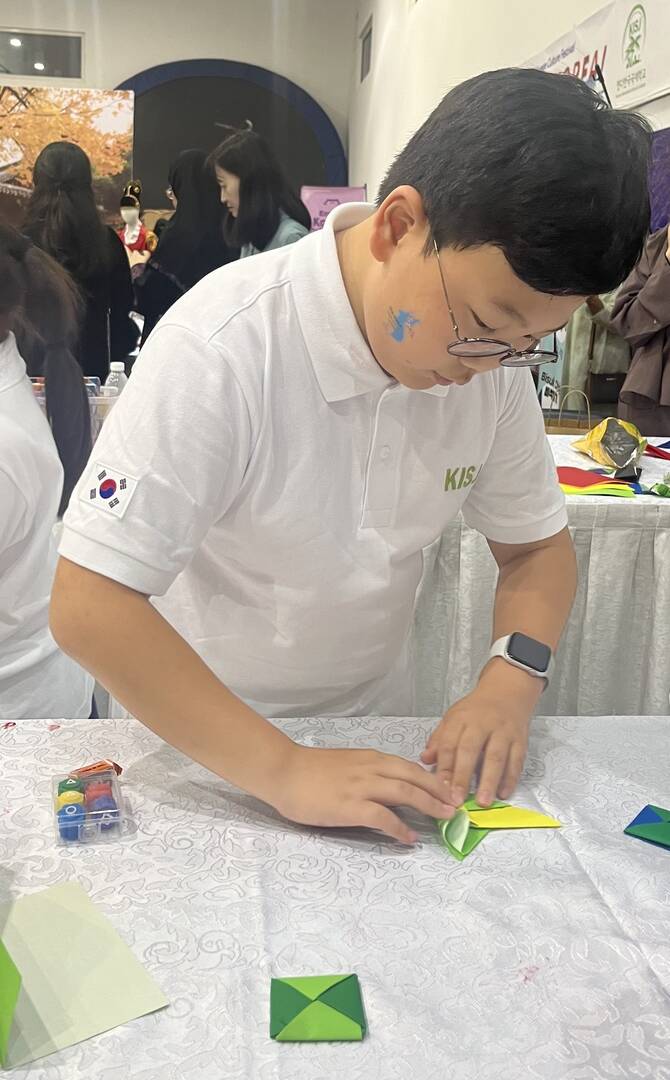
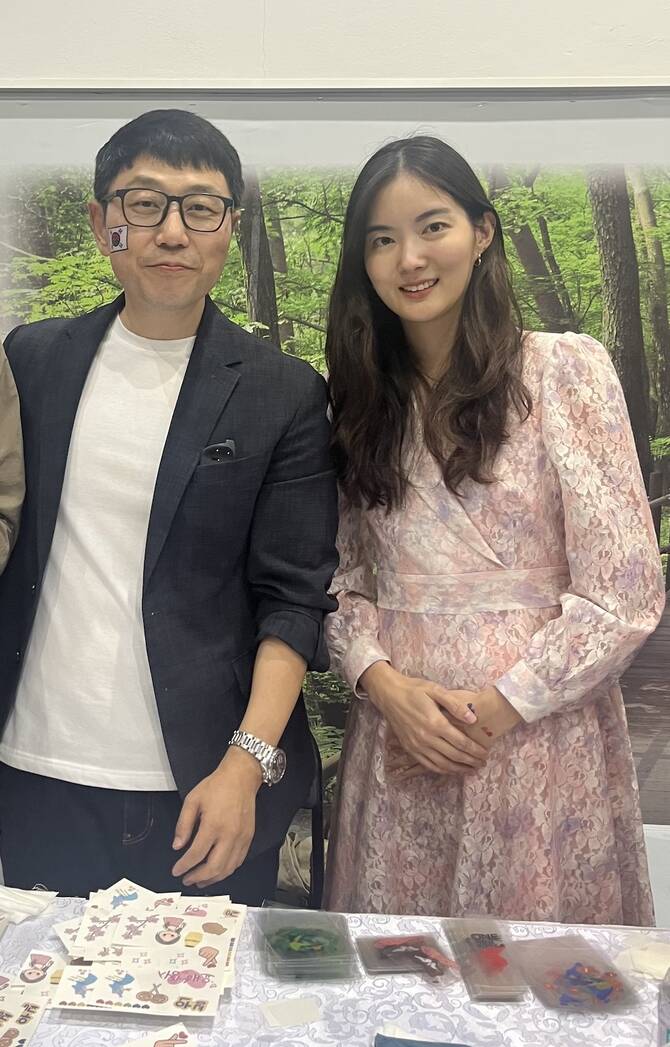
The Korean Culture Festival, which was organized by the Consulate General of South Korea, has been held at the Korean International School in Jeddah. (AN Photo)
2 / 4
The Korean Culture Festival, which was organized by the Consulate General of South Korea, has been held at the Korean International School in Jeddah. (AN Photo)
3 / 4
The Korean Culture Festival, which was organized by the Consulate General of South Korea, has been held at the Korean International School in Jeddah. (AN Photo)
4 / 4
The Korean Culture Festival, which was organized by the Consulate General of South Korea, has been held at the Korean International School in Jeddah. (AN Photo)
Short Url
Updated 10 May 2025
Follow

Jeddah festival celebrates Korean culture

  • Event strengthens ties through heritage, fun 

JEDDAH: The Korean Culture Festival, which was organized by the Consulate General of South Korea, has been held at the Korean International School in Jeddah.

This year’s theme, “Enjoy Korea,” drew around 500 guests to celebrate Korean heritage, culture, and the growing friendship between Saudi Arabia and Korea.

Held annually, the festival is part of the consulate’s efforts to foster cultural exchange and strengthen ties between the two nations.

The event was inaugurated by Consul General Woo Hong-koo, who spoke of the long-standing relationship between South Korea and Saudi Arabia.

He said: “This event provides a valuable opportunity to deepen residents’ interest in Korea. As the world’s 12th largest economy, Korea’s growth has been significantly supported by its long-standing cooperation with Saudi Arabia.

“Through events like this, we hope to inspire more people to explore Korea, a country that warmly welcomes all with its rich culture, dynamic traditions, and the global phenomenon of K-pop.”

One of the festival’s highlights was a pansori concert — a traditional Korean musical storytelling performance — by Chae Soo-jung, the chairman of the World Pansori Association, who traveled from South Korea to participate.

Guests explored various cultural activities, including a kimbap (Korean sushi) cooking class, traditional Korean calligraphy, and a hanbok experience, at which those attending could try on traditional attire.

A new addition this year was the virtual reality corner, offering immersive simulations of modern South Korea.

Han SangJun, principal of the Korean International School, highlighted the festival’s significance, saying: “Beyond showcasing Korean culture and tradition, this festival plays a vital role in building people-to-people connections and fostering mutual respect between our communities.

“It’s especially meaningful to see so many Saudi families and young people actively engage with Korean students, learn through hands-on activities, and create lasting memories. These interactions lay the groundwork for deeper educational and cultural collaboration in the future.”

A highlight was the involvement of Korean school students, who led an interactive segment on traditional games. These included ddakji (a paper-flipping game), gonggi (played with small stones), jegichagi (a Korean version of hacky sack), and biseokchigi (a stone-striking game). The activities encouraged participation from attendees of all ages.

Yeong Na, a representative of the Peaceful Unification Advisory Council, a government-affiliated organization promoting Korean identity and heritage, attended the festival, and said: “Our goal is to foster a deeper understanding of Korea’s historical journey and national values.

“By participating in events like this we hope to build meaningful cross-cultural dialogue and inspire greater interest in Korea’s past, present, and future.”

Ahmed Fatani, a university student, said: “I have always been a fan of K-pop, but this event showed me a whole new side of Korea. I had seen some of the traditional games but watching them live and trying them myself was amazing.

“The calligraphy and hands-on activities were also really memorable. It made me want to learn more about Korean history and hopefully visit the country one day.”


Carved by time: Saudi Arabia’s hidden geotourism gem of Razan

Updated 54 min 4 sec ago
Follow

Carved by time: Saudi Arabia’s hidden geotourism gem of Razan

  • Long before modern engineering, the geology of Razan functioned as effective natural infrastructure, sustaining life in an arid environment
  • This utility made Razan a strategic landmark, playing a vital role in the ancient Yemeni Hajj Road

AL-LITH: Sixty kilometers north of Al-Lith governorate in the Kingdom's west, rising above the shifting sands and valleys of the Makkah region, lies a place where the earth itself tells a story. This is Razan, a geological wonder where history is not written in ink, but etched into the stone by the patient hands of wind, water, and time.

Perched atop a high rocky mass and flanked by valleys to the northwest and southeast, Razan stands in natural isolation. This geographic solitude has acted as a guardian, preserving a landscape that feels almost otherworldly — a pristine stage set by nature over millennia.

The place is defined by its striking rock formations: dense clusters of stone, stepped ridges that resemble ancient staircases, and natural ceilings sculpted by the relentless flow of seasonal torrents.

The visual impact is one of dramatic contrast — the heaviness of solid rock balanced against open, airy spaces carved by erosion. Fine channels and intricate flow patterns mark the stone, serving as fossilized evidence of the water that once rushed through these corridors, shaping the land into a rugged work of art.
 

In the quiet majesty of Razan, the past is preserved. (SPA)

Nature’s infrastructure 

But Razan is more than just a scenic marvel; for centuries, it served as a lifeline. The same forces that sculpted the cliffs also hollowed out natural rock basins. These geological depressions acted as seasonal reservoirs, catching rainwater and supplementing nearby wells. Long before modern engineering, the geology of Razan functioned as effective natural infrastructure, sustaining life in an arid environment.

This utility made Razan a strategic landmark, playing a vital role in the ancient Yemeni Hajj Road. The sturdy, elevated terrain provided a natural pathway for pilgrims, offering stability and protection on their spiritual journey toward Makkah.

Today, Razan stands at the intersection of heritage and opportunity. No longer just a passage for pilgrims, it is emerging as a valuable asset for geotourism. Its unique topography offers a visual feast for travelers and a treasure trove for scientists studying geological history.

As Saudi Arabia moves toward the goals of Vision 2030, sites like Razan are finding new purpose. By transforming this geological narrative into a tourism destination, the region aims to preserve its natural heritage while breathing new life into the local economy.