



ISLAMABAD: Pakistan military spokesperson Lieutenant General Ahmed Sharif Chaudhry said on Wednesday eight civilians had been killed and 33 injured as India launched missile attacks at six locations in a sharp escalation of hostility between the two nuclear-armed rivals.
The development comes amid heightened tensions between the longstanding enemies in the aftermath of an attack on tourists in Indian-administered Kashmir last month in which 26 men were killed. India, without providing evidence publicly, has accused Pakistan of involvement in the assault in the hill station of Pahalgam and vowed to respond. Pakistan has denied involvement, and several top officials have spoken since of intelligence that India was planning to launch retaliatory attacks.
Kashmir has been disputed between India and Pakistan since 1947. Both rule it in part and claim it in full and have fought two of their three wars over the Himalayan region. India accuses Pakistan of arming and training militants involved in a separatist insurgency in its part of Kashmir since 1989, which Islamabad denies, saying it offers only moral and diplomatic support to the Kashmiri people in their struggle for self-determination.
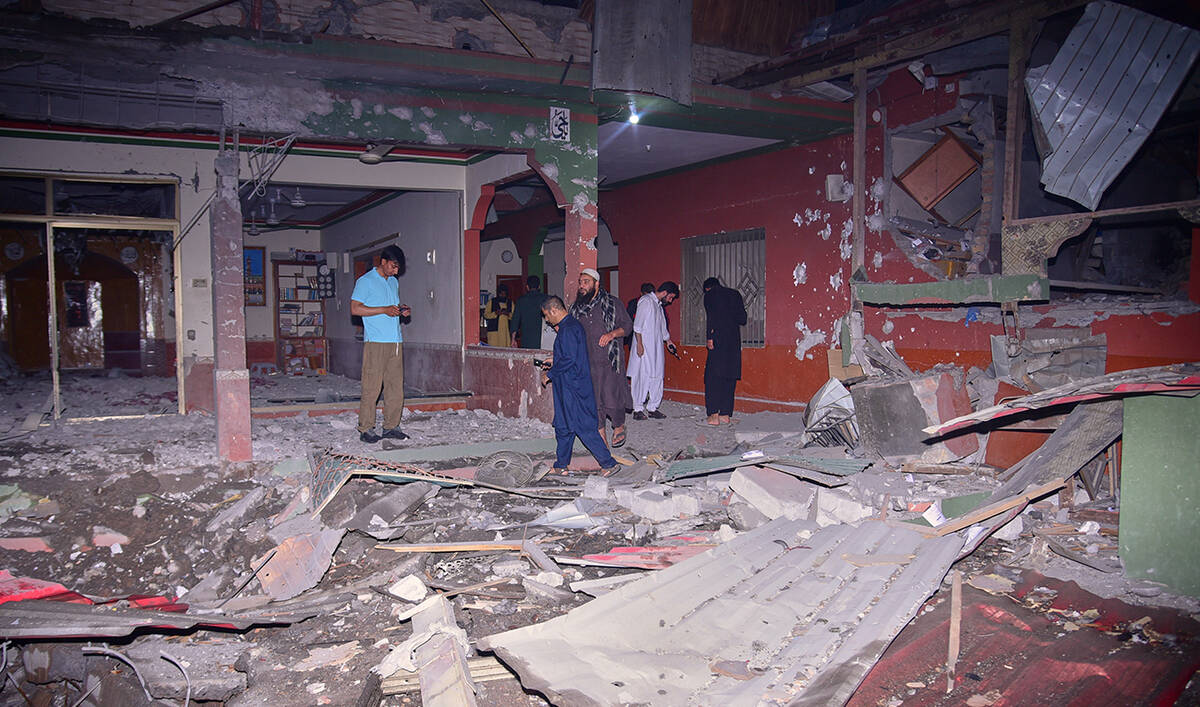
Local residents and members of the media examine a building damaged by a suspected Indian missile attack near Muzaffarabad, the capital of Azad Kashmir on May 7, 2025. (AP)
“Total of six locations in Pakistan were hit,” Chaudhry said in televised remarks, saying the attacks were carried out using “different weapons.”
“Eight Pakistanis were martyred, 35 are injured and two are missing.”
An Indian government statement said its armed forces had launched "Operation Sindoor," hitting nine sites in Pakistan and Azad Kashmir from where it said the Pahalgam attack of April 22 had been “planned and directed.”
No Pakistani military facilities had been targeted, the statement added.
Detailing the casualties, the Pakistan army spokesman said a 3-year-old child, two men and two women had been killed in Ahmedpur East, a city in the eastern province of Punjab, while 31 people were injured.
One man was killed in Muridke, also in Punjab, while two teenagers had died in Kotli in Azad Kashmir, which is a part of the disputed Himalayan region governed by Pakistan. Other places that were struck were Muzaffarabad, also in Azad Kashmir, and Sialkot and Shakargarh in Punjab, but no casualties were reported there.
“The Pakistan Armed Forces, with the full support of the Pakistani nation, are giving and will continue to give a strong response to this cowardly and unprovoked attack,” Chaudhry said, without giving details on the nature of Pakistan’s retaliation.
Information Minister Attaullah Tarar told BBC Pakistan had shot down three Indian planes while Defense Minister Khawaja Muhammad Asif told Bloomberg TV Pakistan has downed five Indian planes and captured some Indian soldiers also.
The claims could not be independently verified by Arab News.
When asked if he feared a further escalation of the conflict, Tarar told Sky News Pakistan had offered to be part of an investigation into the Pahalgam attack but India had acted as “the aggressor without evidence.”
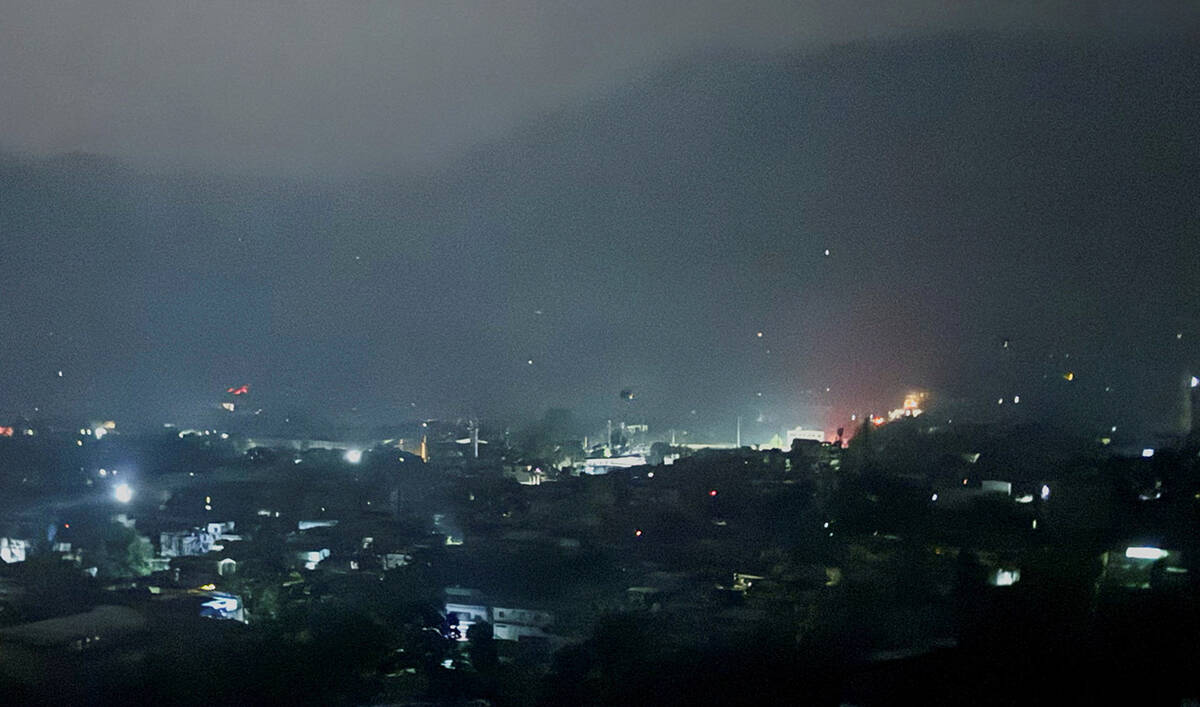
A city view of Muzaffarabad in Azad Kashmir on May 7, 2025. (REUTERS)
Pakistan's foreign ministry said while the Indian air force had remained within Indian airspace, it “violated Pakistan's sovereignty using standoff weapons.”
“MAXIMUM RESTRAINT”
Prime Minister Shehbaz Sharif has meanwhile convened a meeting of the National Security Committee at 10am to finalize Pakistan’s response to the Indian actions while the ministry of defense in New Delhi said it would provide a “detailed briefing” on the operation later in the day.
A spokesman for United Nations Secretary-General António Guterres said he was “very concerned” about the Indian military operations and had called for “maximum military restraint” from both countries.
"The world cannot afford a military confrontation between India and Pakistan,” the statement said.
Speaking to reporters at the White House, US President Donald Trump said he had just heard about the intensification of hostilities that had occurred in recent hours.
"It's a shame … I hope it ends very quickly," he said.
After the Pahalgam attack, India and Pakistan unleashed a raft of punitive measures against each other, with Pakistan closing its airspace to Indian airlines, and India suspending the 1960 Indus Waters Treaty that regulates water-sharing from the Indus River and its tributaries.
Diplomatic relations between Pakistan and India were weak even before the latest conflict as Pakistan had expelled India’s envoy and not posted its own ambassador in New Delhi after India revoked the semi-autonomous status of Kashmir in 2019.
The last military confrontation between the rivals occurred in 2019 when India conducted air strikes on what it said was a militant training camp near the northwestern Pakistani town of Balakot in response to a suicide car bombing in Indian-administered Kashmir's Pulwama area.
Pakistan, which said the planes had bombed an empty hillside and not a camp, launched a retaliatory incursion into Indian airspace that led to a dogfight between the two air forces, leading to the capture of an Indian pilot.
The situation cooled after he was released days later.
On Wednesday morning, Indian police said two women had been injured in Indian-administered Kashmir in shelling by Pakistani troops. One of them was in critical condition, they added. There was no comment from the Pakistani military.
In Pakistan, an emergency has been declared in the country’s largest and most populous province of Punjab, the provincial chief minister said, with hospitals and security forces on high alert. Schools will also remain closed on Wednesday.
A spokesperson for Pakistan International Airlines said flights already airborne had been diverted to Karachi, while flights on the ground had been put on hold.
Qatar Airways said on X it had temporarily suspended flights to Pakistan due to Pakistani airspace closure.
With inputs from Reuters


