ISLAMABAD: Pakistan’s special representative to Afghanistan, Ambassador Muhammad Sadiq, said on Tuesday it was important for Islamabad to continue engagement with Afghanistan to better manage the country’s western border with India, amid friction between the neighbors over a surge in militancy in Pakistan.
Pakistan has witnessed a surge in militant violence since the Pakistani Taliban, or the Tehreek-e-Taliban Pakistan (TTP), called off their months-long ceasefire with the government in late 2022. Islamabad has frequently accused that militant groups use Afghan soil to launch cross-border attacks in Pakistan, an allegation the Afghan Taliban deny, maintaining there are no militant groups operating in their territory.
Late last month, Pakistan’s army said it had killed over 70 militants who were attempting to cross into Pakistan from Afghanistan. The development came amid Pakistan’s tensions with another neighbor to the east, India, following an attack in Indian-administered Kashmir that killed 26 tourists on April 22. Pakistani Information Minister Attaullah Tatar has said that New Delhi blamed the attack on Islamabad to divert Pakistan’s security focus from its western border.
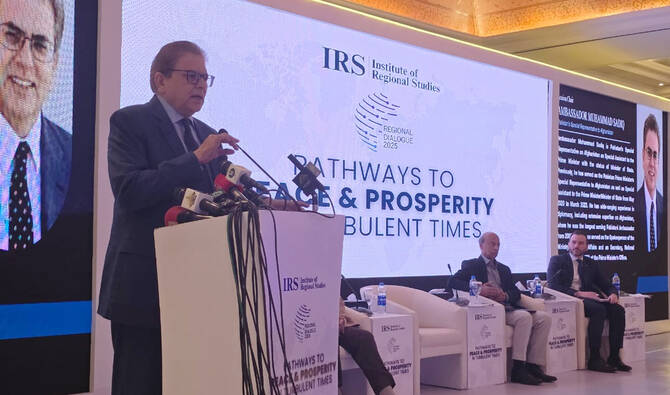
“The important thing [for Pakistan] to do, particularly with Afghanistan, is to continuously remain engaged with them, to act when it’s required and act in a required way,” Sadiq said, addressing a regional conference in Islamabad on ‘Pathways to Peace and Prosperity in Turbulent Times.’
“The sooner we act on something, the sooner we engage with Afghanistan and the government and people of Afghanistan, the sooner we will get results and whenever we delay, we actually get into trouble, more and more trouble.”
Pakistan’s focus should be prevention of smuggling and promotion of trade with Afghanistan, according to the envoy. The “one-document regime” should regulate travel between the two countries and not “hinder people-to-people contact.”
“Anybody who’s going to Afghanistan or coming from Afghanistan should take a passport and get a visa, so that we can have a proper record of entry and exits,” he added.
Pakistan implemented the one-document regime with Afghanistan on January 1, 2023, which requires Afghan nationals to present a valid passport and visa for entry into Pakistan, ending the previous practice of cross-border movement showing local identity documents. The regime aims to regulate travel, enhance border security, and maintain a proper record of entry and exit.
Speaking at the event, Faisal Karim Kundi, governor of Pakistan’s northwestern Khyber Pakhtunkhwa (KP) province that borders Afghanistan, said Islamabad seeks peace not for political gains, but to unlock the true potential of the region.
“Pakistan always believes in dialogues, but dialogues are not our weakness as we are ready for any adventure from India,” he said, adding that Pakistan’s defense was in “safe hands” which was portrayed in the past as well.
Defense analysts and security expert term simultaneous pressure on both eastern and western borders a “serious strategic challenge” for Pakistan, warning it could dilute the country’s focus in its fight against militancy.
Besides a surge in militancy in the northwest, Pakistan is also facing an intensifying separatist insurgency in the southwestern Balochistan province, where separatist militants have mounted their attacks on security forces, police and foreign nationals in recent months.
Dr. Qamar Cheema, a defense analyst, said if India engaged Pakistan through “kinetic means,” it could undermine Pakistan’s ability to effectively combat militancy.
“Any direct attack on Pakistan at the eastern border will definitely challenge [Pakistan’s] capabilities because it will stretch the armed forces,” he told Arab News on the sidelines of the conference.
Muhammad Ali, a security expert, agreed with Cheema.
“It seems that India seeks to divert Pakistan’s attention, resources and force posture to provide relief to TTP and BLA (Baloch Liberation Army) in KP and Balochistan,” he said, adding that Islamabad was “well aware of the challenges” in simultaneously facing rising militancy and an escalation on the Pakistan-India border.
Cheema said Pakistan did not want to be stretched further, which was why it was telling the international community that the transnational militant threat was more important.
“I think this is where the West needs to jump in so that Pakistan’s efforts against the war against terrorism and militant organizations do not get compromised,” he added.


![]()

Pakistan envoy stresses continued engagement with Afghanistan to secure border with India
Short Url
https://arab.news/y8bcv
Pakistan envoy stresses continued engagement with Afghanistan to secure border with India
- Pakistan has been battling twin insurgencies in its western regions that border Afghanistan, while Islamabad’s tensions with Indian have also flared up recently
- Analysts’ term simultaneous pressure on both eastern and western borders a ‘serious challenge’ for Pakistan, warning it could dilute Islamabad’s focus on militancy
Latest updates


© 2026 SAUDI RESEARCH & PUBLISHING COMPANY, All Rights Reserved And subject to Terms of Use Agreement.