

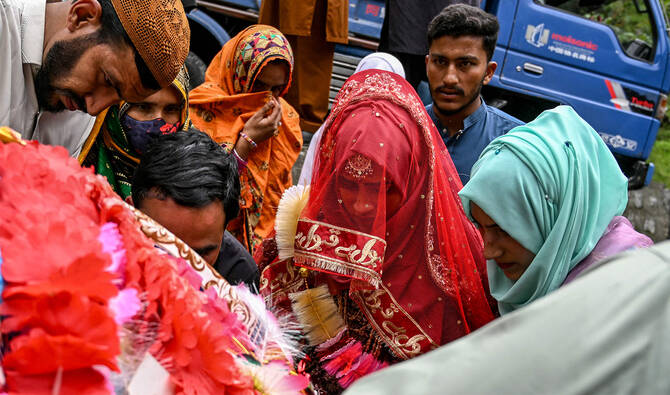

Neelum Valley, Pakistan: Rabia Bibi, a glittering red dupatta pulled over her eyes, wasn’t about to let the threat of war with India stop her wedding in a remote valley in Pakistan-administered Kashmir.
“In our childhood the situation was also like this but we are not afraid. Nor will we be,” the 18-year-old told AFP after being carried in a flower-garlanded “doli” carriage.
“We want peace, so our life does not get affected,” said the bride, radiant in gold bangles, bejeweled bridal headpiece and richly embroidered scarlet robe.

Relatives carry the bride, Rabia Bibi, in a Doli, a traditional hand cart used to carry brides at weddings, as they leave for the groom's house in Ashkot village on the Line of Control (LoC) in Neelum Valley, district of Pakistan's Kashmir, on May 3, 2025, following the ongoing border tensions between India and Pakistan after the Kashmir tourist attack. (Photo by Farooq NAEEM / AFP)
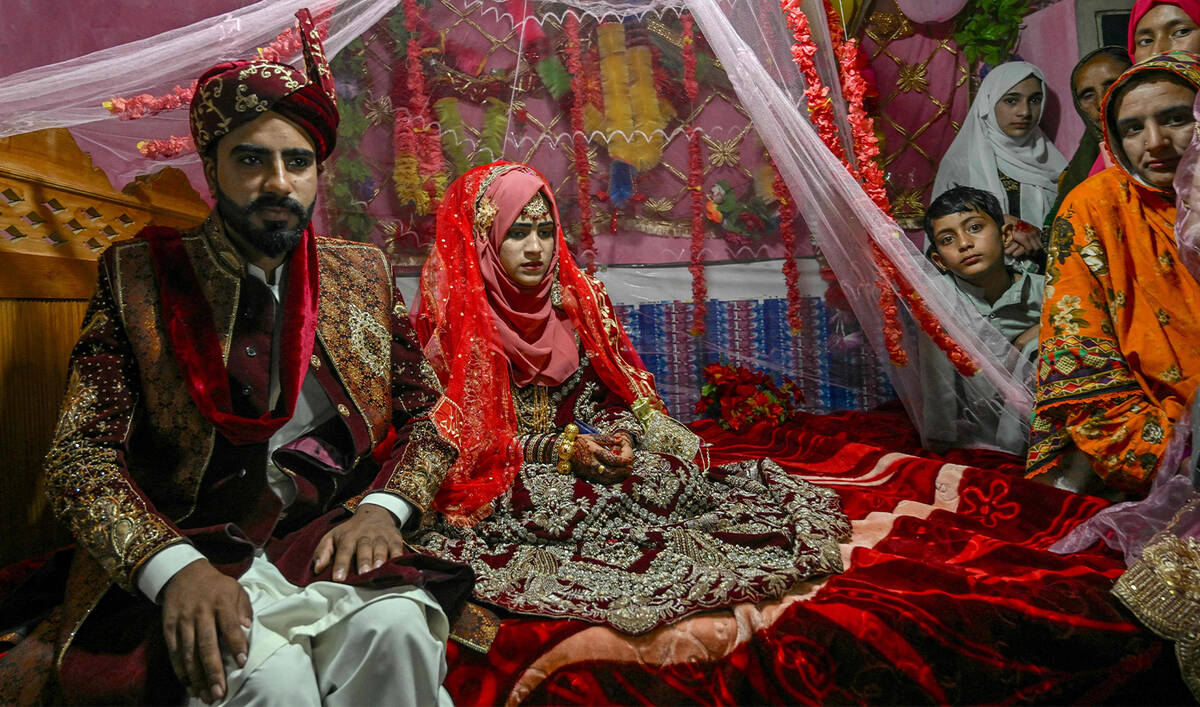
At the ceremony — preceded by the sacrifice of a chicken — groom Chaudhry Junaid, no less resplendent in his elaborate sherwani coat and red-and-gold turban, was also defiant.
“People are anxious and worried, but even so, we haven’t canceled any traditional ceremonies,” the 23-year-old chef said.
The Neelum River and settlements along the Line of Control (LoC) between India (L) and Pakistan are pictured on May 3, 2025, from the Neelum Valley, a district in Pakistan's Kashmir. (AFP)
Tensions between the nuclear-armed arch-rivals have soared since India accused Pakistan of backing a shooting that killed 26 civilians on the Indian side of disputed Kashmir on April 22.
Indian Prime Minister Narendra Modi has given his military “full operational freedom” to respond to the attack.
The two sides have traded gunfire for more than a week on the heavily militarised border and Pakistan on Saturday conducted a “training launch” of a missile to prove its “operational readiness.”
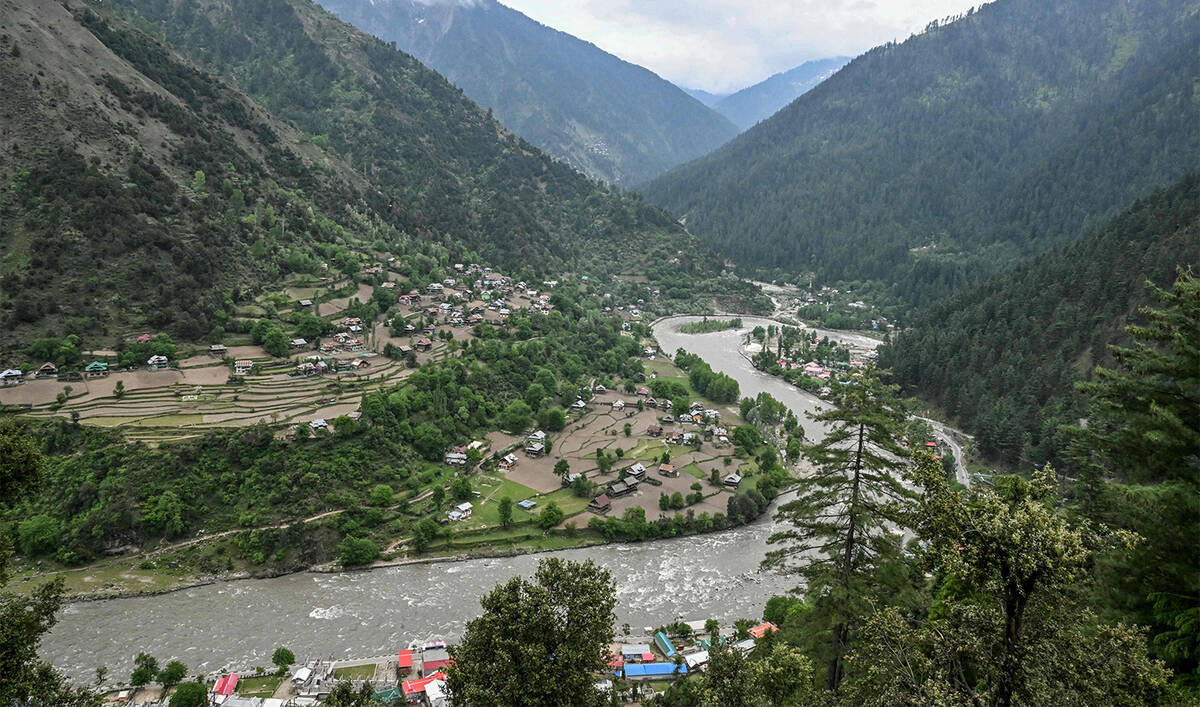
The Neelum River and settlements along the Line of Control (LoC) between India (L) and Pakistan are pictured on May 3, 2025, from the Neelum Valley, a district in Pakistan's Kashmir. (AFP)
Islamabad last week warned they had “credible intelligence” that India was planning imminent strikes.
International pressure has been piled on both New Delhi and Islamabad to de-escalate.
On the Pakistani side, emergency drills have been carried out in playing fields, residents have been told to stock up on food and medicine, and religious schools have shut.
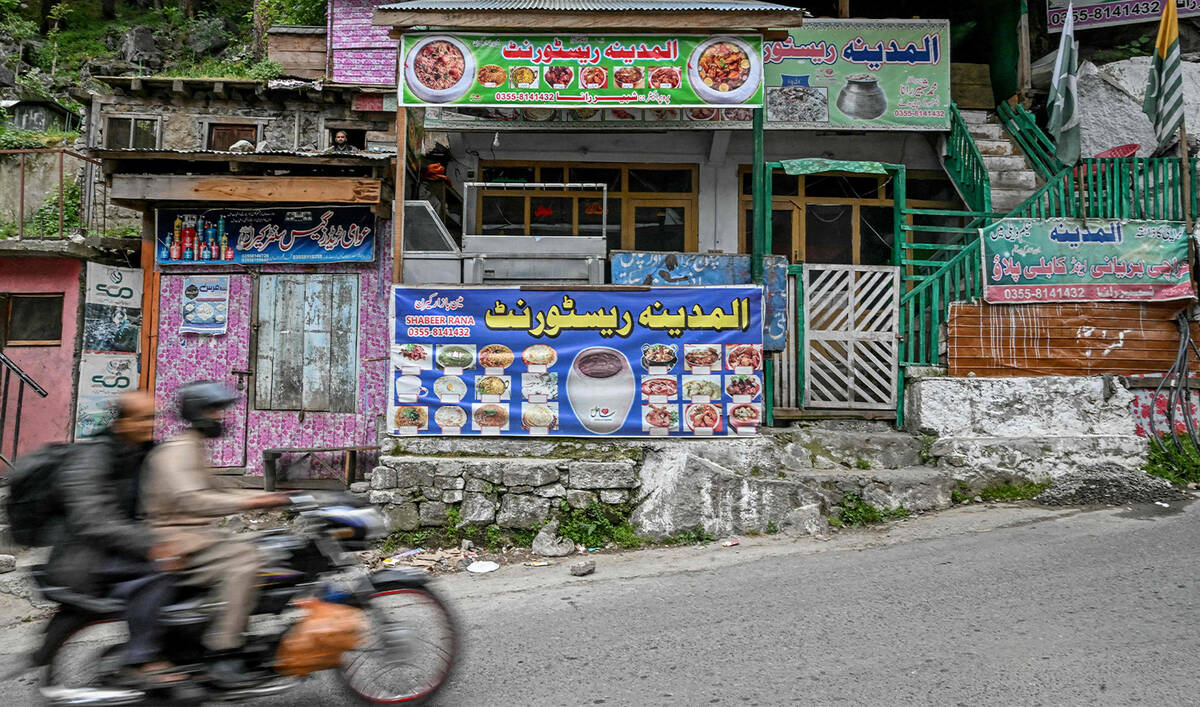
A motorist rides past deserted tourist hotels and eateries in Keran village on the Line of Control (LoC) in Neelum Valley, a district of Pakistan's Kashmir, on May 3, 2025. (AFP)
In Indian-run Kashmir, a vast manhunt seeking the gunmen continues across the territory, while those living along the frontier are moving further away — or cleaning out bunkers fearing conflict.
India and Pakistan, which both claim Kashmir in full, have fought several wars over the Himalayan territory since the end of British rule in 1947.
Ordinary Kashmiris living on both sides of the divided Muslim-majority region are often the first victims caught in the crossfire.
In a checkpoint-free corner of the picturesque Neelum Valley, a tourist epicenter that was shut down last week, Indian territory is the other side of the river that winds through the mountainous region.
Residents told AFP they had been urged by the Pakistani authorities to remain vigilant because of the threat of a possible military confrontation.
In another village, mechanical engineer Shoaib Akhtar was also getting married.
“This is the happiest occasion of our lives, and we won’t let anything ruin it,” said Akhtar, the 25-year-old groom surrounded by family.
“Right now, I’m getting married and that’s what matters most. If war comes, we’ll deal with it when it happens,” he added.
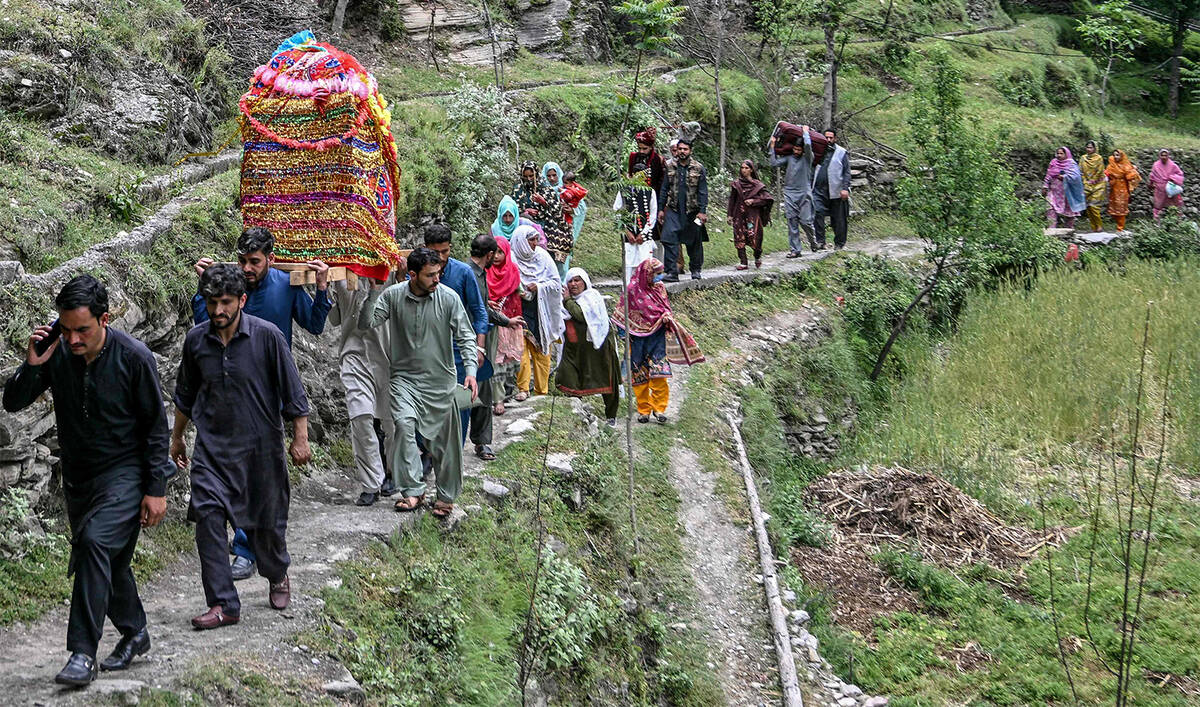
Relatives carry the bride, Rabia Bibi, in a Doli, a traditional hand cart used to carry brides at weddings, as they leave for the groom's house in Ashkot village on the Line of Control (LoC) in Neelum Valley, district of Pakistan's Kashmir, on May 3, 2025. (AFP)
“We are happy, and if India has some issues, we don’t care,” Bibi said.
“We stand firm and will fight for our interests and our nation.”


