NEW DELHI: The United Nations urged India and Pakistan to show “maximum restraint” as the nuclear-armed rivals imposed tit-for-tat diplomatic measures over a deadly shooting in Kashmir.
Relations have plunged to their lowest level in years, with India accusing Pakistan of supporting “cross-border terrorism” after gunmen carried out the worst attack on civilians in contested Muslim-majority Kashmir for a quarter of a century.
“We very much appeal to both the governments... to exercise maximum restraint, and to ensure that the situation and the developments we’ve seen do not deteriorate any further,” UN spokesman Stephane Dujarric told reporters in New York on Thursday.
“Any issues between Pakistan and India, we believe, can be and should be resolved peacefully through meaningful mutual engagement.”
Indian Prime Minister Narendra Modi on Thursday vowed to hunt down the gunmen responsible for killing 26 civilians at the popular tourist site of Pahalgam, after Indian police identified two of the three fugitive gunmen as Pakistani.
“I say to the whole world: India will identify, track and punish every terrorist and their backer,” Modi said, in his first speech since Tuesday’s attack in the Himalayan region.
“We will pursue them to the ends of the Earth.”
Denying any involvement, Islamabad called attempts to link Pakistan to the Pahalgam attack “frivolous” and vowed to respond to any Indian action.
“Any threat to Pakistan’s sovereignty and to the security of its people will be met with firm reciprocal measures in all domains,” a Pakistani statement said, after Pakistan Prime Minister Shehbaz Sharif held a National Security Committee meeting with top military chiefs.
Kashmir has been divided between India and Pakistan since their independence in 1947, with both claiming the territory in full but governing separate portions of it.
Rebel groups have waged an insurgency in Indian-controlled Kashmir since 1989, demanding independence or a merger with Pakistan.
India’s air force and navy both carried out military exercises Thursday.
Indian police say the three gunmen are members of the Pakistan-based Lashkar-e-Taiba group, a UN-designated terrorist organization.
They offered a two million rupee ($23,500) bounty for information leading to each man’s arrest.
A day after the attack, New Delhi suspended a water-sharing treaty, announced the closure of the main land border crossing with Pakistan, downgraded diplomatic ties, and withdrew visas for Pakistanis.
In response, Islamabad on Thursday ordered the expulsion of Indian diplomats and military advisers, canceling visas for Indian nationals — with the exception of Sikh pilgrims — and closing the main border crossing from its side.
Pakistan also warned any attempt by India to stop the supply of water from the Indus River would be an “act of war.”
Pahalgam marks a dramatic shift in recent Kashmiri rebel attacks, which typically target Indian security forces.
Experts say that a military response may still be in the pipeline, with some speculating that it may come within days while others say weeks.
In 2019, a suicide attack killed 41 Indian troops in Kashmir and triggered Indian air strikes inside Pakistan, bringing the countries to the brink of all-out war.
“Whatever little land these terrorists have, it’s time to reduce it to dust,” Modi said on Thursday, after holding two minutes of silence in memory of those killed, all but one of whom was Indian.
India has taken its time to respond to past attacks.
The worst attack in recent years in Indian-run Kashmir was at Pulwama in 2019, when insurgents rammed a car packed with explosives into a police convoy, killing 40 and wounding 35.
Indian fighter jets carried out air strikes on Pakistani territory 12 days later.
Tuesday’s assault occurred as tourists enjoyed tranquil mountain views at the popular site at Pahalgam, when gunmen burst out of forests and raked crowds with automatic weapons.
Survivors told Indian media the gunmen targeted men and spared those who could give the Islamic declaration of faith.
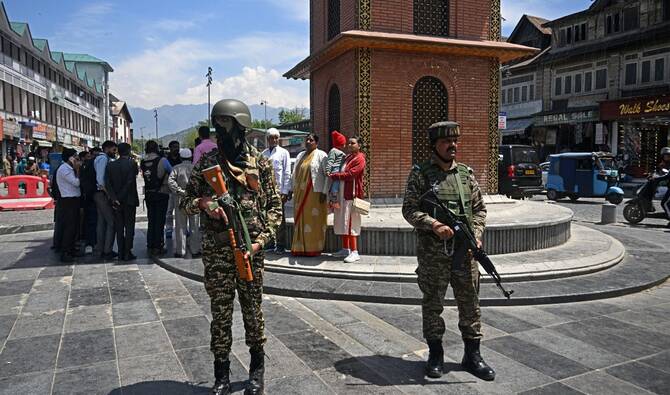
Indian security forces have launched a vast manhunt for the attackers, with large numbers of people detained.
The attack has enraged Hindu nationalist groups, and students from Kashmir at institutions across India have reported experiencing harassment and intimidation.


![]()

India and Pakistan urged to have ‘maximum restraint’ after Kashmir attack
Short Url
https://arab.news/59qbk
India and Pakistan urged to have ‘maximum restraint’ after Kashmir attack
- Relations have plunged to their lowest level in years after gunmen carried out the worst attack on civilians in Indian-administered Kashmir
- Kashmir has been divided between India and Pakistan since independence in 1947, with both claiming the territory in full but governing in part
Latest updates


© 2026 SAUDI RESEARCH & PUBLISHING COMPANY, All Rights Reserved And subject to Terms of Use Agreement.