

Saudi real estate prices rise 4.3% in Q1 on residential sector gains: GASTAT 

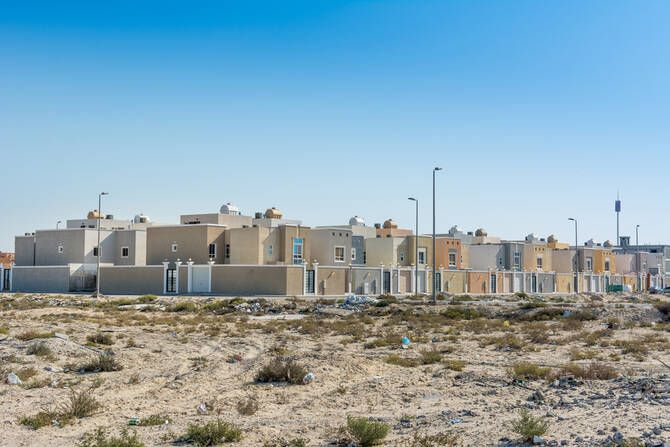
According to the General Authority for Statistics, residential property prices rose 5.1 percent in the first quarter of the year, while commercial real estate prices increased by 2.5 percent. Shutterstock.
Short Url
Updated 15 April 2025
Follow

Saudi real estate prices rise 4.3% in Q1 on residential sector gains: GASTAT 

RIYADH: Saudi Arabia’s real estate market maintained its growth trajectory in the first quarter of 2025, with overall property prices climbing 4.3 percent year on year, official data showed. 

According to the General Authority for Statistics, residential property prices rose 5.1 percent in the first quarter of the year, while commercial real estate prices increased by 2.5 percent. In contrast, the agricultural sector saw a 1.1 percent decline in property values during the same period.

The real estate sector plays a pivotal role in the Kingdom’s Vision 2030 strategy to diversify the economy by transforming Saudi Arabia into a regional hub for tourism, business, and living, with authorities introducing a range of policy measures in recent years to boost home ownership and enhance transparency in real estate transactions. 

“Data indicates that real estate prices in the residential sector experienced varying increases in the first quarter of 2025 compared to the same quarter of the previous year,” GASTAT said in its quarterly Real Estate Price Index report. 

Within the residential segment, which holds a 72.7 percent weight in the index, land plot prices, the largest sub-category, increased by 5.3 percent. Villa costs jumped 10.3 percent, apartment prices gained 1.2 percent, and residential floor costs climbed 2.8 percent, the analysis showed. 

The commercial sector’s 2.5 percent annual growth was primarily led by a 2.4 percent increase in land prices, while commercial building prices rose 3.1 percent and shop or gallery prices were up 5.1 percent.   

Regional trends

Regarding the impact of administrative regions on the annual change, the national level recorded an increase of 4.3 percent.

“This was mainly driven by the annual price increase in Riyadh Region by 10.7 percent, followed by Makkah Region at 1.5 percent, while the Eastern Region recorded a decline of 5.5 percent,” the report said.

It added: “At the regional level, Northern Borders, Al-Jouf, and Najran recorded the highest annual increases after Riyadh, at 8.7 percent, 8.2 percent, and 5.6 percent, respectively. Meanwhile, Eastern and Asir Regions recorded the highest rates of decline, at 5.5 percent and 4.4 percent, respectively.” 

Quarterly comparison

Compared to the final quarter of 2024, the overall real estate index was up 0.7 percent in the first quarter. Residential prices increased 1.9 percent over the period, fueled by a 3.2 percent rise in land plot costs. Apartment and residential floor prices edged up 0.2 percent each, while villa costs declined 1.4 percent.

In the commercial sector, prices declined by 2.1 percent quarter on quarter, driven by a 2.6 percent drop in commercial land plot prices.

“In contrast, building prices increased by 1.6 percent, and gallery/shop prices rose by 1.8 percent. Similarly, prices in the agricultural real estate sector declined by 3.8 percent, driven by a corresponding 3.8 percent decrease in agricultural land prices,” the report added. 


Profit scents lure new investors into Saudi perfume market 

Updated 4 sec ago
Follow

Profit scents lure new investors into Saudi perfume market 

RIYADH: In Saudi Arabia’s perfume market, which at first glance appears saturated with local and global brands, new investors are still entering the sector with fresh labels, indicating that domestic demand can accommodate new competitors. 

Speaking to Al-Eqtisadiah at the Blue Oud and International Perfumes Exhibition in Riyadh, Badr Al-Sayyed, owner of the “Amour” perfume brand, said launching his brand cost SR250,000 ($66,660), with retail prices set at around SR249 per bottle, citing the quality and purity of the essential oils used. 

Al-Sayyed added that the brand was launched in September 2025, initially through an online store, with plans to expand physically in the Eastern Province within the next two years. 

High profit margins  

He noted that the online store receives more than 7,000 visits a month from customers across the Gulf region, with sales growth of between 5 percent and 8 percent from September to December 2025. 

He emphasized that Saudi Arabia leads the region in sales, followed by the UAE, Oman and Bahrain, describing profit margins in the perfume sector as excellent. 

Naif Al-Juwair, a procurement representative at Oud Al-Edan, said the company’s most popular oud types are Moroccan Live and Moroccan Dead oud, with the latter in higher demand. 

He explained that the difference lies in the extraction location on the tree and its condition, with Dead oud known for its classic, cool and long-lasting incense aroma. 

Al-Juwair added that the company operates five offices outside Saudi Arabia and works with oud manufacturers in Indonesia and Vietnam. 

Gulf markets support domestic demand 

Al-Juwair said online sales account for 10 to 15 percent of total sales, while overall company sales grew by up to 70 percent last year. 

He stressed that maintaining quality is essential to balancing profit margins and customer trust, describing the Saudi oud market as strong, with Kuwait ranking second in purchasing power. 

Abdulrahman Baraka, a marketer for the Vanilla perfume brand, said Saudi Arabia accounts for 80 to 90 percent of the brand’s total sales, followed by the UAE at 7 percent and Qatar. 

He said the average bottle sells for around SR300, with the brand focusing on exhibition participation, where sales often outperform traditional stores, generating profits of between SR50,000 and SR100,000 over the 10-day exhibition period. 

He added that the most active consumer group is aged 20 to 30, of both genders, with essential oils imported from Turkiye and perfumes manufactured in Saudi Arabia. He emphasized that all fragrances are proprietary creations, including a recent cola-scented perfume. 

Seasonal trends shape fragrance preferences 

Al-Sayyed explained that fragrance notes vary by taste, individual preference and season, noting that citrus notes such as lemon and bergamot remain popular year-round. 

Summer fragrances, he added, emphasize light, refreshing fruit and herbal notes, while winter scents favor warm, deep notes such as wood, leather, oud and amber. He said men’s perfumes generally lean toward citrus notes, while women’s fragrances focus more on floral accords. 

The perfumer emphasized that he does not seek to compete with others, noting that quality is the core principle and source of strength at every stage of his work. 

He added that essential oils are imported from Grasse, France — renowned worldwide for perfume production — in addition to relying on high-quality perfume factories in Italy, the UK and Switzerland.