


Japanese leader says he hopes Osaka expo will help reunite a divided world

1 / 3
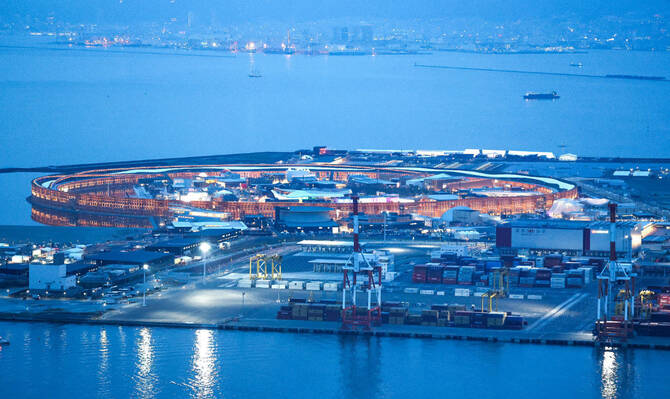
​ This overview image shows the "Grand Ring", made of wood, lit up at dusk on the eve of the opening of the 2025 Osaka Expo in Osaka on April 12, 2025. (JIJI PRESS photo via AFP)
2 / 3
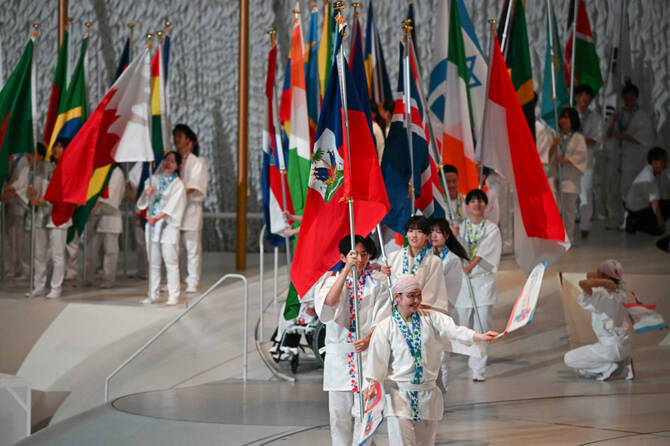
Flag-bearers walk on the stage during the official opening ceremony of the 2025 Osaka Expo in the city of Osaka on April 12, 2025, a day before the event opens to the public for six months. (AFP)
3 / 3
Short Url
Updated 13 April 2025
Follow

Japanese leader says he hopes Osaka expo will help reunite a divided world

  • Expo 2025 Osaka officially opened Sunday, with the theme of life, world and the future
  • It is Osaka’s second world expo after the 1970 event that scored a huge success and attracted 64 million visitors — a record until Shanghai in 2010

OSAKA, Japan: Japanese Prime Minister Shigeru Ishiba, speaking at Saturday’s opening ceremony for the Osaka expo, expressed his hope that the event will help restore global unity in a world plagued by conflicts and trade wars.
“The world, having overcome the coronavirus pandemic, is now threatened by an array of divisions,” Ishiba said. “At a time like this, it is extremely meaningful that people from around the world gather here and discuss the theme of life and experience cutting-edge technology, diverse ideas and culture.”
Expo 2025 Osaka officially opened Sunday, with the theme of life, world and the future, and Japan hopes to bring unity and portray a future society.
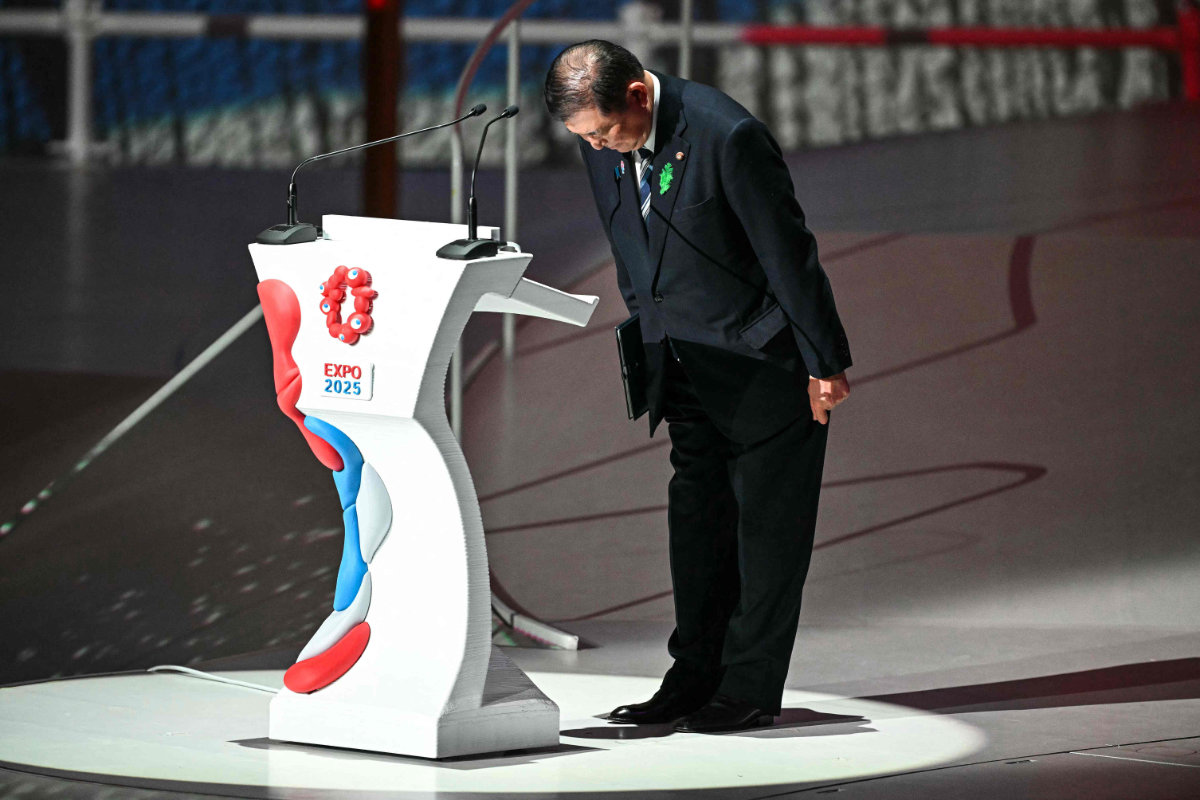


Japan's Prime Minister Shigeru Ishiba takes to the podium to deliver a speech at the official opening ceremony of the 2025 Osaka Expo in the city of Osaka on April 12, 2025, a day before the event opens to the public for six months. (AFP)

But the event’s celebrations have been somewhat dampened by US President Donald Trump’s recent tariff threats, which add to global tension and uncertainty, with Russia’s war in Ukraine and conflict in the Middle East dragging on.
Citing the expo’s iconic lattice-like wooden “Grand Ring,” which symbolizes unity and encircles the venue, Ishiba said: “I sincerely hope the world will unite again through interactions among countries and visitors in and outside of this ring.”
The costly ring, the world’s largest wooden architectural structure, is 20 meters (65 feet) high and has a 2-kilometer (1.2-mile) circumference.

During the six-month event on the reclaimed island and industrial waste burial site of Yumeshima, which means dream island, in the Osaka Bay, the city is hosting some 180 countries, regions and organizations showcasing their futuristic exhibits inside of about 80 pavilions of unique designs.
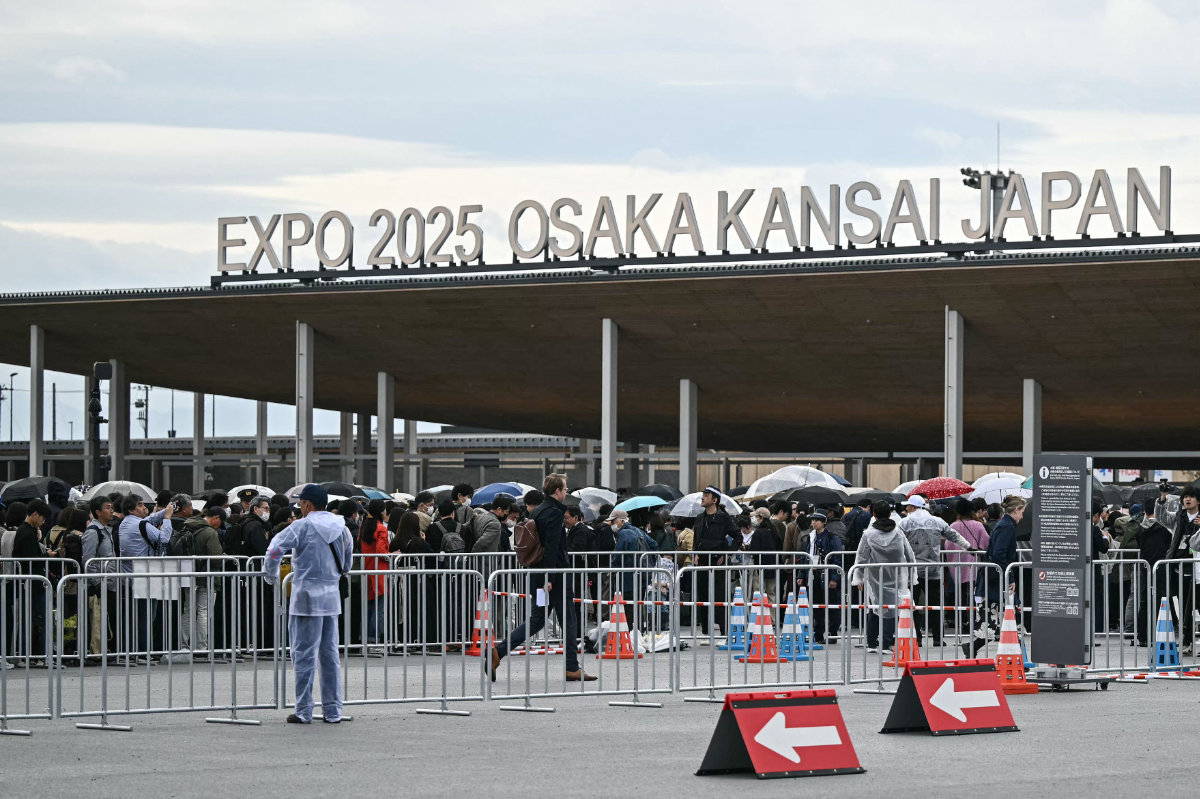


Visitors queue for the gates to open at 9 a.m. on the first day of the 2025 Osaka Expo in the city of Osaka on April 13, 2025. (AFP)

It is Osaka’s second world expo after the 1970 event that scored a huge success and attracted 64 million visitors — a record until Shanghai in 2010.
This time, Japan has faced dwindling public interest, and support and was hit by soaring construction costs due to the weaker yen. The cost nearly doubled from the initial estimate to 235 billion yen ($1.64 billion), about 14 percent of which went to the ring, triggering criticisms from many Japanese over the government’s use of their tax money.
The cost increase also caused construction delays for some countries. Several pavilions, including those of Nepal and India, were not quite ready Saturday. Conflicts also affected preparations for Ukraine and the Palestinians. Russia did not participate.


Signage that reads "not for sale" is seen above the Ukraine pavilion on the first day of the six-month 2025 Osaka Expo in the city of Osaka on April 13, 2025. (AFP)

Ticket sales have been slow. So far, 9 million advance tickets had been sold, far short of the organizers’ target of 14 million. Organizers hope to have more than 28 million visitors at the event that lasts through Oct. 13.

Emperor Naruhito, in his address at Saturday’s opening ceremony, recalled visiting the earlier expo as a fascinating experience for a then 10-year-old prince.
“I vividly remember how excited I was coming across the latest technology, playing with a wireless phone and looking at the moon rock,” brought back by the US Apollo 12 lunar mission, said the emperor, now 65.
Naruhito said he hoped the second Osaka expo would be as successful and expressed hope that children will learn more about people, regions and the world and think about future society by interacting with next-generation technologies and efforts for sustainable future.


Germany blames Russia for cyberattack on air safety, election interference

Updated 4 sec ago
Follow

Germany blames Russia for cyberattack on air safety, election interference

  • “We have been able to clearly identify the handwriting behind it and prove Moscow’s responsibility,” said the spokesman
  • “Our intelligence findings prove that the Russian military intelligence service GRU bears responsibility for this attack“

BERLIN: Germany on Friday accused Russia of a cyberattack targeting its air traffic control and spreading disinformation ahead of February’s general election, charges dismissed by Russia as “absurd” and “baseless.”
A German foreign ministry spokesman said security services had proof that hacker groups run by Russia’s military intelligence service GRU were responsible for the attack and influence operations.
“Based on comprehensive analysis by the German intelligence services, we have been able to clearly identify the handwriting behind it and prove Moscow’s responsibility,” said the spokesman.
“We can now clearly attribute the cyberattack against German Air Safety in August 2024 to the hacker collective APT28, also known as Fancy Bear,” he told a regular press briefing.
“Our intelligence findings prove that the Russian military intelligence service GRU bears responsibility for this attack,” added the spokesman.
He also said Russia had sought to influence February’s parliamentary election, which was won by the conservatives of Chancellor Friedrich Merz, with the far-right AfD scoring its best-ever result in second place.
“Second, we can now state definitively that Russia, through the Storm 1516 campaign, sought to influence and destabilize the most recent federal election,” he added at a press conference.
The spokesman said a GRU-supported Moscow think tank and other groups had spread artificially generated or deepfake images and other content, and that the goal was to divide society and “undermine trust in democratic institutions.”
The Russian embassy in Berlin said in a statement sent to AFP that it “categorically rejected” that Russia was behind any of the activity.
“The accusations of Russian state structures’ involvement in these incidents and in the activities of hacker groups in general are baseless, unfounded and absurd,” the statement said.
According to security sources, much of the material spread by the Storm 1516 campaign involved spurious claims about Merz and other prominent politicians such as former foreign minister Annalena Baerbock and former vice chancellor Robert Habeck, both prominent Greens party members.
AFP’s German Fact Check service debunked two of the other claims in the campaign aimed at subverting trust in elections; namely that the AfD had been left off ballots in the city of Leipzig and that votes for the party in Hamburg were destroyed before they could be counted.

- ‘Pay a price’ -

The foreign ministry spokesman said Germany had “absolutely solid proof” that Russia was behind the operations but added that he could not go into detail because this would involve discussing the work of German intelligence services.
The head of the BfV domestic intelligence agency Sinan Selen said in a statement that “the ‘Storm-1516’ campaign shows in a very concrete way how our democratic order is being attacked.”
“This disinformation ecosystem includes pro-Russian influencers with a wide reach, conspiracy theories and right-wing extremist circles,” Selen said.
The German foreign ministry spokesman warned that Berlin would take “a series of countermeasures to make Russia pay a price for its hybrid actions, in close coordination with our European partners.”
Germany would support “new individual sanctions against hybrid actors on a European level,” he said, without saying who they were.
He added that from January, EU countries would “monitor cross-border travel by Russian diplomats within the Schengen Area. The aim is to facilitate better information exchange and minimize intelligence risks.”
Governments across Europe are on high alert over alleged Russian espionage, drone surveillance and sabotage activities, as well as cyberattacks and disinformation campaigns.
Germany has been Ukraine’s second-biggest supplier of aid since Russia launched its 2022 full-scale invasion and has accused Moscow of being behind drone flights near several European airports in recent months.