CAIRO: Sudan’s notorious paramilitary group launched a two-day attack on famine-hit camps for displaced people that left more than 100 dead, including 20 children and nine aid workers, in the Darfur region, a UN official said Saturday.
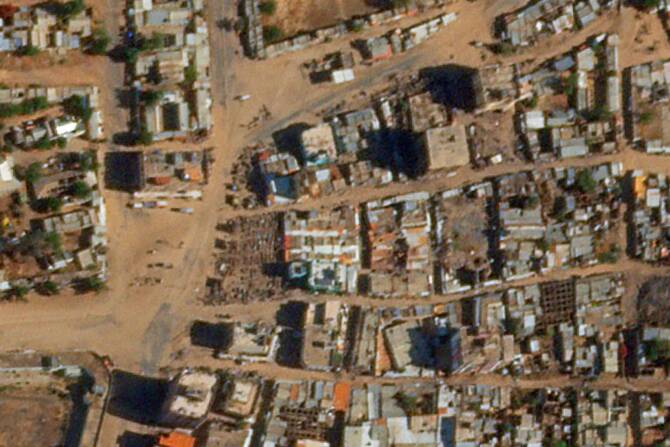
The Rapid Support Forces and allied militias launched an offensive on the Zamzam and Abu Shorouk camps and the nearby city of el-Fasher, the provincial capital of North Darfur province, on Friday, said UN Resident and Humanitarian Coordinator in Sudan Clementine Nkweta-Salami.
El-Fasher is under the control of the military, which has fought the RSF since Sudan descended into civil war two years ago, killing more than than 24,000 people, according to the United Nations, though activists say the number is likely far higher.
The camps were attacked again on Saturday, Nkweta-Salami said in a statement. She said that nine aid workers were killed “while operating one of the very few remaining health posts still operational” in Zamzam camp.
“This represents yet another deadly and unacceptable escalation in a series of brutal attacks on displaced people and aid workers in Sudan since the onset of this conflict nearly two years ago,” she said.
Nkweta-Salami didn’t identify the aid workers but Sudan’s Doctors’ Union said in a statement that six medical workers with the Relief International were killed when their hospital in Zamzam came under attack on Friday. They include Dr. Mahmoud Babaker Idris, a physician at the hospital, and Adam Babaker Abdallah, head of the group in the region, the union said. It blamed the RSF for “this criminal and barbaric act.”
In a statement Saturday evening, Relief International mourned the death of its nine workers, saying they were killed the previous day in a “targeted attack on all health infrastructure in the region,” including the group’s clinic.
The group said the central market in Zamzam along with hundreds of makeshift homes in the camp were destroyed in the attack.
The offensive forced about 2,400 people to flee the camps and el-Fasher, according to the General Coordination for Displaced Persons and Refugees, a local group in Darfur.
Zamzam and Abu Shouk shelter more than 700,000 people who have been forced to flee their homes across Darfur during past bouts of fighting in the region, Nkweta-Salami said.
Late last month, the Sudanese military regained control over Khartoum, a major symbolic victory in the war. But the RSF still controls most of Darfur and some other areas.
The two camps are among five areas in Sudan where famine was detected by the Integrated Food Security Phase Classification, IPC, a global hunger monitoring group. The war has created the world’s largest humanitarian crisis, with about 25 million people — half of Sudan’s population — facing extreme hunger.


![]()
![]()

Attacks on famine-hit camps in Sudan’s Darfur leave at least 100 people dead, UN official says

Short Url
https://arab.news/ncafk
Attacks on famine-hit camps in Sudan’s Darfur leave at least 100 people dead, UN official says
- RSF fighters attacked Zamzam displacement camp around El-Fasher, killing civilians, including women, children and elderly residents
- UN High Commissioner for Human Rights Volker Turk warned on Friday of deeply catastrophic consequences for civilians as the conflict approaches its third year


Latest updates


© 2026 SAUDI RESEARCH & PUBLISHING COMPANY, All Rights Reserved And subject to Terms of Use Agreement.