


From Dubai to Osaka to Riyadh: Expos mark decade of global dialogue, says UAE official

1 / 2
During the Dubai Expo 2020's closing ceremony on March 31, 2022, the BIE flag was handed to Japan’s delegation for the Expo 2025 Osaka, Kansai.  (Screenshot)
2 / 2
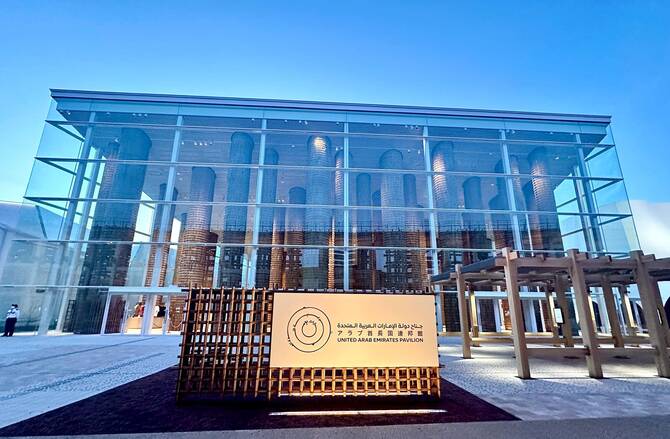
The UAE Pavilion at Expo 2025 Osaka, Kansai. (ANJ)
Short Url
Updated 11 April 2025
Follow

From Dubai to Osaka to Riyadh: Expos mark decade of global dialogue, says UAE official

  • UAE, Japan, and Saudi Arabia expos each bring distinct strengths and perspectives, says UAE official
  • Expo 2025 Osaka, Kansai will run from April 13 to Oct. 13

DUBAI: The move of expos from Dubai to Osaka and soon to Riyadh presents a “unique opportunity to shape a decade of global engagement” in the Middle East and Asia, according to Shihab Al-Faheem, the UAE pavilion commissioner general.

The sequence of the three locations “offers continuity for themes such as innovation, sustainability, and cultural dialogue,” Al-Faheem said in an interview with Arab News Japan.

“It also strengthens connections between our countries. The UAE, Japan, and Saudi Arabia each bring distinct strengths and perspectives,” he added. “By working together through these global platforms, we can create long-term partnerships that deliver meaningful outcomes for people and the planet.”

Al-Faheem, who is also the UAE’s ambassador to Japan, said the Osaka-Kansai Expo this year carries special meaning for the Gulf country.

The UAE’s first expo journey began in Osaka more than five decades ago, and the commissioner-general explained that returning to Japan was “an opportunity to continue engaging with the world and to contribute to shaping a future grounded in cooperation and collective progress.”

As the baton was passed from Dubai Expo 2020 to Osaka, Al-Faheem said the most important insight the UAE valued was that of creating experiences that are immersive, inclusive and people focused.

“We also learned that strong logistical planning and a flexible, responsive approach are essential to hosting a successful expo,” he told Arab News Japan. “We believe these lessons will resonate with Japan as it welcomes the world in 2025.”

When it comes to the UAE’s participation in Osaka this year, the country’s pavilion will continue its “immersive and multi-sensory journey” giving visitors a chance to “engage on an emotional and intellectual level.”

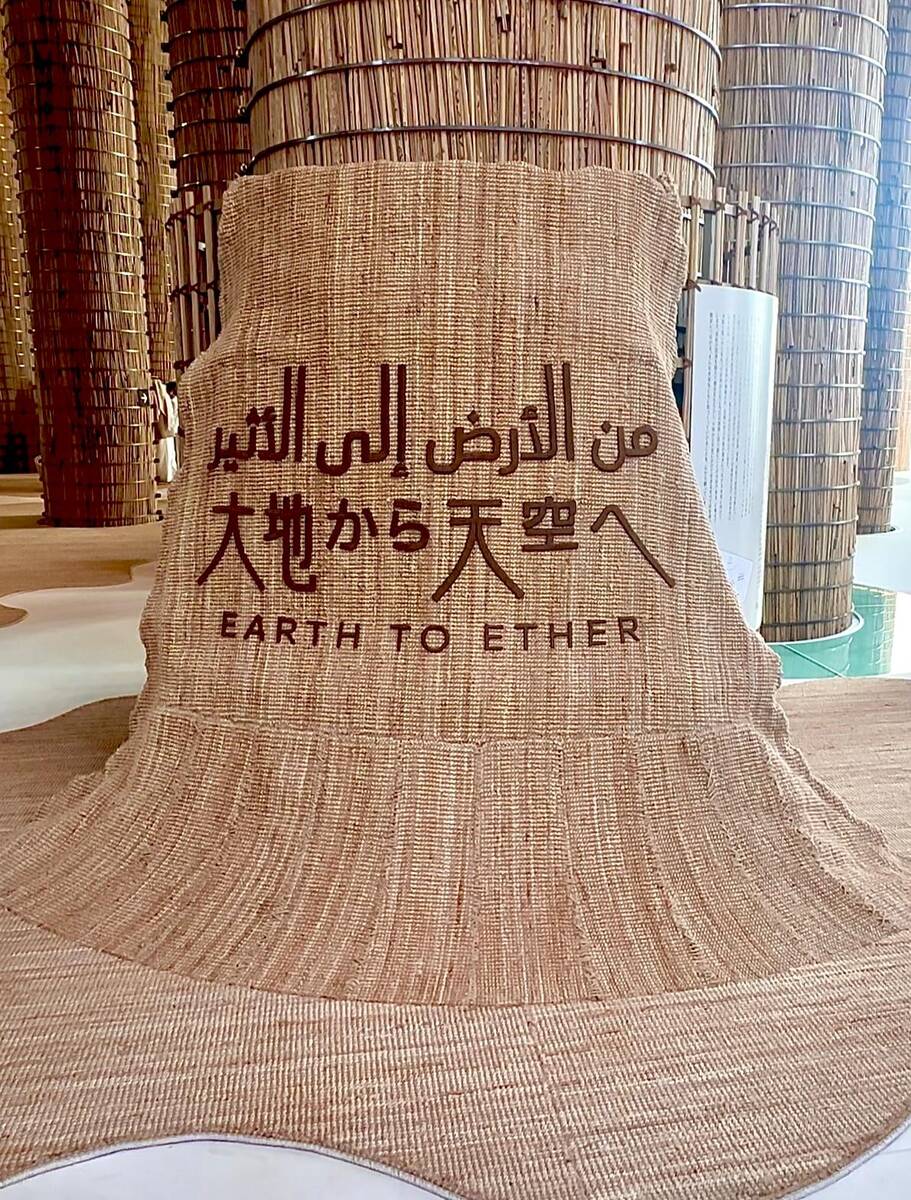
The UAE Pavilion’s theme is “Earth to Ether,” which expresses the Gulf country’s journey from a heritage rooted in the land to a future defined by innovation.

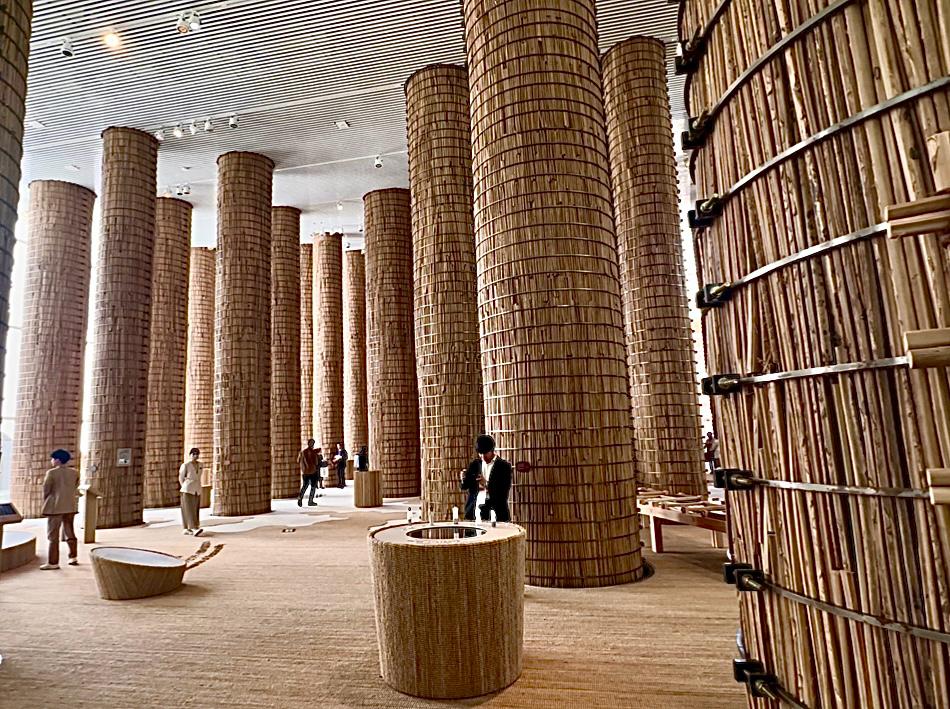
With sustainability and technology in mind, Al-Faheem said the pavilion uses eco-conscious materials such as Datecrete and palm-based architectural elements to reflect environmental values.

“The content of the pavilion also showcases our leadership in clean energy, smart healthcare, and space technologies,” the ambassador said.

The architectural design draws inspiration from traditional Emirati structures and uses materials from the date palm. Inside the pavilion, visitors will be able to experience stories that reflect the UAE’s values and vision for the future.
Given that the UAE and Japan have both hosted World Expos, Al-Faheem said that this has allowed the two countries to strengthen “an already deep and multifaceted relationship. These global events provide a powerful platform to showcase shared values and to develop partnerships across sectors such as energy, education, culture, and technology.”

The UAE Pavilion at Expo 2025 is expected to honor the relationship between the two countries and create new opportunities for joint initiatives.
Al-Faheem said he hopes that through the upcoming expo, the UAE will be able to deepen people-to-people ties with Japan and to create cultural and educational exchanges.

Expo 2025 Osaka, Kansai will run from April 13 to Oct. 13, with an official opening ceremony on April 12.

This article also appears on Arab News Japan


Lebanon PM says IMF wants rescue plan changes as crisis deepens

Updated 4 sec ago
Follow

Lebanon PM says IMF wants rescue plan changes as crisis deepens

  • “We want to engage with the IMF. We want to improve. This is a draft law,” Salam said
  • “They wanted the hierarchy of claims to be clearer. The talks are all positive”

DAVOS, Switzerland: The International Monetary Fund has demanded amendments to a draft rescue law aimed at hauling Lebanon out of its worst financial crisis on record and giving depositors access to savings frozen for six years, Prime Minister Nawaf Salam said.
The “financial gap” law is part of a series of reform measures required by the IMF in order to access its funding and aims to allocate the losses from Lebanon’s 2019 crash between the state, the central bank, commercial banks and depositors.
Salam told Reuters the IMF wants clearer provisions in the hierarchy of claims, which is a core element of the draft legislation designed to determine how losses are allocated.
“We want to engage with the IMF. We want to improve. This is a draft law,” Salam said in an interview at the World Economic Forum annual meeting in ⁠the Swiss mountain resort of Davos.
“They wanted the hierarchy of claims to be clearer. The talks are all positive,” Salam added.
In 2022, the government put losses from the financial crisis at about $70 billion, a figure that analysts and economists forecast is now likely to be higher.
Salam stressed that Lebanon is still pushing for a long-delayed IMF program, but warned the clock is ticking as the country has already been placed on a financial ‘grey list’ and risks falling onto the ‘blacklist’ if reforms stall further.
“We want an IMF program and we want to continue our discussions until we get there,” he said, adding: “International pressure is real ... The longer we delay, the more people’s money will evaporate.”
The draft law, which was passed by Salam’s government in December, is under parliamentary review. It aims to give depositors a guaranteed path to recovering their funds, restart bank lending, and end a financial crisis that has left nearly a million accounts frozen and confidence in the system shattered.
The roadmap would repay depositors up to $100,000 over four years, starting with smaller accounts, while launching forensic audits to determine losses and responsibility.
Lebanon’s Finance Minister Yassine Jaber, who is driving the reform push with Salam, told Reuters it was ⁠essential to salvage a hollowed-out banking system, and to stop the country from sliding deeper into its cash-only, paralyzed economy.
The aim, Jaber said, is to give depositors clarity after years of uncertainty and to end a system that has crippled Lebanon’s international standing.
He framed the law as part of a broader reckoning: the first time a Lebanese government has confronted a combined collapse of the banking sector, the central bank and the state treasury.
Financial reforms have been repeatedly derailed by political and private vested interests over the last six years and Jaber said the responsibility now lies with lawmakers.
Failure to act, he said, would leave Lebanon trapped in “a deep, dark tunnel” with no way back to a functioning system.
“Lebanon has become a cash economy, and the real question is whether we want to stay on the grey list, or sleepwalk into a blacklist,” Jaber added.