- US trade mission to Iraq is the largest in the more than 100-year history of the US Chamber of Commerce
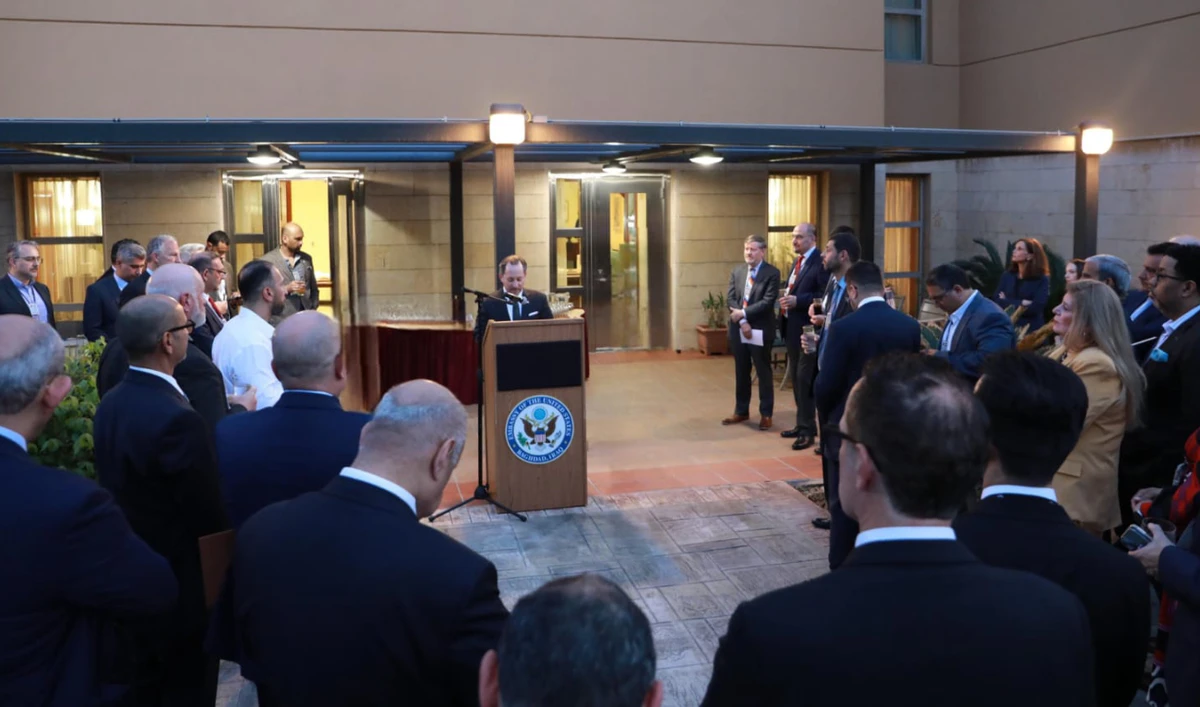
BAGHDAD: A US trade delegation representing 60 companies was visiting Iraq to sign economic cooperation agreements with the private sector, Washington’s embassy in Baghdad said Tuesday.
The three-day visit, which began on Monday, comes amid fears of an international recession after US President Donald Trump imposed sweeping tariffs on numerous countries, which included 39 percent duties on Iraqi imports.
The US delegation consists of 101 members from 60 companies in the energy, technology and health sectors, who are set to meet with senior Iraqi officials and sign agreements, said an embassy statement.
It is the largest US trade mission to Iraq in the more than 100-year history of the US Chamber of Commerce, the embassy added.
In a post on X, the US mission said that a “pivotal memorandum of understanding to strengthen ties between the US and Iraqi private sectors” was signed on Monday between the US Chamber of Commerce and the Federation of Iraqi Chambers of Commerce.
“This partnership will foster long-term economic collaboration,” it said.
According to the office of the US trade representative in Iraq, total goods trade with the oil-rich country reached $9.1 billion in 2024, with US exports amounting to $1.7 billion.
US goods imports from Iraq totaled $7.4 billion.
During the visit, Iraq is expected to sign a “landmark agreement” with General Electric to develop a high-efficiency power plant, according to Farhad Alaaldin, foreign policy adviser to Iraqi Prime Minister Mohamed Shia Al-Sudani.
Last year, during Sudani’s visit to Washington, Iraq and the US signed several memoranda of understanding in the energy sector, including one with General Electric to ensure the maintenance of the Iraqi electricity grid.
Iraq’s power plants are currently highly dependent on gas imported from Iran, which provides about a third of its neighbor’s energy needs.
But Tehran has often cut supplies, exacerbating regular power outages.
Baghdad has repeatedly stressed the need to diversify energy sources to reduce its dependence on Iran.
Iraq has been trying to move past decades of war and unrest, including a sectarian struggle after the US-led invasion 2003 toppled dictator Saddam Hussein.