QUETTA: The provincial administration of Pakistan’s southwestern Balochistan on Saturday warned of strict action after a Baloch nationalist party announced to march to Quetta to pressure authorities for the release of activists from an ethnic rights group.
The Balochistan National Party (BNP-M) led by Sardar Akhtar Mengal on Friday announced the march toward the provincial capital after holding two inconclusive rounds of talks with officials, demanding the release of detained ethnic rights activists.
The Baloch Yakjehti Committee’s (BYC) top leader, Dr. Mahrang Baloch, and several of her colleagues were arrested on March 22 after staging a sit-in outside the University of Balochistan.
Pakistani authorities charged them with terrorism, sedition and murder following a protest in which three demonstrators were killed, according to police documents.
Mengal decided to launch a protest after objecting to the government’s treatment of female BYC leaders, calling for their immediate release and condemning what he described as the suppression of their democratic rights.
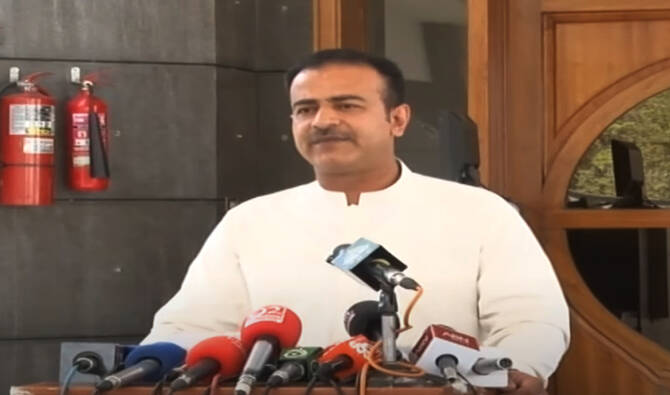
“The provincial government is ready to allow Mengal and his party to protest at Sariab Road [in Quetta], but he is adamant on entering the Red Zone,” Shahid Rind, the Balochistan administration’s spokesperson, said at a news conference, referring to a high-security area housing key government buildings.
“The Government of Balochistan will not allow anyone to violate Section 144, and action will be taken against the protesters,” he added, citing the legal provision that empowers authorities to ban public gatherings of more than four people to maintain law and order.
Rind said Mengal had demanded the release of BYC activists at the very start of the negotiations.
“If the courts provide relief to Mahrang Baloch and other activists, the government will accept the decision,” he continued while explaining the authorities’ position over the issue during the talks.
“We still stand by the offers made to Sardar Mengal,” he added. “But now the ball is in his court.”
During the media interaction, Rind said anti-state speeches had been made during Mengal’s protest, and the government would take legal action against those responsible.
His comments came a day after Pakistan’s top army generals met to review the national security situation and pledged not to let “foreign-backed proxies” and their “political supporters” destabilize Balochistan.
Authorities have long claimed a nexus between Baloch Liberation Army (BLA) militants and BYC activists, an allegation the latter deny.
The crackdown on BYC leaders followed a deadly train attack last month in Balochistan, in which BLA separatists took hundreds of passengers hostage. The standoff lasted nearly 36 hours until the army launched a rescue operation, killing 33 militants.
A final count showed 26 passengers had also died in the incident.
Authorities later accused BYC activists of storming a mortuary in Quetta and seizing the bodies of three militants.
Asked about reports of government negotiations with BYC chief Dr. Mahrang Baloch in prison, Rind said the provincial administration was not engaged in any such dialogue.


![]()

Authorities warn of action as nationalist party announces Quetta march for Baloch activists’ release
Short Url
https://arab.news/npjc3
Authorities warn of action as nationalist party announces Quetta march for Baloch activists’ release
- The development follows Sardar Akhtar Mengal’s announcement of the protest march for the release of BYC leaders
- The provincial government says it will take legal action against people delivering anti-state speeches at BNP protest
Latest updates


© 2026 SAUDI RESEARCH & PUBLISHING COMPANY, All Rights Reserved And subject to Terms of Use Agreement.