LOS ANGELES: Val Kilmer, the brooding, versatile actor who played fan favorite Iceman in “Top Gun,” donned a voluminous cape as Batman in “Batman Forever” and portrayed Jim Morrison in “The Doors,” has died. He was 65.
Kilmer died Tuesday night in Los Angeles, surrounded by family and friends, his daughter, Mercedes Kilmer, said in an email to The Associated Press. The New York Times was the first to report his death on Tuesday.
Val Kilmer died from pneumonia. He had recovered after a 2014 throat cancer diagnosis that required two tracheotomies.
“I have behaved poorly. I have behaved bravely. I have behaved bizarrely to some. I deny none of this and have no regrets because I have lost and found parts of myself that I never knew existed,” he says toward the end of “Val,” the 2021 documentary on his career. “And I am blessed.”
Kilmer, the youngest actor ever accepted to the prestigious Juilliard School at the time he attended, experienced the ups and downs of fame more dramatically than most. His break came in 1984’s spy spoof “Top Secret!” followed by the comedy “Real Genius” in 1985. Kilmer would later show his comedy chops again in films including “MacGruber” and “Kiss Kiss Bang Bang.”
His movie career hit its zenith in the early 1990s as he made a name for himself as a dashing leading man, starring alongside Kurt Russell and Bill Paxton in 1993’s “Tombstone,” as Elvis’ ghost in “True Romance” and as a bank-robbing demolition expert in Michael Mann’s 1995 film “Heat” with Al Pacino and Robert De Niro.
“While working with Val on ‘Heat’ I always marvelled at the range, the brilliant variability within the powerful current of Val’s possessing and expressing character,” director Michael Mann said in a statement Tuesday night.
Actor Josh Brolin, a friend of Kilmer, was among others paying tribute.
“You were a smart, challenging, brave, uber-creative firecracker,” Brolin wrote on Instagram. “There’s not a lot left of those.”
Kilmer — who took part in the Method branch of Suzuki arts training — threw himself into parts. When he played Doc Holliday in “Tombstone,” he filled his bed with ice for the final scene to mimic the feeling of dying from tuberculosis. To play Morrison, he wore leather pants all the time, asked castmates and crew to only refer to him as Jim Morrison and blasted The Doors for a year.
That intensity also gave Kilmer a reputation that he was difficult to work with, something he grudgingly agreed with later in life, but always defending himself by emphasizing art over commerce.
“In an unflinching attempt to empower directors, actors and other collaborators to honor the truth and essence of each project, an attempt to breathe Suzukian life into a myriad Hollywood moments, I had been deemed difficult and alienated the head of every major studio,” he wrote in his memoir, “I’m Your Huckleberry.”
One of his more iconic roles — hotshot pilot Tom “Iceman” Kazansky opposite Tom Cruise — almost didn’t happen. Kilmer was courted by director Tony Scott for “Top Gun” but initially balked. “I didn’t want the part. I didn’t care about the film. The story didn’t interest me,” he wrote in his memoir. He agreed after being promised that his role would improve from the initial script. He would reprise the role in the film’s 2022 sequel, “Top Gun: Maverick.”
One career nadir was playing Batman in Joel Schumacher’s goofy, garish “Batman Forever” with Nicole Kidman and opposite Chris O’Donnell’s Robin — before George Clooney took up the mantle for 1997’s “Batman & Robin” and after Michael Keaton played the Dark Knight in 1989’s “Batman” and 1992’s “Batman Returns.”
Janet Maslin in the Times said Kilmer was “hamstrung by the straight-man aspects of the role,” while Roger Ebert deadpanned that he was a “completely acceptable” substitute for Keaton. Kilmer, who was one and done as Batman, blamed much of his performance on the suit.
“When you’re in it, you can barely move and people have to help you stand up and sit down,” Kilmer said in “Val,” in lines spoken by his son Jack, who voiced the part of his father in the film because of his inability to speak. “You also can’t hear anything and after a while people stop talking to you, it’s very isolating. It was a struggle for me to get a performance past the suit, and it was frustrating until I realized that my role in the film was just to show up and stand where I was told to.”
His next projects were the film version of the 1960s TV series “The Saint” — fussily putting on wigs, accents and glasses — and “The Island of Dr. Moreau” with Marlon Brando, which became one of the decade’s most infamously cursed productions.
David Gregory’s 2014 documentary “Lost Soul: The Doomed Journey of Richard Stanley’s Island of Dr. Moreau,” described a cursed set that included a hurricane, Kilmer bullying director Richard Stanley, the firing of Stanley via fax (who sneaked back on set as an extra with a mask on) and extensive rewrites by Kilmer and Brando. The older actor told the younger at one point: “‘It’s a job now, Val. A lark. We’ll get through it.’ I was as sad as I’ve ever been on a set,” Kilmer wrote in his memoir.
In 1996, Entertainment Weekly ran a cover story about Kilmer titled “The Man Hollywood Loves to Hate.” The directors Schumacher and John Frankenheimer, who finished “The Island of Dr. Moreau,” said he was difficult. Frankenheimer said there were two things he would never do: “Climb Mount Everest and work with Val Kilmer again.”
Other artists came to his defense, like D. J. Caruso, who directed Kilmer in “The Salton Sea” and said the actor simply liked to talk out scenes and enjoyed having a director’s attention.
“Val needs to immerse himself in a character. I think what happened with directors like Frankenheimer and Schumacher is that Val would ask a lot of questions, and a guy like Schumacher would say, ‘You’re Batman! Just go do it,’” Caruso told the Times in 2002.
After “The Island of Dr. Moreau,” the movies were smaller, like David Mamet human-trafficking thriller “Spartan”; “Joe the King” in 1999, in which he played a paunchy, abusive alcoholic; and playing the doomed 70’s porn star John Holmes in 2003’s “Wonderland.” He also threw himself into his one-man stage show “Citizen Twain,” in which he played Mark Twain.
“I enjoy the depth and soul the piece has that Twain had for his fellow man and America,” he told Variety in 2018. “And the comedy that’s always so close to the surface, and how valuable his genius is for us today.”
Kilmer spent his formative years in the Chatsworth neighborhood of Los Angeles. He attended Chatsworth High School alongside future Oscar winner Kevin Spacey and future Emmy winner Mare Winningham. At 17, he was the youngest drama student ever admitted at the Juilliard School in 1981.
Shortly after he left for Juilliard, his younger brother, 15-year-old Wesley, suffered an epileptic seizure in the family’s Jacuzzi and died on the way to the hospital. Wesley was an aspiring filmmaker when he died.
“I miss him and miss his things. I have his art up. I like to think about what he would have created. I’m still inspired by him,” Kilmer told the Times.
While still at Juilliard, Kilmer co-wrote and appeared in the play “How It All Began” and later turned down a role in Francis Ford Coppola’s “The Outsiders” for the Broadway play, “Slab Boys,” alongside Kevin Bacon and Sean Penn.
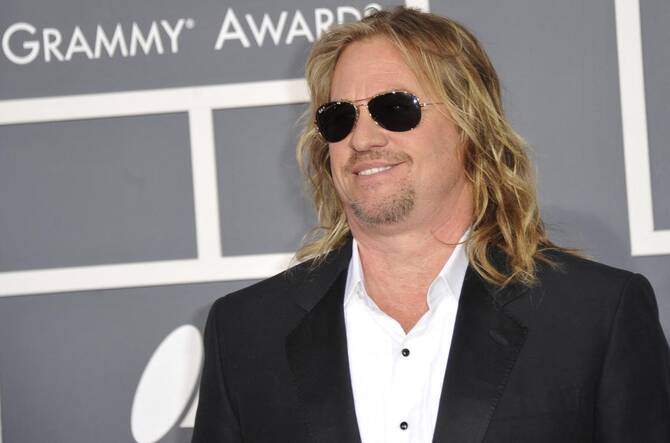
Kilmer published two books of poetry (including “My Edens After Burns”) and was nominated for a Grammy in 2012 for spoken word album for “The Mark of Zorro.” He was also a visual artist and a lifelong Christian Scientist.
He dated Cher, married and divorced actor Joanne Whalley. He is survived by their two children, Mercedes and Jack.
“I have no regrets,” Kilmer told the AP in 2021. “I’ve witnessed and experienced miracles.”


![]()

Val Kilmer, ‘Top Gun’ and Batman star with an intense approach, dies at 65
Short Url
https://arab.news/y79sk
Val Kilmer, ‘Top Gun’ and Batman star with an intense approach, dies at 65
- Val Kilmer: ‘I have behaved poorly. I have behaved bravely. I have behaved bizarrely to some. I deny none of this and have no regrets’
- Director John Frankenheimer said there were two things he would never do: ‘Climb Mount Everest and work with Val Kilmer again’


Latest updates


© 2026 SAUDI RESEARCH & PUBLISHING COMPANY, All Rights Reserved And subject to Terms of Use Agreement.