
DAKAR, Senegal: Rusting pipes in a barren field and unpaid workers are what remain after a US company promised to turn a huge piece of land in Senegal — about twice the size of Paris — into an agricultural project and create thousands of jobs.
In interviews with company officials and residents, The Associated Press explored one of the growing number of foreign investment projects targeting Africa, home to about 60 percent of the world’s remaining uncultivated arable land. Like this one, many fail, often far from public notice.
Internal company documents seen by the AP show how the plans, endorsed by the Senegalese government, for exporting animal feed to wealthy Gulf nations fell apart.
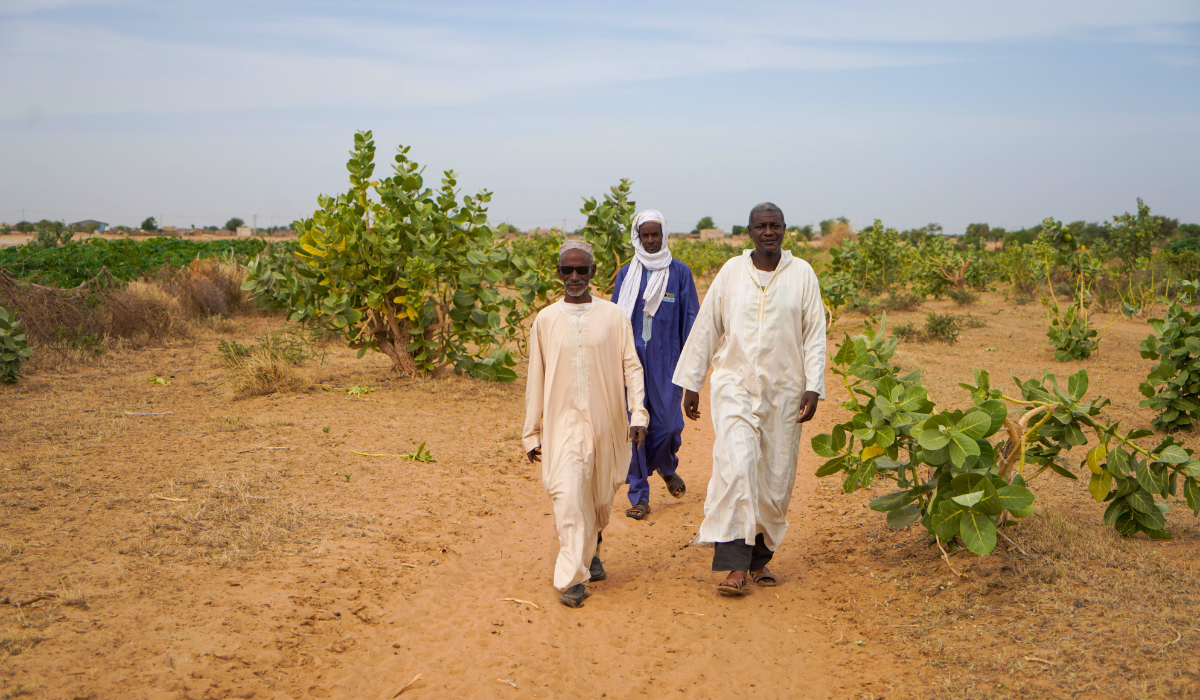
Herders and farmers from left, Adama Sow, Oumar Ba and Daka Sow walk outside Niéti Yone, northern Senegal, Tuesday, Dec. 10, 2024. (AP)
At first glance, the landscape of stark acacia trees on the edge of the Sahara Desert doesn’t hold much agricultural promise. But in an age of climate change, foreign investors are looking at this and other African landscapes.
The continent has seen a third of the world’s large-scale land acquisitions between 2000 and 2020, mostly for agriculture, according to researchers from the International Institute of Social Studies in the Netherlands.
But 23 percent of those deals have failed, after sometimes ambitious plans to feed the world.
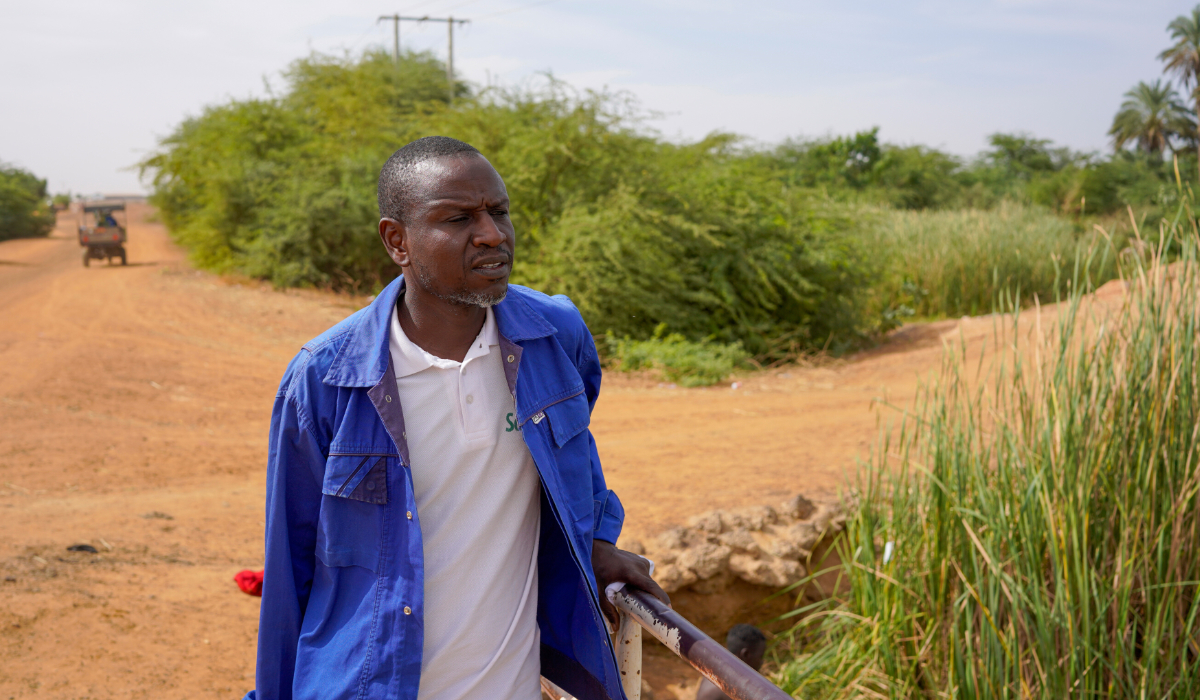
Union leader Doudou Ndiaye Mboup speaks to reporters in Niéti Yone, northern Senegal, Monday, Dec. 9, 2024. (AP)
Why target land on the edge of the Sahara Desert?
In 2021, the Senegalese village of Niéti Yone welcomed investors Frank Timis and Gora Seck from a US-registered company, African Agriculture. Over cups of sweet green tea, the visitors promised to employ hundreds of locals and, one day, thousands.
Timis, originally from Romania, was the majority stakeholder. His companies have mined for gold, minerals and fossil fuels across West Africa.
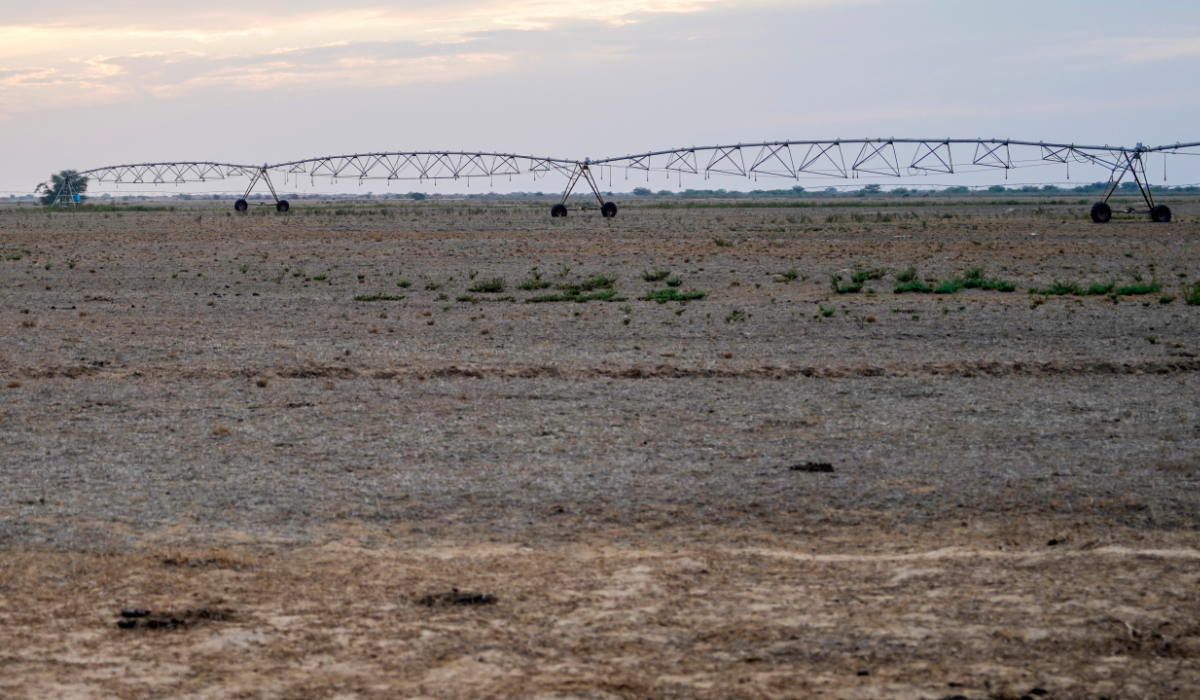
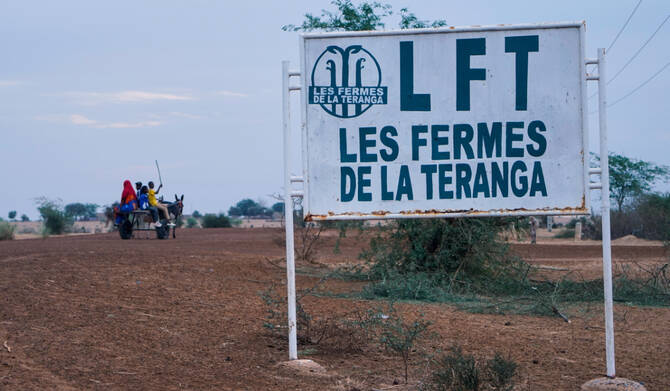
Rusting pipes stand in a barren field outside Niéti Yone, northern Senegal, Monday, Dec. 9, 2024. (AP)
Seck, a Senegalese mining investor, chaired an Italian company whose biofuel plans for the land parcel had failed. It sold the 50-year lease for 20,000 hectares to Timis for $7.9 million. Seck came on as president of African Agriculture’s Senegalese subsidiary and holds 4.8 percent of its shares.
Now the company wanted the community’s approval.
The land was next to Senegal’s largest freshwater lake, for which the company obtained water rights.
The proposal divided the community of subsistence farmers. Herders who had raised livestock on the land for generations opposed it. Others, like Doudou Ndiaye Mboup, thought it could help ease Senegal’s unemployment crisis.
“I bought their dream. I saw thousands of young Africans with jobs and prosperity,” said Mboup, who was later employed as an electrician and now leads a union of employees.
Despite the formation of an opposition group called the Ndiael Collective, African Agriculture moved ahead, hiring about 70 of the community’s 10,000 residents.
Stock exchange vision: One year later, almost worth nothing
After planting a 300-hectare (740-acre) pilot plot of alfalfa, the company announced in November 2022 it would go public to raise funds.
African Agriculture valued the company at $450 million. The Oakland Institute, an environmental think tank in the US, questioned that amount and called the deal bad for food security as well as greenhouse gas emissions.
The company went public in December 2023, with shares trading at $8 on the NASDAQ exchange. It raised $22.6 million during the offering but had to pay $19 million to the listed but inactive company it had merged with.
That payment signaled trouble to investors. It showed that the other company, 0X Capital Venture Acquisition Corp. II, didn’t want to hold its 98 percent of stock. And it highlighted the way African Agriculture had used the merger to bypass the vetting process needed for listing.
One year later, shares in African Agriculture were worth almost nothing.
Now, security guards patrol the land’s barbed-wire perimeter, blocking herders and farmers from using it. The company has been delisted.
Big ambitions leave big impacts for the local community
Mboup said he and others haven’t been paid for six months. The workers took the company to employment court in Senegal to claim about $180,000 in unpaid wages. In February, they burned tires outside the company’s office. Mboup later said an agreement was reached for back wages to be paid in June.
“I took out loans to build a house and now I can’t pay it back,” said Mboup, who had been making $200 a month, just above average for Senegal. “I’ve sold my motorbike and sheep to feed my children and send them to school, but many are not so lucky.”
Timis didn’t respond to questions. Seck told the AP he was no longer affiliated with African Agriculture. Current CEO Mike Rhodes said he had been advised to not comment.
Herders and farmers are furious and have urged Senegal’s government to let them use the land. But that rarely happens. In a study of 63 such foreign deals, the International Institute of Social Studies found only 11 percent of land was returned to the community. In most cases, the land is offered to other investors.
“We want to work with the government to rectify this situation. If not, we will fight,” warned Bayal Sow, the area’s deputy mayor.
The Senegalese minister of agriculture, food sovereignty and herding, Mabouba Diagne, did not respond to questions. The African Agriculture deal occurred under the previous administration.
The failed project has undermined community trust, said herder Adama Sow, 74: “Before, we lived in peace, but now there’s conflict for those of us who supported them.”
Former CEO announces acquisition in Cameroon and Congo
Meanwhile, African Agriculture’s former CEO has moved on to a bigger land deal elsewhere on the continent — with experts raising questions again.
In August, South African Alan Kessler announced his new company, African Food Security, partnering with a Cameroonian, Baba Danpullo. It has announced a project roughly 30 times the size of the one in Senegal, with 635,000 hectares in Congo and Cameroon.
The new company seeks $875 million in investment. The company’s investor prospectus, obtained by the AP, says it plans to register in Abu Dhabi.
In an interview with the AP in January, Kessler blamed the failure of the Senegal project on the way African Agriculture’s public offering was structured. He said there were no plans for a public offering this time.
He claimed his new company’s project would double corn production in these countries, and described African Food Security as the “most incredibly important development company on the planet.” He said they have started to grow corn on 200 hectares in Cameroon.
Experts who looked over the prospectus raised concerns about its claims, including an unusually high projection for corn yields. Kessler rejected those concerns.
“When he was CEO of African Agriculture, Kessler also made lofty claims about food production, job creation, exports and investment returns that did not pan out,” said Renée Vellvé, co-founder of GRAIN, a Spain-based nonprofit for land rights.
Hype without proof was a key strategy for African Agriculture, said its former chief operating officer, Javier Orellana, who said he is owed 165,000 euros ($178,000) in unpaid salary after leaving the company in 2023.
He told the AP he had been suspicious of the company’s $450 million valuation.
“I know the agriculture industry well and ($450 million) didn’t add up,” Orellana said, adding he stayed on because the company gave him what he called a very attractive offer.
In the end, a share in African Agriculture is now worth less than a penny.
“We are looking forward to going back to Senegal,” Kessler said. “We were appreciated there. We’ve been welcomed back there.”