

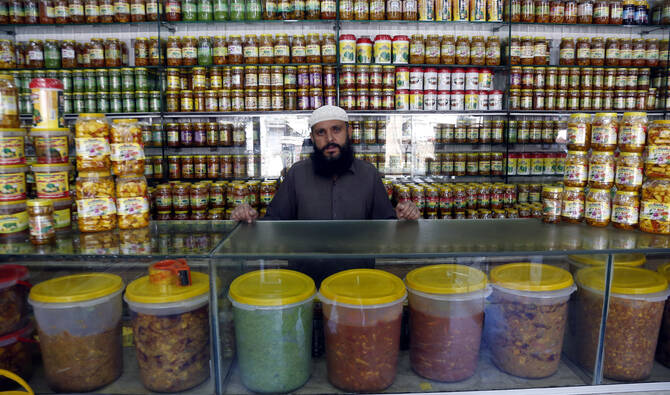

SHIKARPUR, Sindh: Few table spreads in Pakistan are complete without a jar of pickles, their tangy, spicy, and complex flavors adding punch to main dishes like lentils, curries and rice.
One city in Pakistan has become synonymous with the production of achar, or pickles as they are called in Urdu.
Located deep in the heart of the southern Sindh province, Shikarpur has been churning out some of the country’s most beloved achar for generations, selling to shops around the country and also exporting to the UK, US, UAE, Saudi Arabia and other countries.
Shikarpur city houses at least 12 pickle manufacturing factories, which run networks of shops. The main brands include Hajji Mola Bux Memon, Hajji Sikander Memon, Tahir Shabir Shaikh, Nisar Ahmed Memon, Shah Nawaz Soomro, Soomra, and Nawab Memon. Other small home-based manufacturers also operate in the city, producing some of the best pickles made in Pakistan.
Abdul Saboor, the fourth-generation owner of Hajji Mola Bux Memon Achar, a leading brand from the city, said his great-grandfather established the business in 1965.
“When you hear the name Shikarpur, your taste buds automatically come alive,” he told Arab News as he supervised the packaging of products at his factory.
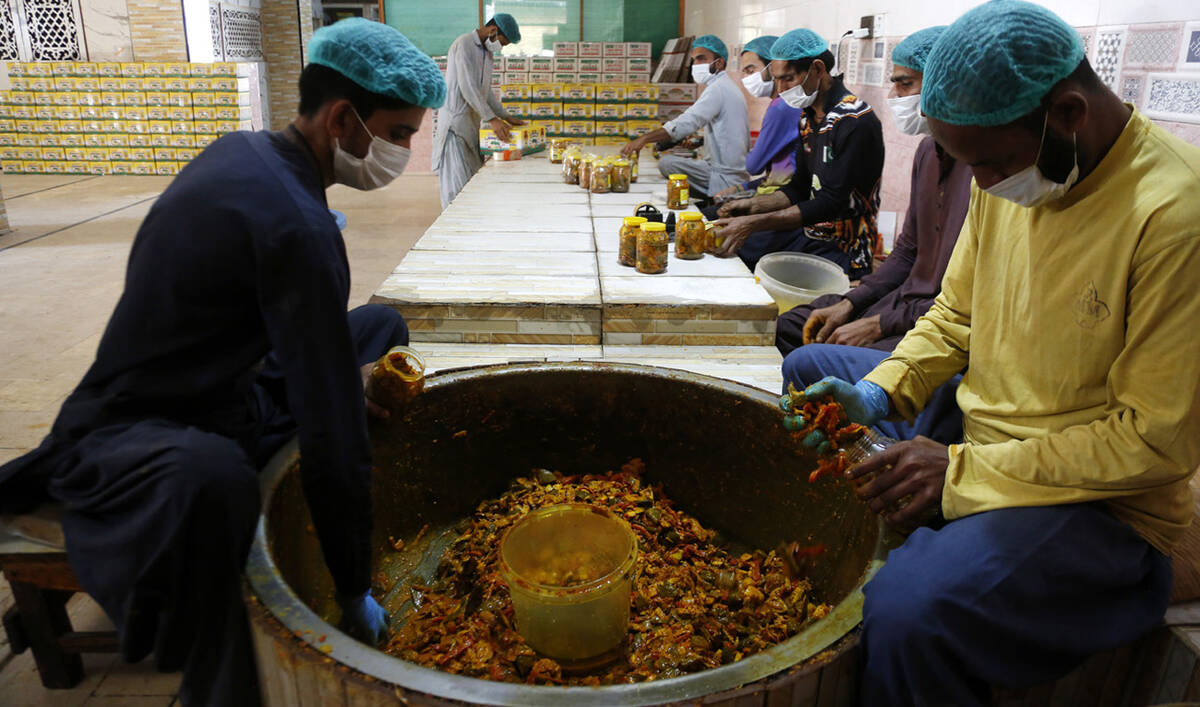
Workers pack pickles at a factory in Shikarpur city on March 20, 2025, during Arab News special coverage of how a small southern city became Pakistan’s pickle powerhouse. (AN Photo)
“The real joy is when you think of achar, and you say, ‘If it’s achar, it must be Hajji Mola Bux’.”
Saboor said the roots of Shikarpuri achar could be traced back to pre-partition India, a time when the local Hindu community first mastered the intricate preparation of the popular delicacy:
“When Hindus migrated [to India after Pakistan was born in 1947], our ancestors took inspiration from them and started the business.”
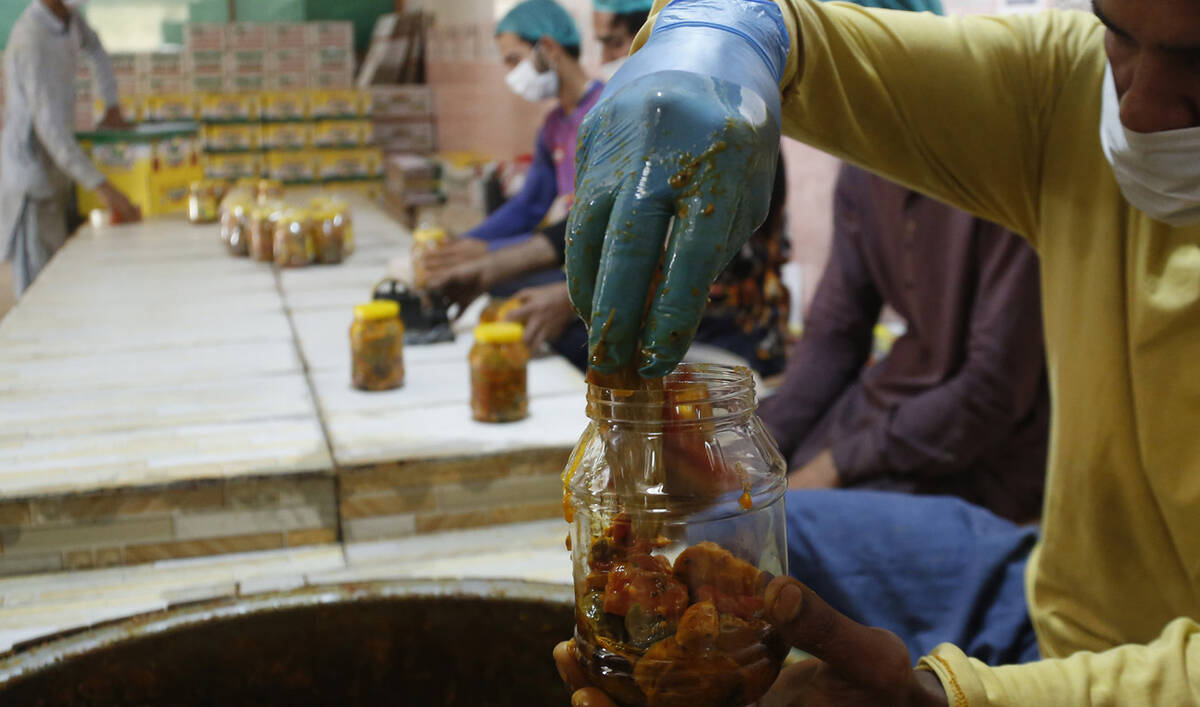
Workers pack pickles at a factory in Shikarpur city on March 20, 2025, during Arab News special coverage of how a small southern city became Pakistan’s pickle powerhouse. (AN Photo)
Barkatullah Asif Soomro, the owner of the home-based Memsa Achar company, said his business was started by his maternal grandmother.
“Our grandmother ran the business at home about 50 to 60 years ago,” he told Arab News. “As the demand grew, we naturally moved to a shop, but the achar spices are the same as those used at home.”
“ANCESTORS’ FORMULA”
Achar recipes vary across regions and families, but the basic process involves fermenting vegetables, fruits, or other ingredients in a mixture of spices, salt, oil, vinegar and lemon juice.
Today, Shikarpur’s achar, alongside its Hyderabadi counterpart, enjoys immense popularity both domestically and internationally. The most favorite Shikarpuri blend is a mixed pickle with carrots, turnips, onions, cauliflower, chickpeas, garlic, green chilies, lime and mango, creating a spicy, tangy and aromatic product that has delighted generations. Other favorites are pickles made of mango, green chilies and chickpeas, as well as pickled chicken, beef and mutton.
Maqsood Ahmed Meerani, a salesman with 30 years of experience, highlighted the popular ‘Mix Oil Golden’ variety.
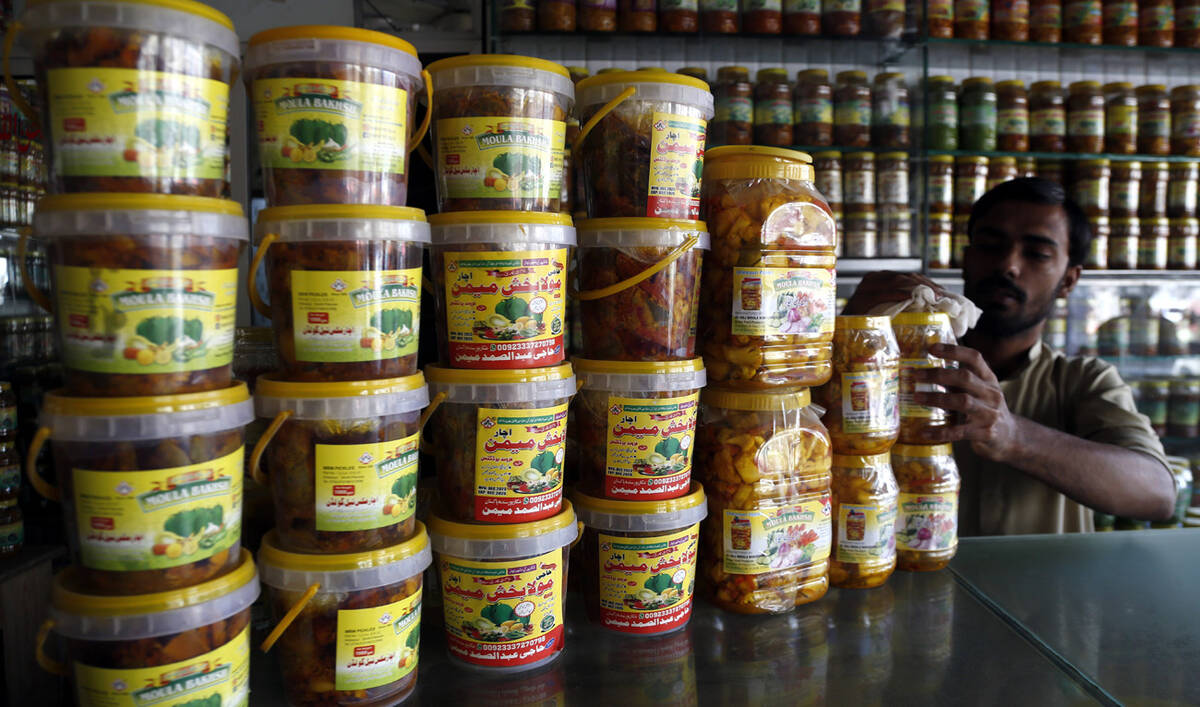
Workers set up pickle bottles at a shop in Shikarpur city on March 20, 2025, during Arab News special coverage of how a small southern city became Pakistan’s pickle powerhouse. (AN Photo)
“It has good quality and is made in mustard oil,” he said. “It includes lemon, chili, mango, carrot, falsa, garlic, ginger and many other ingredients, and it has a very distinct taste.”
Pickles serve as appetizers and are believed to help in the digestion of foods by aiding the flow of gastric juices. Experts say fermented pickles have beneficial bacteria that help control harmful intestinal microbes.
But the specialty of Shikarpuri achar, according to Saboor, was the meticulously sourced, organic spice mix made by grounding down fresh herbs as per age-old recipes.
“We buy all our herbs and spices ourselves and grind them with machines, right in front of our eyes,” he said. “All the spices we use are from our ancestors’ formulas, entirely organic.”
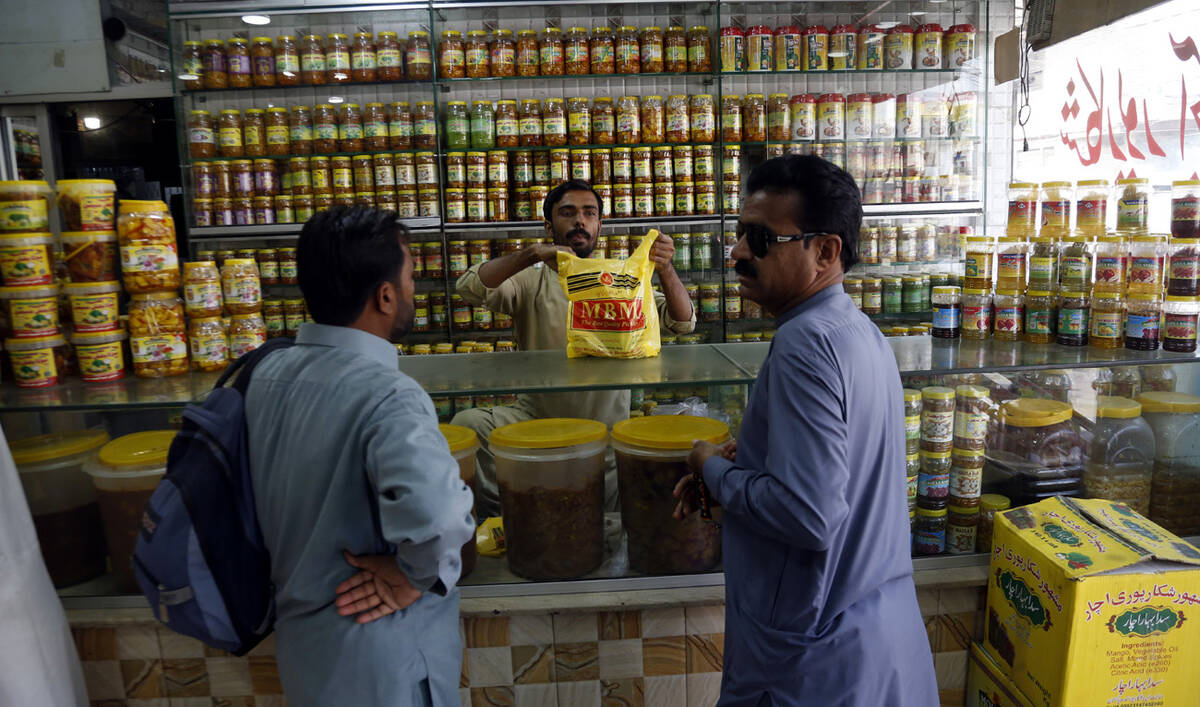
Customers wait for their orders at a pickle shop in Shikarpur city on March 20, 2025, during Arab News special coverage of how a small southern city became Pakistan’s pickle powerhouse. (AN Photo)
Over time, the Hajji Mola Bux brand has refined its techniques, introducing new ingredients, but the core focus on quality and organic spices remains unchanged.
“When the lid of the achar jar opens, and the aroma hits, it should be delightful,” Saboor said. “If it smells good, you can be sure of its quality.”
The business previously sold to Saudi Arabia and the United Kingdom but had to halt exports during the COVID-19 pandemic.
“After Eid, our export business will resume,” Saboor said, referring to the Eid Al-Fitr holiday which falls from Mar. 31 to Apr. 2 this year.
Junaid Ahmed, a resident of Shikarpur, said the city’s achar was so famous friends and relatives residing elsewhere often requested it when they heard someone was traveling from Shikarpur.
“Nothing else, but achar is a must to bring as a gift,” he said as he bought jats of pickles for his family from a local shop.
“It’s something we also send as gifts to our friends or relatives. Whether it’s Karachi or Lahore, no matter where in Pakistan, we send achar as a gift.”


