KARACHI: In a modest home situated in one of the narrow streets of a portside slum in the Pakistani megacity of Karachi, a 64-year-old artisan gently picked up a seashell, wiped it clean and began to inscribe it in ink with the names of Allah and the Prophet Muhammad (peace be upon him).
With careful strokes, he transformed the shell into a delicate showpiece, destined for display in upscale shops in Clifton and, eventually, homes across Pakistan. The piece is special, and so is the maker: Babu Lal, a Hindu by faith.
Hindus make up 2.14 percent of Pakistan’s population, according to the 2017 census, with a majority of them living in the southern Sindh province, of which Karachi is the capital. In many areas of Sindh, Hindus and Muslims have historically coexisted, though reports of discrimination and violence, such as forced conversions of Hindu girls, blasphemy accusations and land grabs, have increased in recent decades, drawing concern from human rights groups.
And yet, in Karachi’s coastal area of Ibrahim Haideri — along with parts of the Qur'angi and Clifton neighborhoods — nearly 300 Hindu families have kept this seashell art tradition alive, passing it down through generations since well before the country’s independence in 1947.
“Our art teaches respect for all religions, and we work for all religions,” Lal told Arab News, his weathered hands working on a shell.
“We first bring shells from the sea, then clean and wash them, and after that, we make art products from them and supply them to the market,” he said. “All the hard work and labor in this process is done by hand. There is no machine work involved.”
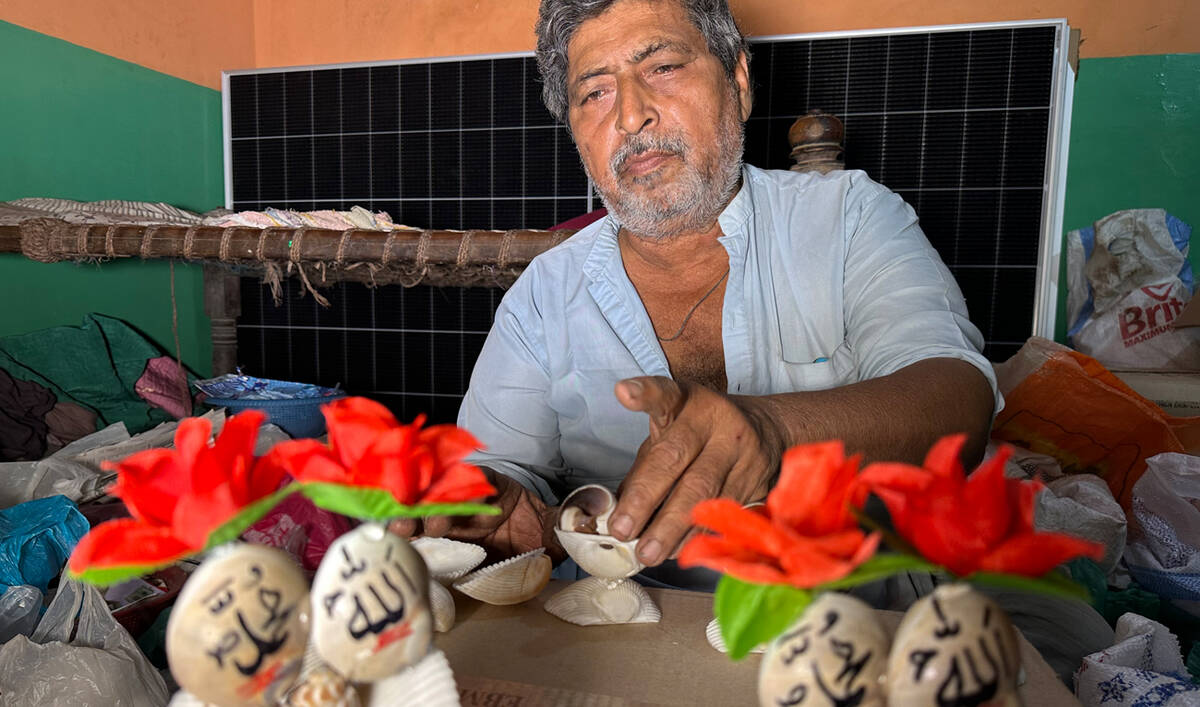
Babu Lal gestures during an interview with Arab News in Karachi on March 26, 2025. A dedicated artisan, he is among nearly 300 Hindu families in Karachi preserving the centuries-old tradition of seashell art, inscribing sacred Islamic names and verses by hand. (AN Photo)
Lal’s creations include a wide range of items from keychains and glass ornaments to frames bearing sacred names and miniature replicas of the Holy Kaaba, among the most sought-after items in the market.
“While making these items, we take extra care in cleaning and handling them,” he said. “We do all this work quite carefully.”
UNCERTAIN FUTURE
Lal’s journey as an artisan began in childhood when he learned the trade by watching his father and grandfather at work over half a century ago.
But the future of the craft is now uncertain, due to a lack of institutional support and limited opportunities for artisans like himself. This has discouraged him from passing the craft on to his children.
Another problem, according to Lal, was that stalls set up by local artisans were now frequently dismantled and once busy sales spots for artists, including popular areas along the Clifton seafront and Manora, had been closed off in recent years.
“They no longer allow us to set up stalls there so what can we do?” the artist asked. “That’s why we want to stop this work. If you’ve seen the stalls at Clifton’s Sea View, those have also been shut down.”
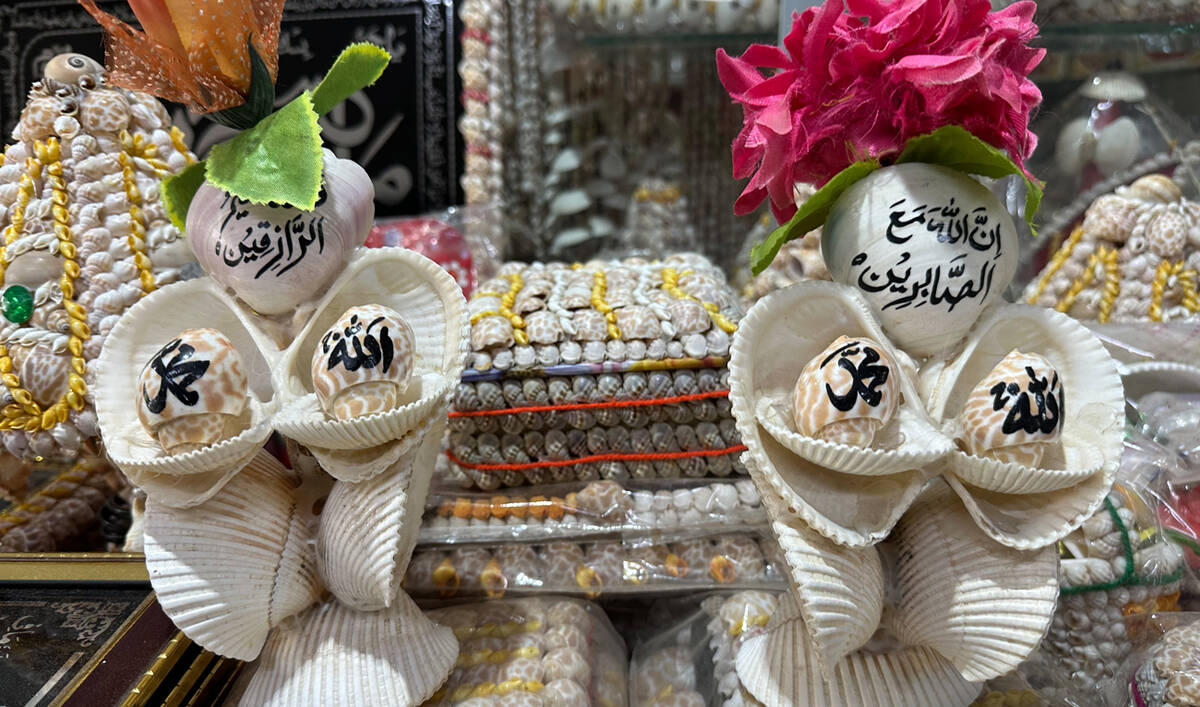
This photo, taken on March 26, 2025, shows art pieces created by Babu Lal in Karachi. (AN Photo)
Despite these challenges, shopkeepers like Gul Sher Abbasi acknowledge Lal’s dedication and craftsmanship.
“These items mostly come from Babu,” Abbasi told Arab News. “Then, there are different people who manufacture and we get them as well.”
“Handcrafted items are something different,” he added. “The things that are made by hand are special. There is a different pleasure in preparing those things.”
Abbasi said the seashells’ craft held potential beyond Pakistan’s borders and with the right support, Lal’s handmade items could find buyers in Gulf countries like Saudi Arabia, the United Arab Emirates and Qatar.
Meanwhile, Lal said his art extended across religious lines, with orders coming in for Christian, Hindu and Muslim communities alike.
“We work for everyone, and we also make things based on specific orders,” he said. “If someone orders us to make an idol, we make it. If someone orders a cross, we make it.”