


Saudi study launched in first crewed polar orbit flight with SpaceX

1 / 4
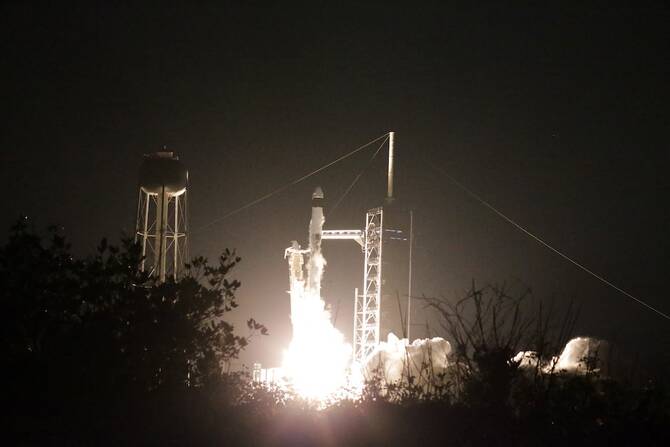
A Saudi mission to study the effects of low gravity on the microbiome of the human eye joined the launch of SpaceX’s Fram2 flight on Monday night. (Reuters)
2 / 4
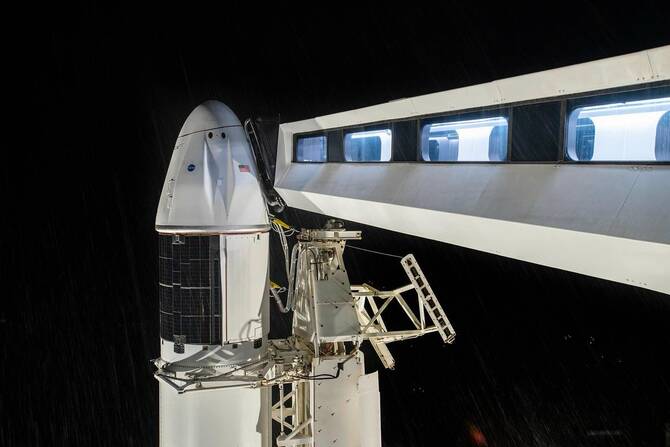
Biological samples for a Saudi study into the effects of low gravity on the microbiome of the human eye have been launched into orbit on a SpaceX rocket. (Supplied/SDM)
3 / 4
Biological samples for a Saudi study into the effects of low gravity on the microbiome of the human eye have been launched into orbit on a SpaceX rocket. (Supplied/SDM)
4 / 4
Biological samples for a Saudi study into the effects of low gravity on the microbiome of the human eye have been launched into orbit on a SpaceX rocket. (Supplied/SDM)
Short Url
Updated 03 April 2025
Follow

Saudi study launched in first crewed polar orbit flight with SpaceX

  • Crew of four to go into polar orbit for first time in history
  • Mission carries samples of human eye microbiome as part of Saudi study

RIYADH: Biological samples for a Saudi study into the effects of low gravity on the microbiome of the human eye have been launched into orbit on a SpaceX rocket.

Monday night marked a historic moment in both Saudi and global history as health-tech startup SDM and nonprofit FALAK for Space Science and Research launched the Falak Mission to explore the ocular microbiome in space aboard SpaceX’s Fram2 from Florida’s Space Coast.

“This is the first time that astronauts have gone into the polar (orbit) space, not the equatorial … this is the first time globally that any specimens have gone to the polar space (orbit) with live astronauts,” Prof. Dr. Selwa Al-Hazza, CEO and founder of SDM, told Arab News.

SpaceX’s Fram2 Falcon 9 rocket took off on March 31 at 9:47 p.m. carrying with it ocular microbiome samples.

The mission is part of global efforts to study the impact of microgravity on the ocular microbiome in space — a critical yet under-researched aspect of eye healthcare.
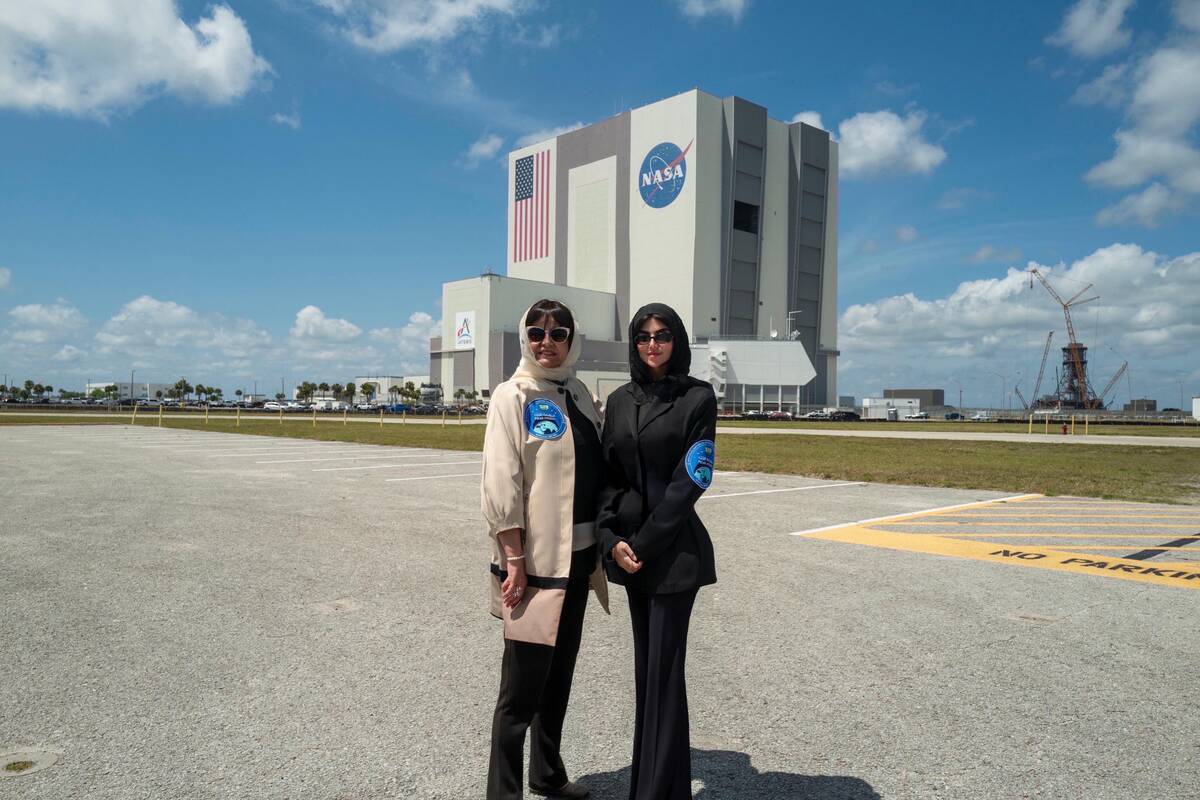


Prof. Dr. Selwa Al-Hazza (L) is the CEO and founder of SDM. (Supplied/SDM)

It will track the genetic and protein changes that may occur as a result of exposure to microgravity.

The experiment also aims to evaluate the ability of microbes to form biofilms, which may increase the risk of infection in space, as well as analyzing changes in microbial resistance to antibiotics after exposure to microgravity.

The project “will contribute to achieving qualitative progress in education and research in space and associated technologies,” Dr Ayoub Al-Subehi, CEO of Falak, told the Saudi Press Agency ahead of the launch. 

Al-Hazza, who has 39 years of experience in fields spanning ophthalmology, image analysis, artificial intelligence, diabetic retinopathy, and ocular genetic diseases, underlined that this mission represents a significant step in the Kingdom’s commitment to scientific innovation and its expanding role in the global space sector.

She told Arab News: “After 39 years of being in ophthalmology, there has to be treatment for every disease. Why can’t we do something with these microbiomes?

“To spend 40 years and trying to treat patients and they do not respond, all of the pharmaceuticals and drugs, and patients going back and forth – to be able to find the mutation of what happens to the microbiomes ... What does this mean to me? To be able to treat every single (patient) ... to be able to take the microbiome and to find a solution for all of the sick patients through a simple mutation, staying away from drugs and staying away from the back and forth — that, to me, is a dream come true,” she said.

“I thought, what if we take his microbiome to the microgravity, why don’t we take it up to space, let’s see what effect the space has on the microbiome. I am sure there has to be some sort of mutation, I am sure there has to be some sort of change in its structure,” Al-Hazza added. 

Over the last 18 months, Al-Hazza and her team, along with SDM co-founder Naif Al-Obaidallah, have connected with specialists at Johns Hopkins Hospital, where Al-Hazza was a professor, as well as microbiome experts in Malta and Turkiye.

Al-Hazza worked with these specialists who have knowledge and expertise in the sector to explore medical solutions in space.
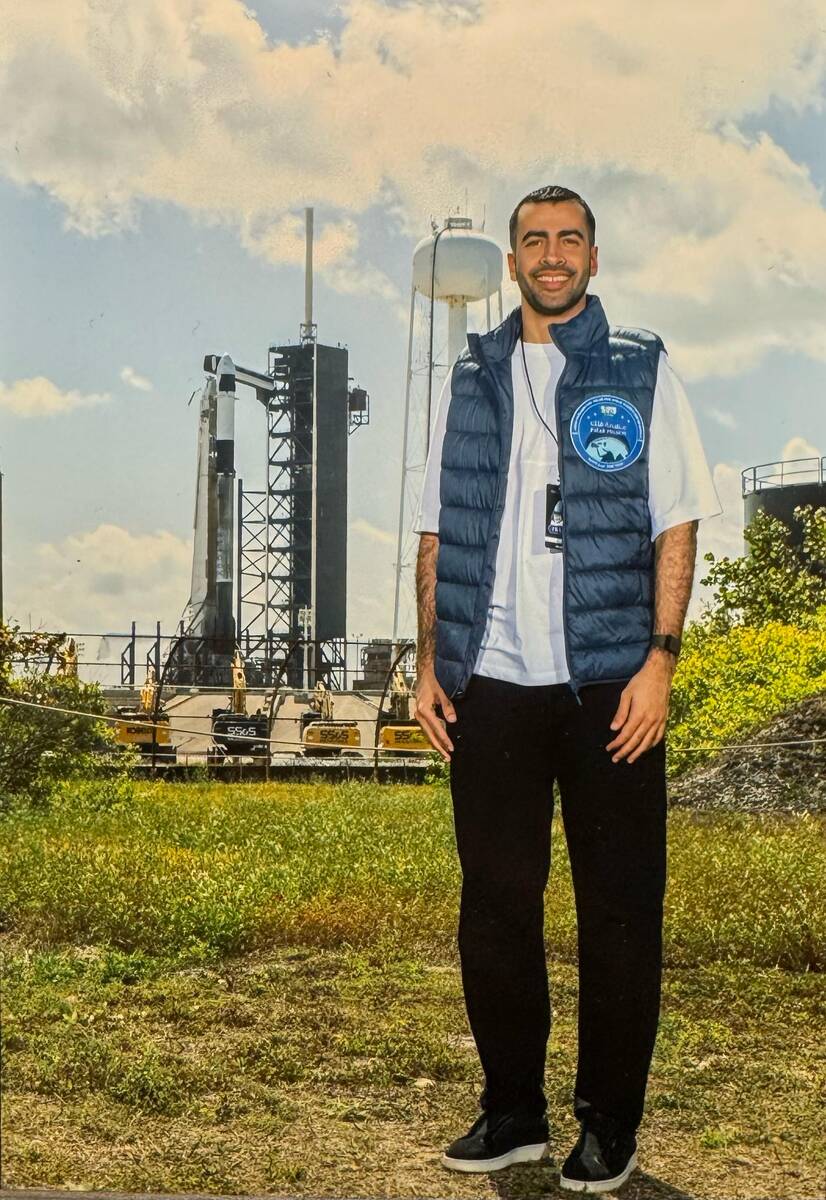


SDM co-founder Naif Obaidallah. (Supplied/SDM)

“With my 39 years of expertise in ophthalmology, we put our minds together we got the mission, we saw it last night.”

Al-Hazza shared the sense of pride she felt as the SDM team, in partnership with FALAK, carried the Saudi flag representing an important step in the Kingdom’s commitment to innovate and enhance its growing role in the global space sector.

She underlined that the mission had the support of King Abdulaziz City for Science and Technology, at which she is an adviser, as well as the Saudi Space Agency and Communications, Space and Technology Commission.

The study is part of the Fram2 mission, which was launched from the Kennedy Space Center, has a crew of four and is the first human spaceflight to follow a polar orbit.

The Falcon 9 rocket is expected to land on April 3 with a specific time yet to be announced.


Threat to Kingdom’s security is ‘red line’ that will be ‘addressed and neutralized,’ Saudi envoy says

Updated 14 January 2026
Follow

Threat to Kingdom’s security is ‘red line’ that will be ‘addressed and neutralized,’ Saudi envoy says

  • Abdulaziz Alwasil tells UN Security Council the situation in southern Yemen is ‘a just cause with social and historic dimensions’ that can only be resolved through dialogue
  • Recent military activity in the south was unilateral, resulting in an escalation that harms the interests of Yemeni people and undermines efforts to address issues in the south, he said

NEW YORK CITY: Any attempt to threaten Saudi Arabia’s national security is a “red line” and will be met with decisive action, the Kingdom’s ambassador to the UN told the Security Council on Wednesday.

Speaking during a meeting of the council to discuss Yemen, Abdulaziz Alwasil said the situation in the south of the country is “a just cause with social and historic dimensions” that can only be resolved through dialogue.

“We stress that any attempt to threaten our national security is a red line, and we will not hesitate to take the necessary actions and steps to address it and neutralize it,” he added.

Alwasil reaffirmed Saudi Arabia’s support for Yemeni President Rashad Al-Alimi, the Presidential Leadership Council, and the Yemeni government in their efforts to achieve security, stability, development and peace while preserving national unity.

He said military activity by Southern Transitional Council forces in Hadramout and Al-Mahra on Dec. 2, 2025, was unilateral, did not have the approval of the Presidential Leadership Council, and was not carried out in coordination with the Coalition to Restore Legitimacy in Yemen.

It had resulted in an unjustified escalation that harmed the interests of the Yemeni people, undermined efforts to address the issues in the south, and ran counter to the coalition’s objectives, Alwasil added.

The Kingdom, working with its coalition partners, the Presidential Leadership Council and the Yemeni government, had moved to contain the situation by dispatching a military force to coordinate arrangements with the Southern Transitional Council in Aden, he said.

The aim was to ensure the return of the southern council’s forces to their previous positions outside of Hadramout and Al-Mahra, and the handover of camps to legitimate government forces and local authorities in line with agreed procedures, Alwasil added.

He expressed regret over the military operations that took place in Hadramout and Al-Mahra, close to Saudi Arabia’s southern border, which he said posed a direct threat to the Kingdom’s national security, as well as the security of Yemen and regional stability. Such steps were extremely dangerous, he added, and contradicted the principles on which the Coalition to Restore Legitimacy in Yemen had been founded.

Alwasil welcomed a prisoner and detainee exchange agreement signed in Muscat on Dec. 23, which he described as an important humanitarian measure to alleviate suffering and build confidence.

He praised Oman for hosting and sponsoring the consultations and supporting negotiations, and commended the efforts of UN’s special envoy for Yemen, Hans Grundberg, the International Committee of the Red Cross and all others that has played a part.

Regarding the political efforts to resolve the crisis, Alwasil said Saudi Arabia welcomed President Al-Alimi’s call for an inclusive conference in Riyadh to bring together all stakeholders to discuss just solutions to the situation in southern Yemen.

Preparations for the conference have begun, he added, in cooperation with the Yemeni government and southern representatives, reflecting the close ties between the two countries and their shared interests in stabilizing Yemen.

He urged all southern stakeholders to participate actively and constructively in the talks, to help find comprehensive and just solutions that meet the legitimate aspirations of the people of southern Yemen.

Alwasil called on all Yemeni forces and stakeholders to cooperate and intensify their efforts to reach a lasting political settlement that would ensure security and stability.

He described the southern issue as “a just cause with social and historic dimensions,” adding that “the only way to address it is through dialogue that leads to a comprehensive political solution” based on nationally and internationally agreed terms of reference.