



PESHAWAR: In the Namak Mandi Bazaar in the Pakistani city of Peshawar, cheese makers have been having a day as customers pour in daily to place orders for the Eid Al-Fitr holiday.
In the northwestern regions of the country, particularly the Khyber Pakhtunkhwa province, cheese is often given to friends and family as Eid gifts or used at home to prepare fried cheese or paneer curries and tikkas for loved ones who visit over the holiday.
Particularly “kham panir,” a seasonal cheese made from sheep or goat milk, is a traditional food and a staple in the diets of Pakistani and Afghan herders, often eaten with fruits, vegetables, or sweets. Other popular varieties are kadchgall and quroot or qurt. Cheese in these regions is often served with raisins, nuts, and mulberries and is a common breakfast food eaten with bread.
Traditional methods and ingredients are used in cheese making, setting Pakistani cheese apart, manufacturers say.
In Peshawar, the provincial capital of KP province, the process of making the cheese begins before sunrise and takes at least four hours for the product to be ready, said Fazal Hayat, the manager at Al-Hajj Mushtaq Dairy, one of the largest manufacturers in Peshawar.
“First, the milk is heated and cooked in a geyser, and after it is boiled, it is transferred to a tub through a machine,” Hayat said as he supervised workers preparing hundreds of Eid orders:
“In the tub, the milk is added with a little yoghurt or lassi or yoghurt’s sour water, with which it is fermented until the cheese moves to one side and separates from the water and curdled milk. The cheese is then pressed and made ready for selling.”
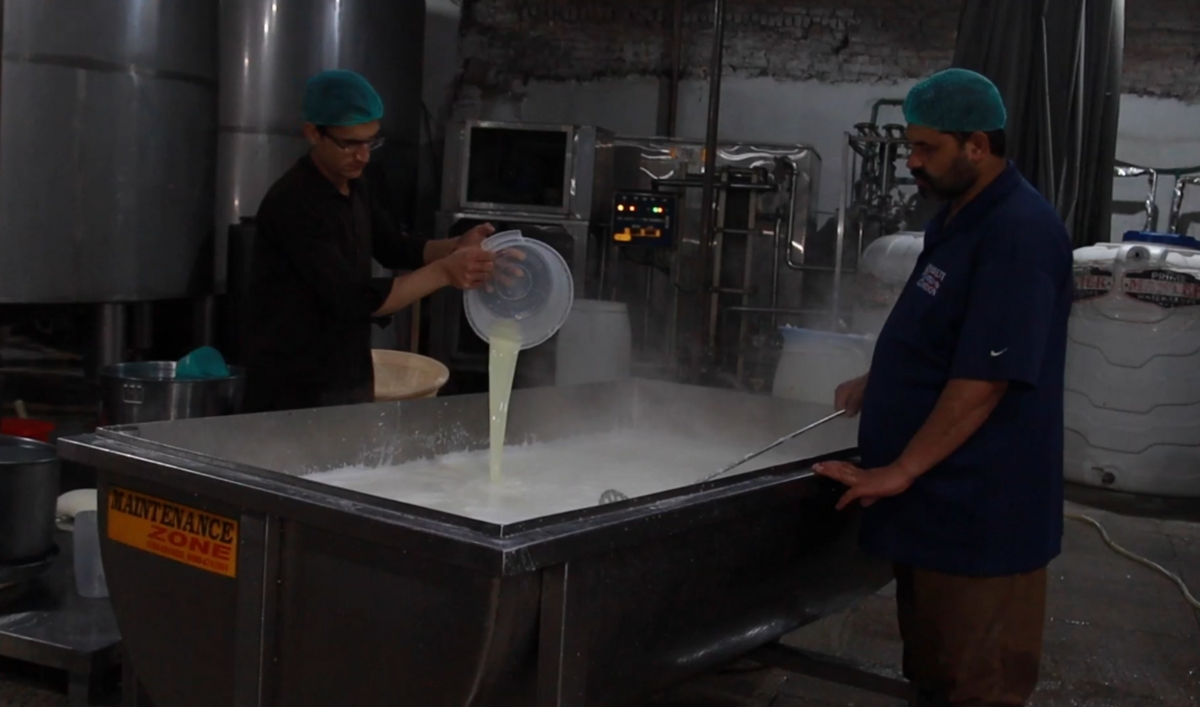
Workers prepare cheese in Peshawar, Pakistan, on March 24, 2025. (AN photo)
The cheese is then either sold directly to customers or picked up by wholesalers for sale in different places of the city such as the Food Street of Saddar Bazaar and the Ghanta Ghar in Peshawar.
Zia Khan, the owner of Al-Hajj Mushtaq Dairy, which was set up in 1940, said cheese demand would reach its peak in the ten days before Eid.
“Eid is one of the best rituals of Muslims, so for that we get special orders for cheese,” he told Arab News,
Khan said the company sold around 300-400 kilograms of cheese a day most of the year, which increased to 1,000-1,500kg in Ramadan. During the three or four days of the Eid holiday, sales could cross 2,000kg daily.
“The price of one kilogram is Rs1500-1600 [$6] on normal days, but during Ramadan, we sell it for Rs1000 [$3.5] per kilogram,” he said.
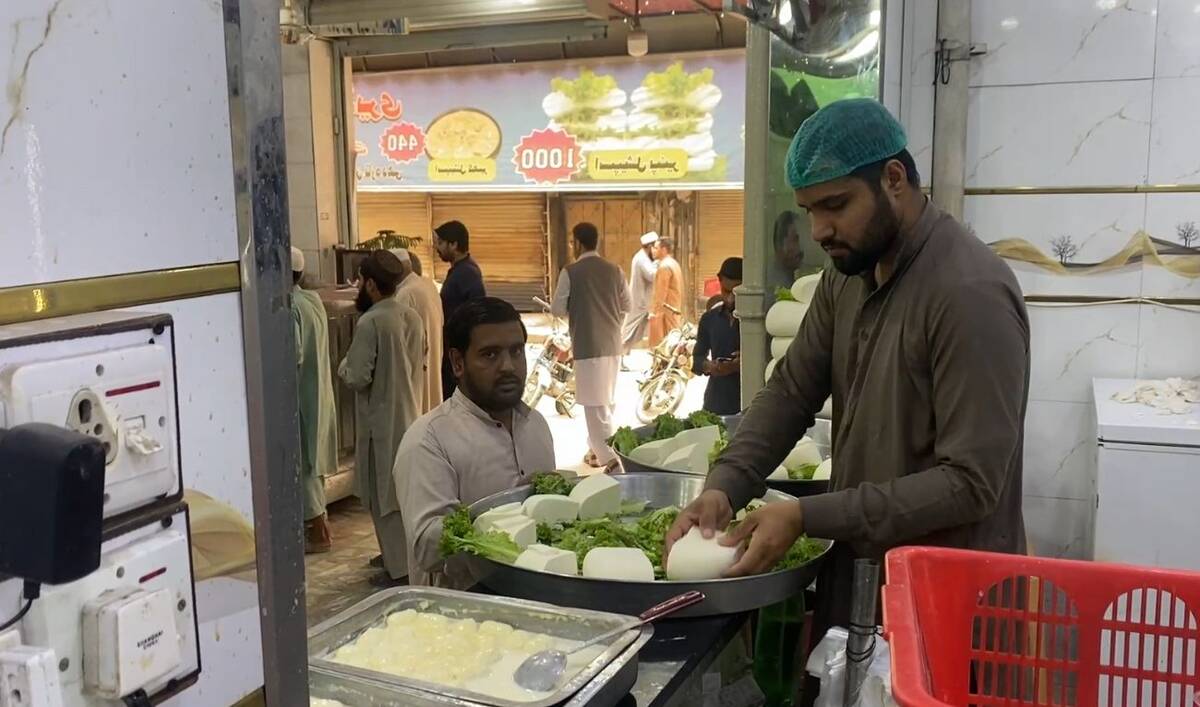
A customer buys cheese in Peshawar, Pakistan, on March 24, 2025. (AN photo)
Orders for cheese come from all over KP province as well as the rest of the country and the company sends parcels to customers through courier or transport services, Khan added.
Muhammad Asif, a wholesaler in Peshawar’s Saddar Bazaar, said people from far flung areas of the KP province had placed ordered in the last ten days of Ramadan.
“When 2-3 days are left for Eid, people take cheese to far-flung areas, people who are from Swat, Kohat, Mardan or Rawalpindi [in Punjab province], when they go home, they take it for others as gifts,” Asif said as he packed balls of cheese in a plastic bag and handed it to an eager customer.
“Sweets you can get from everywhere, but this cheese isn’t present everywhere, it’s a special gift.”
During Ramadan, Muslims often include dairy products like milk, yogurt and cheese in their diets, particularly after breaking their fast as they are easily digestible and provide essential nutrients.
“Of course, it is a dairy product and preferred, and a majority of people use dairy products in their iftar and Eid meals,” said Tikka Khan, a lawyer who was buying cheese at a Peshawar bazaar.
“Even at our marriage ceremonies, there must be palak [spinach] paneer, right? Even in pakora [fritters], a cheese filling is preferred.”


