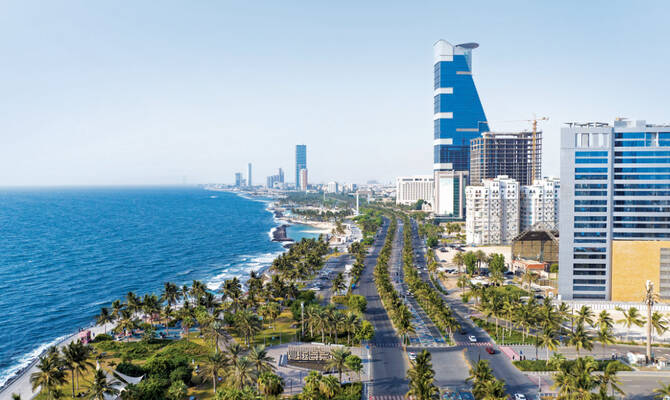

JEDDAH: Saudi Arabia’s investment in its maritime sector could see a shift in global trade logistics that helps reduce reliance on traditional routes, leading industry figures have told Arab News.
With its strategic location at the crossroads of global trade, the Kingdom is positioning itself as an international logistics hub, enhancing its maritime infrastructure and embracing sustainability.
This drive is a key part of Saudi Arabia’s economic diversification initiative under Vision 2030, which seeks to reduce the Kingdom’s reliance on oil revenues.
In August, Omar Hariri, president of the Saudi Ports Authority, revealed that investments in the Kingdom’s maritime sector have exceeded SR25 billion ($6.66 billion) thanks to successful collaborations between his organization and private sector partners.
Hariri said that significant investments have been made over the past four years through partnerships with both national and international companies.
Speaking to Arab News, Pierroberto Folgiero, CEO of Fincantieri, one of the world’s largest shipbuilding companies, highlighted how Saudi Arabia’s investment in maritime infrastructure is influencing the future of global trade routes.
“By expanding its shipbuilding capacity and enhancing its logistics infrastructure, the Kingdom can address global supply chain bottlenecks, strengthen its maritime influence, and foster resilience in international trade flows,” he said.
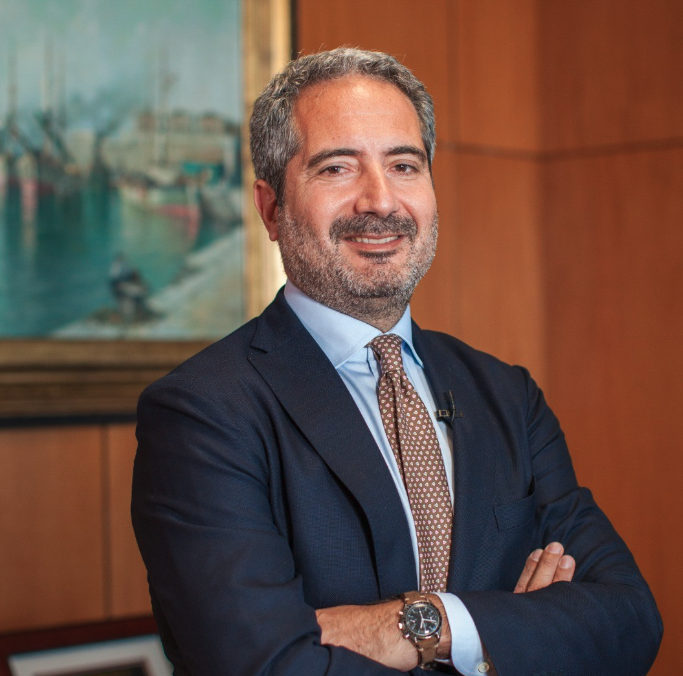
Pierroberto Folgiero, CEO of Fincantieri. Supplied
Folgiero noted that Saudi investments in advanced maritime infrastructure could create alternative trade routes, reducing reliance on chokepoints like the Suez Canal, adding that his company sees this as an opportunity to apply its shipbuilding and maritime technology expertise.
“Investments in shipbuilding, ports, logistics, and shipping services have allowed the Kingdom to capitalize on its geographic advantages. Notable projects include the development of the King Salman International Maritime Industries Complex in Ras Al-Khair, set to become one of the world’s largest shipyards, and modernizing key ports such as the Jeddah Islamic Port and King Abdulaziz Port,” he said.
The CEO added that Saudi Arabia is also advancing its shipbuilding and maritime technology through strategic partnerships with global industry leaders.
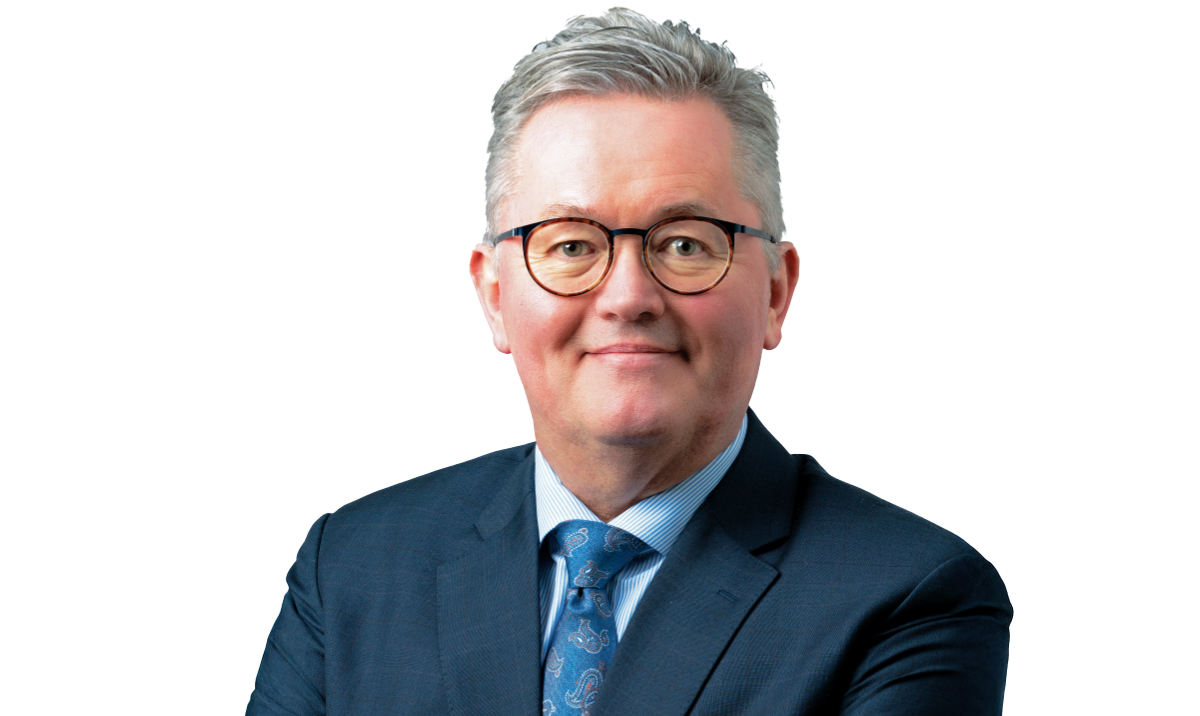
We are leveraging the adoption of digitization, automation, and AI-driven solutions to optimize port operations and streamline the logistics chain.
Poul Hestbaek, Folk Maritime CEO
“These collaborations focus on transferring expertise and technology, accelerating the Kingdom’s evolution into an influential player in the international maritime and shipping sectors,” he said.
He pointed out that Saudi Arabia’s focus on smart ports, using automation, IoT, and AI, is central to its maritime strategy. These technologies will streamline trade, improve turnaround times, reduce costs, and boost transparency, making the Kingdom an attractive hub for global shipping and logistics companies.
In May, Fincantieri launched Fincantieri Arabia, a subsidiary with a focus on shipbuilding, maritime equipment and systems, and naval logistic support services, including training and simulation.
Folgiero said this expansion will contribute to localizing technology, creating jobs, and boosting Saudi Arabia’s global maritime presence.
National developments
It is not just established international companies that will benefit from Saudi Arabia’s growing maritime sector.
In 2024, the Public Investment Fund-backed Folk Maritime was launched, initially operating two routes, but that number has since doubled.
Poul Hestbaek, the former CEO of Hamburg Sud, has been tasked to lead the company.
Speaking to Arab News, he highlighted the Saudi government’s proactive steps to adapt its regulatory framework and attract global investors to the industry, noting that his company is fully aligned with these efforts to drive innovation in maritime trade.
“As Saudi Arabia modernizes its regulatory framework, we are leveraging the adoption of digitization, automation, and AI-driven solutions to optimize port operations and streamline the logistics chain. This transformation is enhancing Saudi Arabia’s position as an attractive destination for international investors,” he said. Hestbaek said that his company is playing a vital role in this transformation, particularly through its expanding fleet and direct liner services along strategic routes, including those connecting India to the Red Sea and the Gulf.
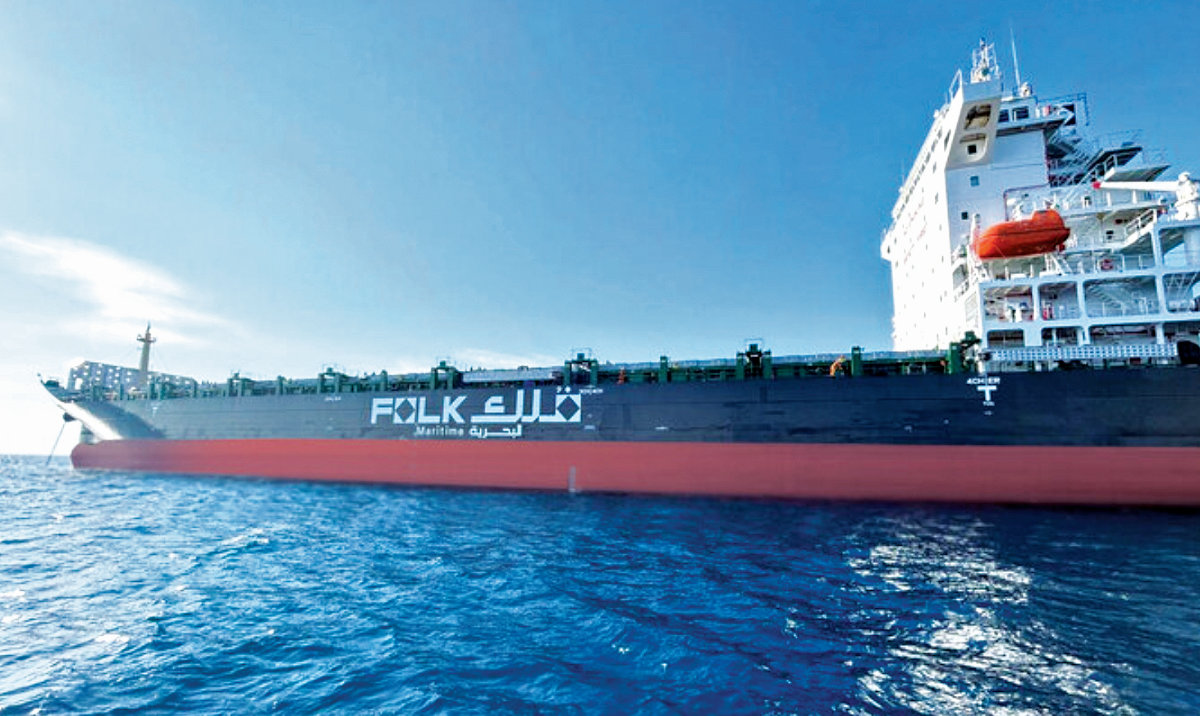
M/V Folk Jeddah was Folk Maritime Services Co. first vessel. (Supplied)
He also highlighted Folk Maritime’s role in improving cargo efficiency across key trade routes, including the Red Sea and the Gulf.
“As we increase regional shipping capabilities and expand our fleet, key economic indicators to watch include the growth in port throughput, the development of new shipping routes, and the rise in non-oil exports,” said the CEO.
Sustainable maritime operations
Achieving growth in the sector is not the only goal for Saudi Arabia. As Hestbaek emphasized, expansion has to be done in a sustainable manner.
Explaining how sustainability is at the core of his company’s operations, he said: “We are aligned with Saudi Arabia’s net zero carbon by 2060 goals, incorporating advanced green technologies into our fleet, using energy-efficient technologies to reduce emissions and optimize fuel consumption.”
Hestbaek noted the Folk Maritime’s commitment to decarbonization by adhering to international standards, prioritizing International Maritime Organization regulations, adopting alternative fuels, and replacing older vessels with eco-friendly ones like the M/V Folk Jeddah. The company also recently purchased 5,600 recyclable containers.
Ensuring secure, resilient operations
As the Houthi-led attacks in the Red Sea have demonstrated, security is an ever-present concern for the maritime industry.
Hestbaek highlighted Saudi Arabia’s multi-faceted approach to ensuring secure shipping lanes, addressing both physical and cyberthreats.
“The Kingdom works closely with international and regional partners to counter piracy and maintain secure sea routes in the Arabian Gulf, Red Sea, and beyond. Saudi Arabia has invested in state-of-the-art naval and coast guard assets, as well as enhancing port security to safeguard ships and cargo,” he said.
The CEO added that his company has a strategy to safeguard operations and collaborates with local and international authorities, adding that cybersecurity is a top priority for both Saudi Arabia and Folk Maritime.
“We are committed to safeguarding our fleet and digital infrastructure from emerging cyberthreats, implementing cybersecurity measures, such as secure communication channels, real-time monitoring systems, and advanced protocols for data protection and cargo tracking,” he said.
Maritime tourism
The maritime industry is more than just transferring goods from port to port.
As Fincantieri’s Folgiero said, Saudi giga-projects such as NEOM and the Red Sea are transforming the Kingdom’s cruise ship industry, aligning with Vision 2030’s goal of making Saudi Arabia an international tourism hub.
“Futuristic cities like The Line and Sindalah Island, alongside the eco-tourism focus of the Red Sea Project, offer bespoke and sustainable experiences that cater to the high-end travel market, sharpening Saudi Arabia’s competitive edge in the global tourism landscape,” he said.
Ensuring the Kingdom capitalizes on this, the PIF-backed Cruise Saudi was created in 2021, with an aim to attract 1.3 million passengers annually by 2035.
It also plans to generate 50,000 direct and indirect jobs in the cruise sector by 2035.
Cruise Saudi’s first ship, Aroya, which features 19 decks, 1,678 cabins and suites, and can accommodate up to 3,362 passengers, was launched in December at Jeddah Islamic Port.