

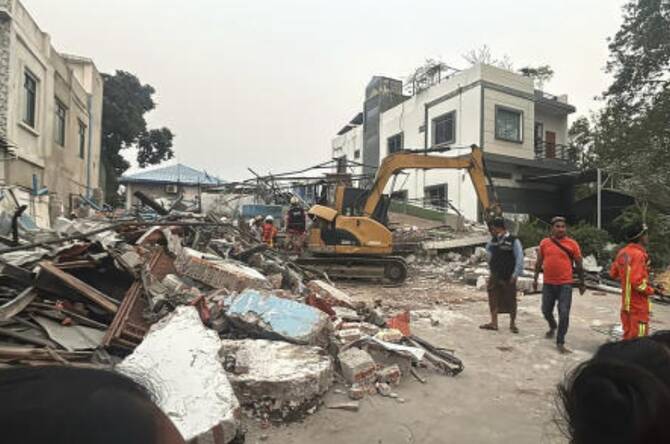

GENEVA: A severe lack of medical supplies is hampering efforts to respond to the deadly earthquake in Myanmar, the United Nations said Saturday, adding that those affected needed urgent humanitarian aid.
The UN said it was mobilizing emergency response efforts, alongside humanitarian partner organizations, following the huge earthquake that struck on Friday leaving more than 1,600 people dead in Myanmar and neighboring Thailand.
“As the full scale of the disaster unfolds, urgent humanitarian assistance is needed to support those affected,” the UN humanitarian agency OCHA said in a statement.
It said the response was being hindered by a lack of medical supplies, along with damaged roads and communications infrastructure.
“A severe shortage of medical supplies is hampering response efforts, including trauma kits, blood bags, anaesthetics, assistive devices, essential medicines, and tents for health workers,” OCHA said.
The agency said hospitals and health facilities had sustained extensive damage or had been destroyed.
“Telecommunications and Internet disruptions continue to hinder humanitarian communications and operations. Damaged roads and debris are obstructing humanitarian access and complicating needs assessments,” it added.
OCHA said coordination efforts were under way to conduct rapid needs assessments and scale up the emergency response.
“The earthquake caused widespread destruction of homes and severe damage to critical infrastructure,” it said.
“Thousands of people are spending the nights on the streets or open spaces due to the damage and destruction to homes, or fearing further quakes.”
In central and northwestern Myanmar, hospitals in Mandalay, Magway and the capital Naypyidaw “are struggling to cope with the influx of people injured.”
In the southern part of Shan state, multiple townships have been affected, with clothing, blankets, emergency shelters and food assistance needed immediately, OCHA said.
The agency said a convoy of 17 cargo trucks from neighboring China carrying shelters and medical supplies was expected to arrive on Sunday.
Meanwhile the World Health Organization said it had rushed nearly three tons of medical supplies, including trauma kits and multi-purpose tents, from its emergency stockpile in Yangon to hospitals in Mandalay and Naypyidaw treating thousands of people injured in the quake.
“Immediate support is critical to save lives,” its South-East Asia branch said on X.
Jagan Chapagain, secretary general of the International Federation of Red Cross and Red Crescent Societies (IFRC) — the world’s largest humanitarian network — said Red Cross teams in Myanmar were “racing against time” to rescue survivors, provide pre-hospital care and distribute emergency shelter materials.
In a video from Yangon, Marie Manrique, the IFRC’s acting head of delegation in Myanmar, said the numbers of fatalities and injuries were continually increasing.
“We do have some uplifting stories of actually finding people... however, the sad stories will continue to be coming in,” she said.
Besides infrastructure, many houses have collapsed, “and we really need to start thinking of what is going to happen to these people and their long-term housing needs,” she added.


