



NUUK, Greenland/WASHINGTON: US Vice President JD Vance on Friday accused Denmark of not doing a good job keeping Greenland safe and suggested the United States would better protect the semi-autonomous Danish territory that President Donald Trump has pressed to take over.
During a visit to the US military base at Pituffik in the north of the Arctic island, Vance said the US has no immediate plans to expand its military presence on the ground but will invest in resources including additional naval ships.
He pledged respect for Greenland’s sovereignty but also suggested the territory would come to see the benefit of partnering with the US, in remarks the Danish prime minister called unfair.
“Denmark has not kept pace and devoted the resources necessary to keep this base, to keep our troops, and in my view, to keep the people of Greenland safe from a lot of very aggressive incursions from Russia, from China and other nations,” Vance said. He gave no details of the alleged incursions.
Trump has frequently said that the United States has a security imperative to acquire the island, which has been controlled by Denmark since 1721.
Vance’s sharp attacks against Denmark — a longtime US ally and NATO member — offered another example of the little regard the Trump administration holds for traditional US alliances.

Vance, in particular, has not held back in his messaging. He lectured European officials on free speech and illegal migration on the continent during an overseas trip last month and later accused Ukrainian President Volodymyr Zelensky of not showing enough gratitude to Trump during a contentious meeting at the White House.
In Greenland on Friday, Vance said Russia, China and other nations are taking an “extraordinary interest” in Arctic passageways, naval routes and minerals in the region. He said the US will invest more resources, including naval ships and military icebreakers that will have a greater presence in the country.
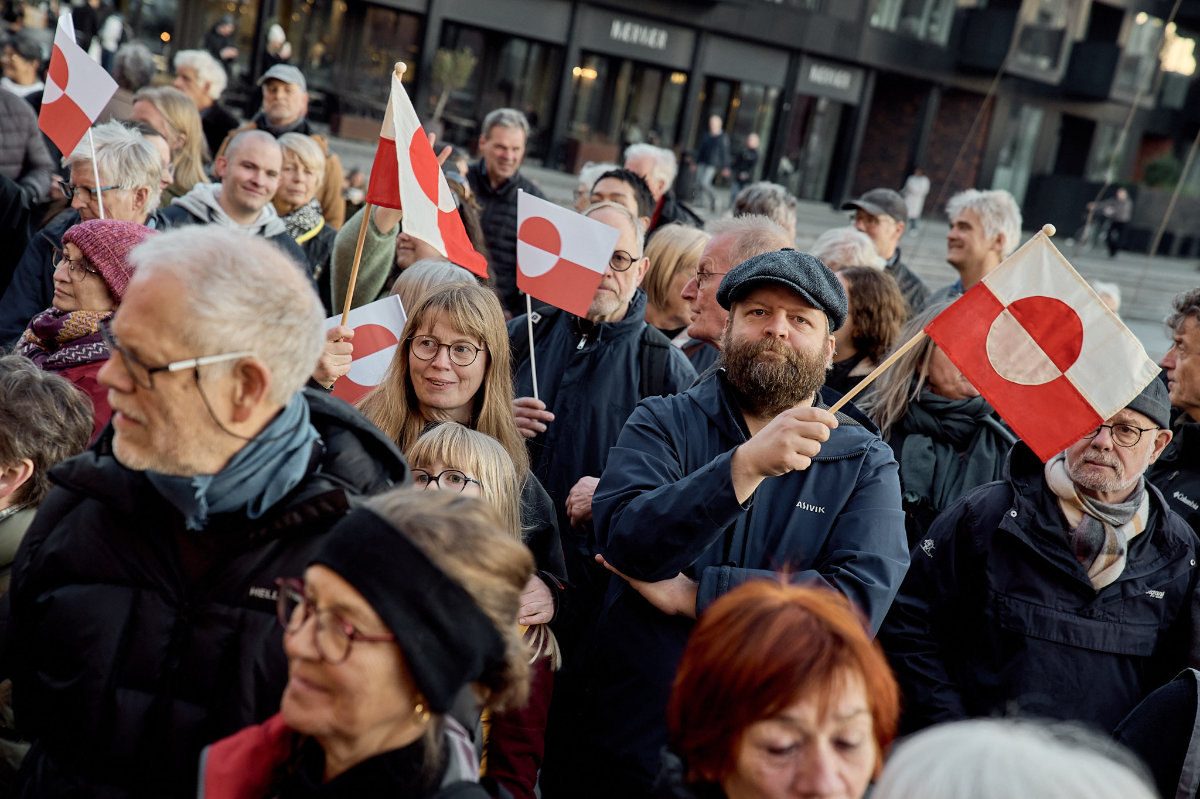
People with Greenland flags attend a demonstration in support of Greenland in front of Greenland's representation in Christianshavn, Copenhagen, Denmark on March 28, 2025. (AFP)
As Greenlanders expressed deep unease about the visit, Vance vowed the people of Greenland would have “self-determination” and the US would respect its sovereignty.
“I think that they ultimately will partner with the United States,” Vance said. “We can make them much more secure. We could do a lot more protection. And I think they’d fare a lot better economically as well.”
His remarks came just hours after a new broad government coalition that aims to keep ties with Denmark for now was presented in the capital, Nuuk.
Greenland’s new prime minister, Jens-Frederik Nielsen, said the US visit signalled a “lack of respect,” while Danish leaders expressed their commitment to Greenland.
“For many years we have stood side by side with the Americans under very difficult circumstances. Therefore the vice president’s description of Denmark is not a fair one,” Danish Prime Minister Mette Frederiksen said in a statement to Danish news agency Ritzau.
Denmark’s Foreign Minister Lars Lokke Rasmussen said Vance “has a point that we haven’t done enough, but I’m a little provoked because it’s also the Americans who haven’t done enough.”
Rasmussen said that the US today has a base with 200 soldiers, while during the Cold War the Americans had 17 military installations in Greenland with 10,000 soldiers.
As Vance’s visit was underway, Trump told reporters at the White House the US needs Greenland to ensure the “peace of the entire world.”
“We need Greenland, very importantly, for international security. We have to have Greenland. It’s not a question of, ‘Do you think we can do without it?’ We can’t,” Trump said.
Trump said Greenland’s waterways have “Chinese and Russian ships all over the place” and the United States will not rely on Denmark or anybody else to handle the situation.
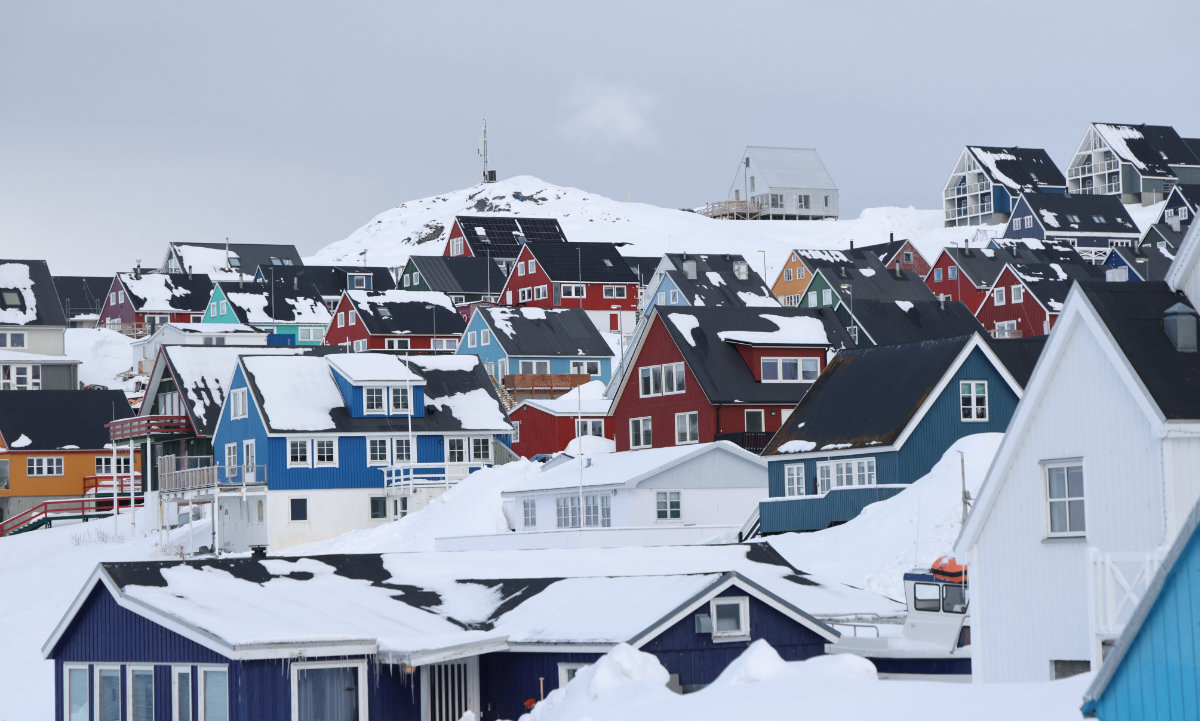
A view shows the city of Nuuk, Greenland, on March 28, 2025. (REUTERS)
Scaled-back trip
Vance greeted members of the US armed forces shortly after his arrival, thanking them for their service on the remote base located 750 miles (1,200 km) north of the Arctic Circle. The outside temperature at Pituffik was minus 3 degrees Fahrenheit (-19 C).
Vance’s wife Usha, national security adviser Mike Waltz and Energy Secretary Chris Wright accompanied him on the trip.
Under the terms of a 1951 agreement, the US is entitled to visit its base whenever it wants, as long as it notifies Greenland and Copenhagen. Pituffik is located along the shortest route from Europe to North America and is vital for the US ballistic missile warning system.
The island, whose capital is closer to New York than it is to the Danish capital Copenhagen, boasts mineral, oil and natural gas wealth, but development has been slow and the mining sector has seen very limited US investment. Mining companies operating in Greenland are mostly Australian, Canadian or British.
A White House official has said Greenland has an ample supply of rare earth minerals that would power the next generation of the US economy.
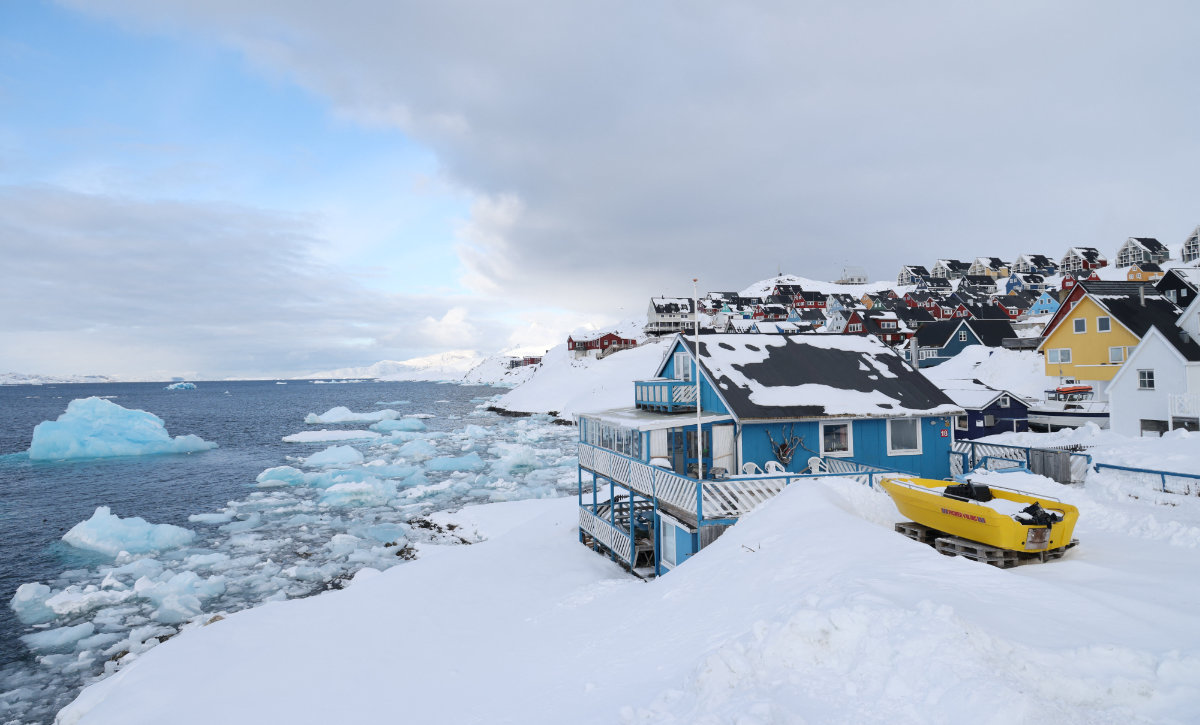
A view shows the city of Nuuk, Greenland, on March 28, 2025. (REUTERS)
The question now is how far Trump is willing to push his idea of taking over the island, said Andreas Oesthagen, a senior researcher on Arctic politics and security at the Oslo-based Fridtjof Nansen Institute.
“It is still unlikely that the United States will use military means,” he told Reuters.
“But it is unfortunately likely that President Trump and Vice President Vance will continue to use other means of pressure, such as ambiguous statements, semi-official visits to Greenland, and economic instruments,” he added.
Polls have shown that nearly all Greenlanders oppose becoming part of the United States. Anti-American protesters, some wearing “Make America Go Away” caps and holding “Yankees Go Home” banners, have staged some of the largest demonstrations ever seen in Greenland.
On Thursday, residents in Nuuk planted Greenlandic flags in the snow and a cardboard sign in English that said “Our Land. Our Future.”
Nielsen on Friday urged political unity. His pro-business party, the Democrats, which favors a gradual independence from Denmark, emerged as the biggest party in a March 11 election.
“At a time when we as a people are under pressure, we must stand together,” Nielsen told a press conference.


