

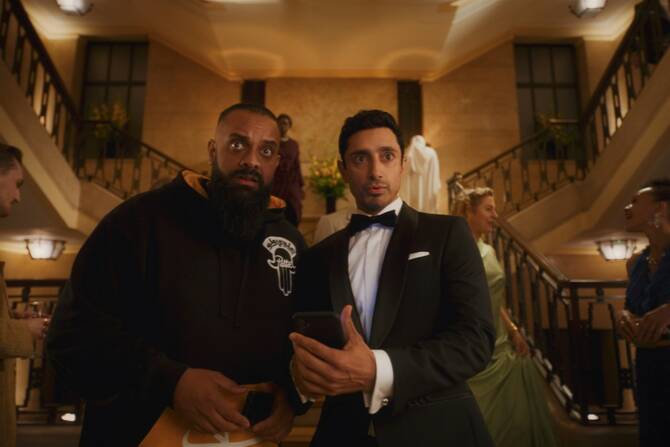

DUBAI: Riz Ahmed’s six-part Amazon series isn’t easily categorized. The first episode makes it seem like a straight-up, semi-autobiographical sitcom in the vein of “Curb Your Enthusiasm” — with an equally self-absorbed main character, a struggling British-Pakistani actor and sometime rapper called Shah Latif, played by the very-much-not-struggling actor and sometime rapper Ahmed, who is of British-Pakistani descent.
By the end of episode six, though, the show has morphed into something far more layered, tackling cultural expectations, creative drive, ego and ambition, institutional racism, gender roles, and much more. It’s part life story, part satire of the entertainment industry, and, seemingly, part therapy for Ahmed.
Latif is given the opportunity to audition to be the new James Bond. When word of this gets out (helped by Shah ‘accidentally’ getting snapped leaving the audition location), it naturally enrages a certain section of the British population disgusted to think that Bond might be played by a non-White actor. And Shah has his own reasons to feel conflicted about what would be a life-changing role: he’s cultivated a public image as a role model for his community — can he really be that if he’s willing to become a figurehead for the old-school UK establishment?
That struggle between Shah’s ambition and his desire to not be seen as a ‘sell-out’ is central to “Bait.” But equally important is Shah’s relationship with his family — which is where much of the show’s humor can be found, particularly in his relationship with his cousin Zulfi (who, along with his sister Q has lived with Shah and his parents since they were kids), played by the comedian Guz Khan. Their scenes together are a joy — trading insults in that way that British siblings and best friends do, treading a thin line between love and reproach.
Ahmed carries the show well, making his often-unlikable character — vanity, lack of empathy, self-pity, and self-aggrandizement are all central to Shah’s personality — someone you’re still, just about, rooting for.
Despite its short runtime, though, “Bait” still has some flab. Shah’s imagined discussions with the severed pig’s head thrown through the window of his family home by racists strained this viewer’s patience, as did some of the more surreal fantasy sequences. Overall, though, “Bait” has a lot going for it: slick writing, believable performances all round, and a cultural significance that’s well-timed and valuable. It seems set up for a second season, but what we’re really hoping for is a Zulfi-focused spin-off show.


