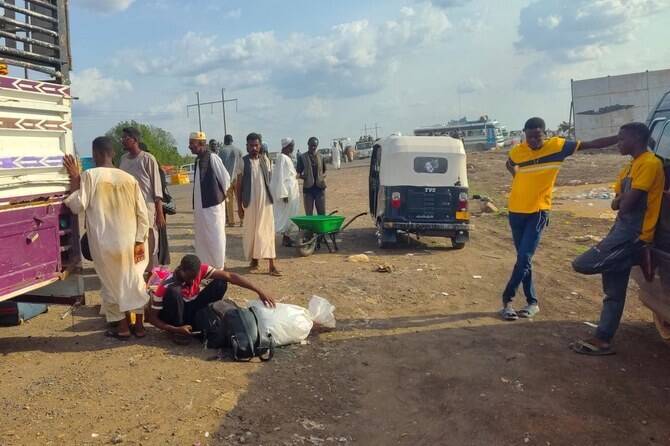

KHARTOUM: Residents of Sudan’s Tuti island at the confluence of the Blue Nile and White Nile have emerged from paramilitary control to speak of hardships suffered and relief that their oppressors have been driven away.
They say Sudan’s Rapid Support Forces, who have been forced by the army off the island between the capital Khartoum and its twin city Omdurman, would block people from medical treatment, jail others and extort inhabitants.
“I suffered from severe urinary retention,” recalled elderly islander Omar Al-Hassan, saying an RSF member stopped him from crossing a bridge to see doctors.
“He claimed our papers were incomplete, but we had all the necessary documents. He just wanted money.”
The RSF, whose war with the army erupted in April 2023 and which still controls swathes of west Sudan, did not respond to a request for comment by Reuters. The RSF has either denied it violates human rights or said it would hold perpetrators to account, while accusing the army of widespread abuses.
The UN accuses both sides in the civil war of abuses that may amount to war crimes.
Tuti island, with its green landscape overlooking the majestic Nile waters, was once one of Sudan’s most soothing spots, offering relaxation in a nation with a long history of war.
Its population of about 10,000 could relax on beaches near lemon trees swaying in the breeze. People would also pass time at coffee shops, puffing on water pipes, perhaps discussing Sudan’s complex, combustible politics.
That was before the conflict between the army and RSF — once partners in a coup that toppled veteran autocrat Omar Hassan Al-Bashir — erupted and ravaged Sudan.
’TUTI IS FREE’
Now, in a microcosm of the war’s devastation, Tuti’s close-knit farming community are at risk of famine and have been ravaged by dengue fever.
Sudan’s military, headed by career army officer Abdel Fattah Al-Burhan claimed control of Khartoum, including Tuti island, this week.
“We conducted a thorough and comprehensive cleanup of all areas of the island ... We tell the people to return and come back,” said soldier Al-Tahir Al-Tayeb.
“We will only take our rights by this,” he added, tapping on his gun. “We say to them, Tuti is free, and God is great.”
Nearby, a woman walked by a shop surveying destruction as people lingered at a mosque.
RSF leader Mohamed Hamdan Dagalo, known as Hemedti, rose from lowly beginnings to head a widely feared Arab militia that crushed a revolt in Darfur, winning him influence and eventually a role as the country’s second most powerful man, and one of its richest, as an enforcer for Bashir.
The RSF, menacing young men armed with rocket-propelled grenades and machine-guns mounted on trucks, mastered desert warfare in the Darfur region but lack the discipline of the regular army.
That was clear on Tuti island, said resident Abdul Fattah Abdullah, describing how RSF men followed him on four motorcycles and grabbed him as he was carrying vegetables from a market.
The next 20 days, locked up in a small room with 32 army officers, were the hardest in his whole life, he complained. It did not end there. RSF fighters demanded the equivalent of $400, he said.
“They harassed people, demanding either their gold or their money. May God punish them,” said Abdullah.