

Pakistan’s tailors measure up against Eid craze for pret 

Tailor Muhammad Shafiq marks fabric for cutting at his shop in Islamabad, Pakistan on March 25, 2025. (AN Photo)
Short Url
Updated 30 March 2025
Follow

Pakistan’s tailors measure up against Eid craze for pret 

  • Customer preferences are shifting toward ready-to-wear fashion, impacting tailoring businesses
  • Women say they opt for pret for its convenience, affordability and accessibility over custom tailoring 

ISLAMABAD: With a measuring tape draped around his neck, Muhammad Shafiq cut through a piece of fabric, expertly following along yellow chalk markings he had made according to the exact size of a client. 

Each year, the demand for custom-made clothing skyrockets ahead of the Muslim festivals of Eid Al-Fitr and Eid Al-Adha, with tailoring shops in Islamabad and other cities of Pakistan bustling with women eager to get their dresses made in time. The exercise requires long shopping trips to malls and bazaars to buy cloth in various fabrics and prints, or ordering them online, and then giving them to tailors to fashion into outfits as per customized measurements and styles.

But in the past few years, many tailoring businesses have had to contend with a growing preference for ready-to-wear fashion, chosen for its convenience, affordability, and accessibility, allowing women and men alike to easily find stylish and fashionable garments without the need for custom tailoring or extensive shopping trips.

“It’s not that there is no work at all but earlier we would have advanced bookings almost a month before Eid,” Shafiq, 53, who has been a tailor for four decades, told Arab News at his cramped shop in the Pakistani capital earlier this month.
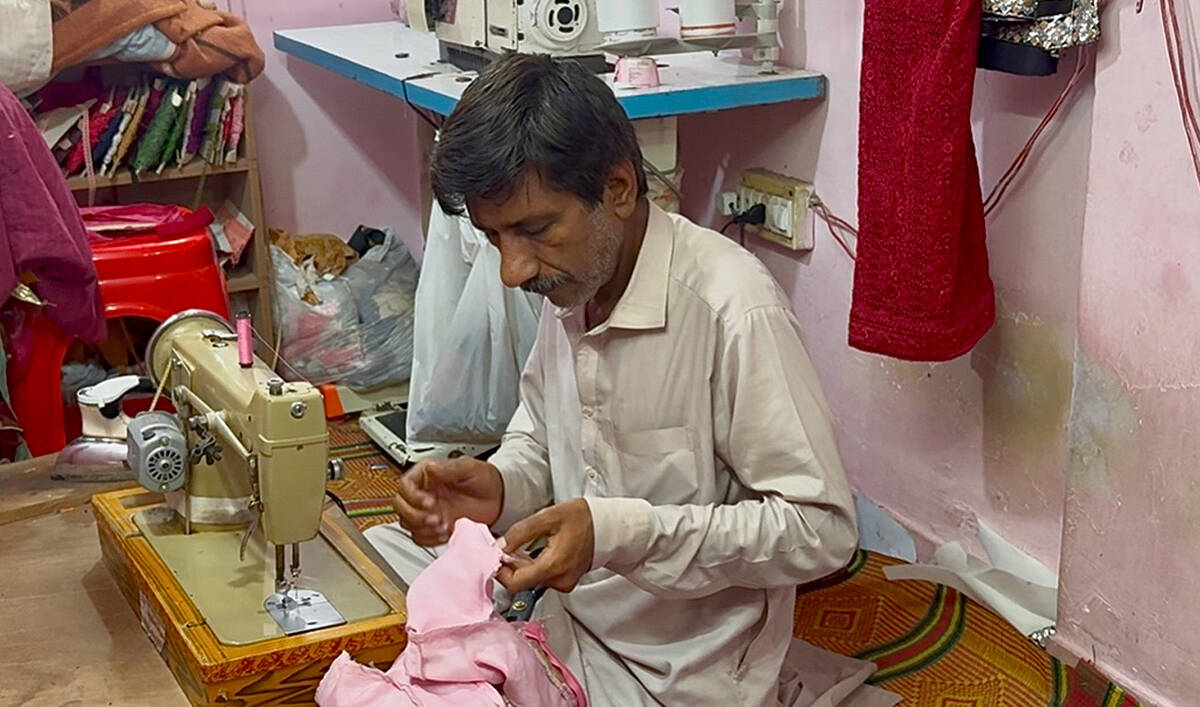


A worker at Muhammad Shafique's tailoring shop stitches clothes in Islamabad, Pakistan, on March 2025, 2025. (AN Photo)

“But now it’s down to around 10 days [of advanced bookings]. Many people don’t have the time to get clothes stitched and opt for boutique-made, ready-to-wear outfits.”

“CONVENIENCE”

Ready-to-wear clothing is widely available at Pakistani stores, department stores, and online platforms, making it easier to find and purchase. Pret collections also often reflect current fashion trends, allowing consumers to stay up to date with the latest styles. And instead of scheduling fittings and waiting for custom-made garments, consumers can simply try on and purchase ready-to-wear pieces on the go.

Arslan Haider, a designer and store manager, said boutiques and designer brands were certainly reshaping fashion preferences on holidays like Eid.

“During events like Eid, the market sees a surge in business and new fashion trends emerge in stores, which helps businesses flourish,” Haider told Arab News. 
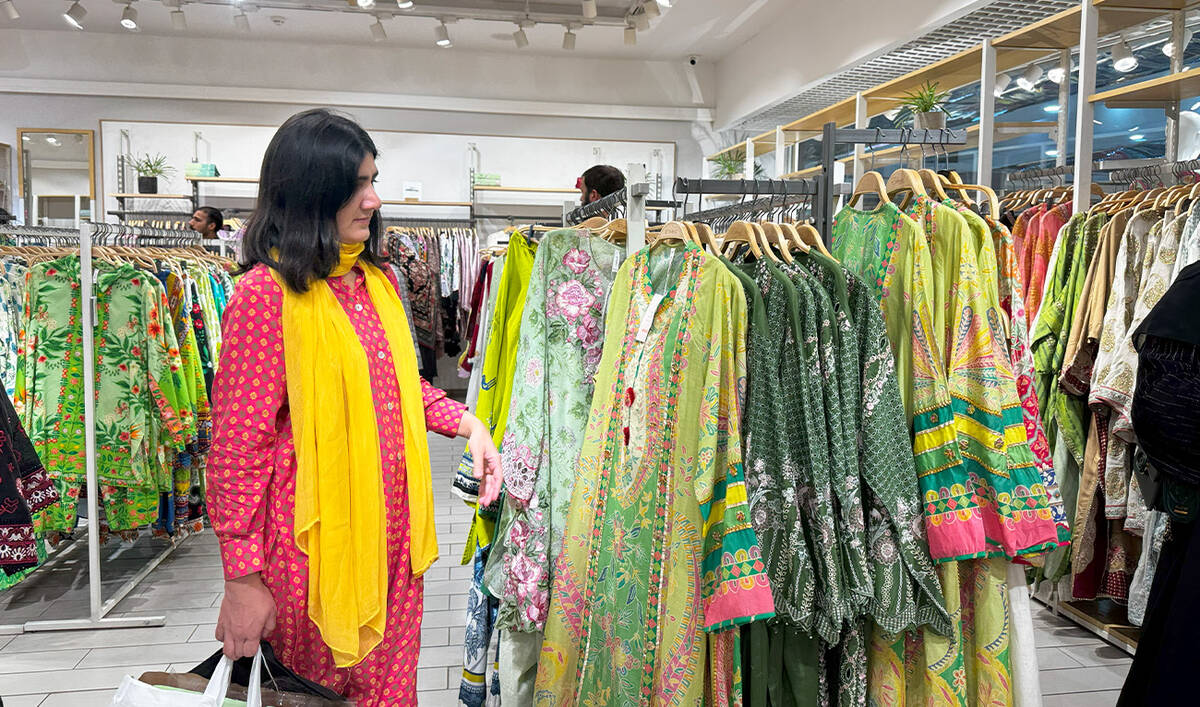


A customer sifts through stitched clothes on display at a retail clothing shop in Islamabad on March 25.2025. (AN Photo)

But tailoring still worked as a cheaper option in some cases, he said, and the older generation, more concerned with perfect fittings, preferred bespoke clothing while younger people were more inclined toward pret.

“Stitched clothes come with stylish designs and they eliminate the need for multiple visits to tailors to provide measurements and other accessories,” Haider said, adding that the convenience was a serious consideration for many customers.

“Unstitched clothes require at least seven to eight days with a tailor, and there’s always a risk of error. With stitched clothing, customers get a standardized product, whether they buy online or from a store,” he said.

Farida Qureshi, a UK-based customer visiting Pakistan for Eid, said she preferred ready-to-wear fashion as it saved time and effort. Getting an outfit stitched, on the other hand, did not just require buying the cloth and paying a visit to the tailor, but also purchasing matching accessories such as laces, beads and buttons, which was a time-consuming task. 

“Finding everything in one place, ready-made is far easier than visiting different shops and then waiting for a tailor,” Qureshi said. 

But there are still those who want the personalized touch of a tailor on their Eid dresses. 

“I do buy ready-made clothes, but I often face size issues,” Qureshi said. “With my tailor, I get exactly what I want.”

Which is why business still thrives for many tailors like Shafiq, who work up to 16 hours daily during Ramadan to complete Eid orders. 

“Some people want a perfect fit, something that ready-made clothes can’t always provide,” he said. 

“I have customers who have been coming to me for years because they know I already have their measurements and can tailor their Eid clothes exactly to their liking.”


Pakistan transporters call off five-day strike after successful talks with Punjab government

Updated 12 December 2025
Follow

Pakistan transporters call off five-day strike after successful talks with Punjab government

  • Transporters went on strike against heavy fines, penalties imposed by Punjab over traffic violations
  • Punjab government sets up committee to resolve transporters issues, confirms provincial minister

ISLAMABAD: Pakistani goods transporters called off their five-day-long nationwide strike on Friday after successful talks with the Punjab government, officials and transporters confirmed, as the business community warned of an impending economic crisis if the dispute stayed unresolved. 

Transporters went on a nationwide strike on Dec. 8 against stringent traffic rules and heavy fines imposed by the Punjab government over traffic violations. These penalties were included in the Motor Vehicle Ordinance 2025 last month. 

The ordinance details hefty fines ranging from Rs2000 [$7] to Rs50,000 [$178] and mentions prison sentences going up to six months for various offenses committed by drivers, such as driving on the wrong side of the road or driving in vehicles with tinted windows. 

“Yes, the strike has been called off after our meeting with Senior Minister of Punjab Marriyum Aurangzeb,” Nabeel Tariq, president of the All Pakistan Goods Transport Association (APGTA), told Arab News. 

Tariq said fines ranging from Rs1000 ($3.6) to Rs1500 ($5.4) for traffic violations have been increased to around Rs20,000 ($71.3) as per the new rules. 

He said the APGTA has agreed to accept a 100 percent or even 200 percent hike in fines. However, he said an increase of 2000 percent was not “logical.”

“Our urgent demands have been accepted and a committee has been formed to review the ordinance and come up with recommendations,” Tariq said. 

Speaking to Arab News, Aurangzeb confirmed the strike had been called off after talks with the Punjab government and that a committee has been formed to resolve the transporters’ issues. 

The committee will be headed by Aurangzeb and will include representatives of goods transporters, a statement issued by her office said. 

“The government wants to protect human lives and make things better for all citizens,” the statement said. “We will resolve the issues (with transporters) amicably.” 

‘UNPRECEDENTED CRISIS’

Pakistan’s business and industrial community, meanwhile, warned of an impending crisis if the disputed was not resolved. 

The All Pakistan Textile Mills Association (APTMA) and the Karachi Chamber of Commerce and Industry (KCCI) have both appealed for immediate government intervention.

Imdad Hussain Naqvi, president of the Grand Transport Alliance Pakistan (GTAP), told Arab News that over 400,000 goods carriers had been stranded across Pakistan due to the strike, affecting supplies to millions of consumers.

Earlier, in a letter to Punjab Chief Minister Maryam Nawaz, APTMA Chairman Kamran Arshad said the strike has “critically impacted import and export operations which are backbone of the country’s economy.”

He said hundreds of cargo vehicles remain stranded across Punjab, creating “abnormal delays” in goods movement and triggering heavy demurrage, detention charges, missed vessels and production shutdowns due to the non-availability of raw materials.

Arshad warned the disruption poses “a serious risk of order cancelation of export orders by international buyers, which would have far-reaching consequences for Pakistan’s foreign exchange earnings.”

Meanwhile in Pakistan’s commercial hub Karachi, KCCI President Rehan Hanif issued an even stronger warning, saying the nationwide strike threatens to paralyze Pakistan’s economic lifeline. 

“The complete suspension of cargo movement is pushing Pakistan toward an unprecedented trade and industrial crisis,” Hanif said in a statement. 

He added that import and export consignments are now stranded at the city’s ports, highways and industrial zones.