

Highlights from Saher Nassar’s ‘Chronicles from the Storm’ exhibition in Dubai

‘Chronicles No. 8.’ (Supplied)
Short Url
Updated 27 February 2026
Follow

Highlights from Saher Nassar’s ‘Chronicles from the Storm’ exhibition in Dubai

DUBAI: Here are three highlights from Saher Nassar’s ‘Chronicles from the Storm,’ which runs until March 18 at Zawyeh Gallery in Dubai.

‘Chronicles No. 1’

In his latest solo exhibition, the Palestinian artist “reimagines events that push past emotional capacity toward moral exhaustion, questioning the ethical certainty of the human spirit when faced with immense suffering,” according to the show catalogue, with works that “contemplate the devaluation of hope as a fundamental factor of human survival, sometimes revealed as currency for escape, sometimes seen in people resorting to their primal instincts to endure.”

‘Chronicles No. 8’
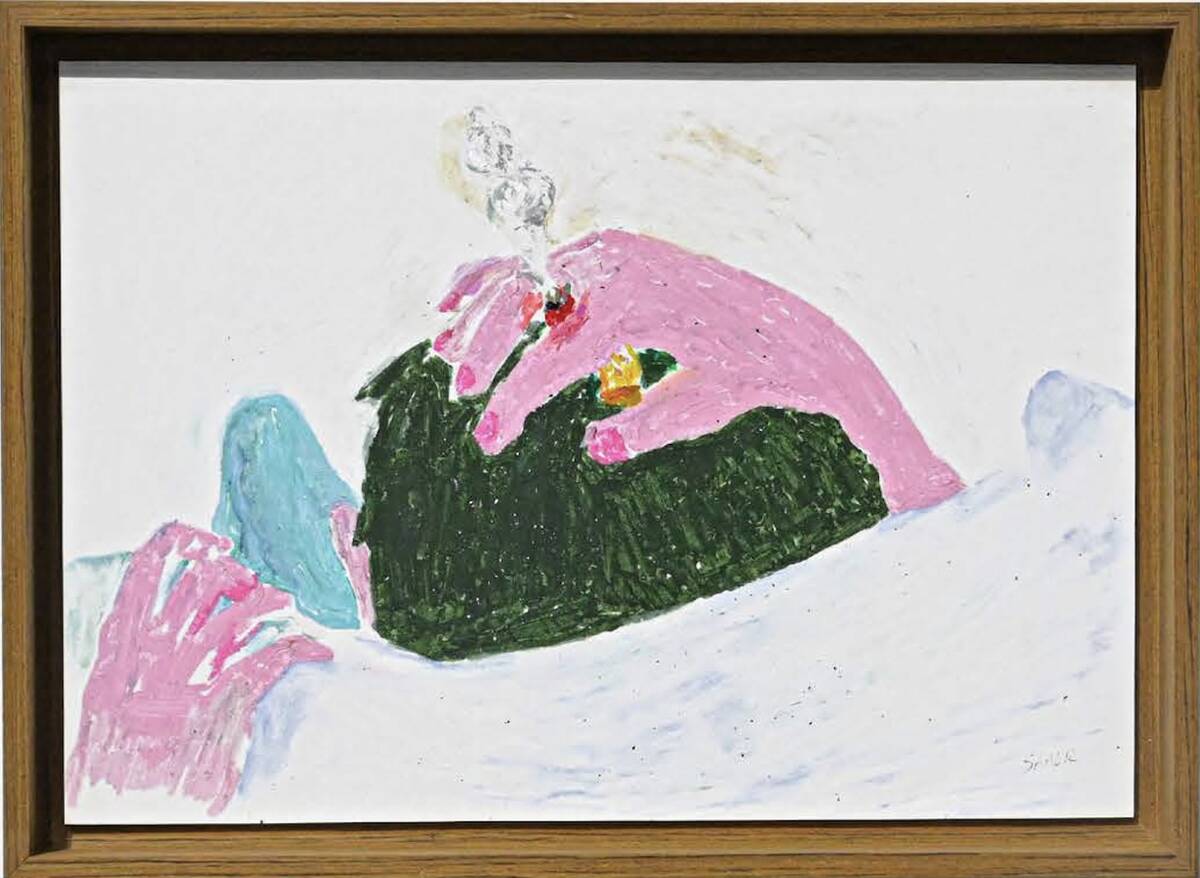
“Drawing from both personal and collective experiences, the exhibition unfolds as a layered reflection on how repeated trauma reshapes perception, belief, and the instinct to survive,” a press release for the show states. “Nasser translates lived realities into visual studies that move beyond immediate reaction. Rather than seeking resolution or catharsis, the works dwell in a state of moral exhaustion.”

‘Chronicles No. 3’

In “Chronicles from the Storm,” the UAE-based multidisciplinary artist is not attempting to offer answers, the press release suggests; rather, he is “bearing witness” and “inviting viewers to sit with unresolved questions and the uneasy persistence of the human spirit in the aftermath of the storm.” The works on show “carry a restrained intensity, resisting spectacle in favor of contemplation,” the release continues.


Lebanese filmmaker turns archival footage into a love letter to Beirut

Updated 28 February 2026
Follow

Lebanese filmmaker turns archival footage into a love letter to Beirut

LONDON: Lebanese filmmaker Lana Daher’s debut feature “Do You Love Me” is a love letter of sorts to Beirut, composed entirely of archival material spanning seven decades across film, television, home videos and photography.

The film premiered at the 82nd Venice International Film Festival in September and has since traveled to several regional and international festivals.

Pink Smoke (2020) by Ben Hubbard. (Supplied)

With minimal dialogue, the film relies heavily on image and sound to reconstruct Lebanon’s fragmented history.

“By resisting voiceover and autobiography, I feel like I had to trust the image and the shared emotional landscape of these archives to carry the meaning,” Daher said.

A Suspended Life (Ghazal el-Banat) (1985) by Jocelyne Saab. (Supplied)

She explained that in a city like Beirut “where trauma is rarely private,” the socio-political context becomes the atmosphere of the film, with personal memory expanding into a collective experience — “a shared terrain of emotional history.”

Daher said: “By using the accumulated visual representations of Beirut, I was, in a way, rewriting my own representation of home through images that already existed."

Whispers (1980) by Maroun Bagdadi. (Supplied)

Daher, with editor Qutaiba Barhamji, steered clear of long sequences, preferring individual shots that allowed them to “reassemble meaning” while maintaining the integrity of their own work and respecting the original material, she explained.

The film does not feature a voice-over, an intentional decision that influenced the use of sound, music, and silence.

The Boombox (1995) by Fouad Elkoury. (Supplied)

“By resisting the urge to fill every space with dialogue or score, we created room for discomfort,” Daher said, adding that silence allows the audience to sit with the image and enter its emotional space rather than being guided too explicitly.

 The film was a labor of love, challenging Daher personally and professionally.

“When you draw from personal memory, you’re not just directing scenes, you’re revisiting parts of yourself and your childhood,” she said. “There’s vulnerability in that.”